
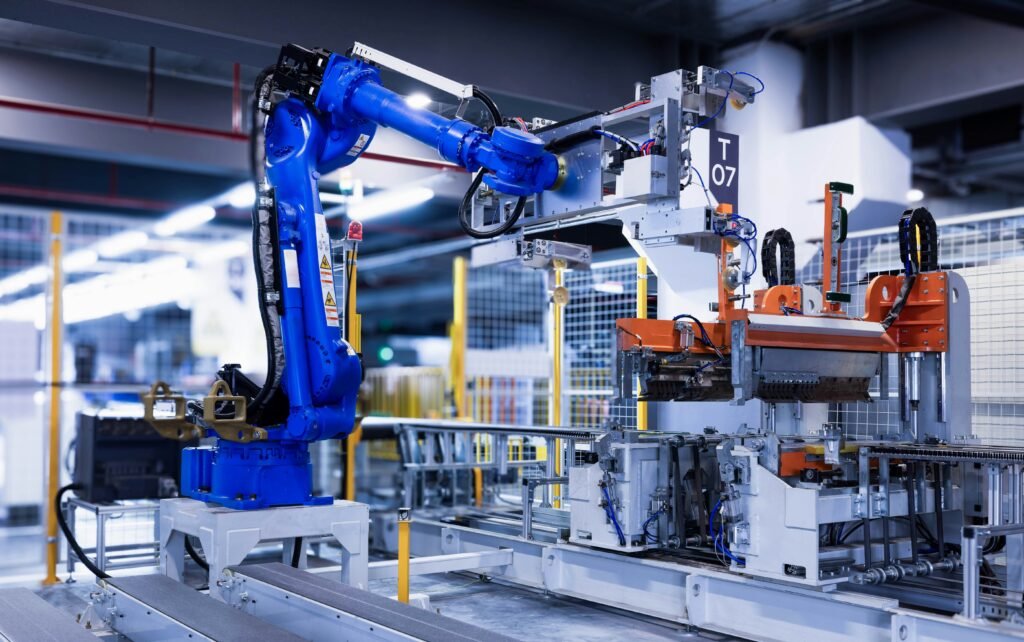
Industrial automation is no longer limited to large manufacturing corporations with massive production budgets. It has become the foundation of modern factories, smart warehouses, robotics systems, and high-speed logistics operations across the world. From automated conveyor systems in e-commerce fulfillment centers to robotic assembly lines in automotive plants, precision motion control is now essential for maintaining production efficiency, product consistency, and operational scalability.
At the center of this transformation is the growing demand for advanced gear motors. As industries push for faster production cycles, energy-efficient machinery, and compact automation systems, manufacturers are investing heavily in motion technologies that deliver stable torque, accurate speed control, and long-term reliability. Every packaging line, robotic arm, sorting machine, and automated storage system depends on efficient drive components to function smoothly.
This shift has also elevated the role of every dc gear motor manufacturer in the global industrial supply chain. Manufacturers are no longer producing simple mechanical parts alone. They are developing intelligent motion solutions that support Industry 4.0 environments, connected manufacturing systems, and advanced robotics integration.
According to the International Federation of Robotics (IFR), global industrial robot installations reached more than 540,000 units in a single year, highlighting how rapidly automation is expanding worldwide. As robotics adoption increases, demand for compact and high-performance gear motors continues rising alongside it.
One trend becoming increasingly clear across the automation sector is that companies are no longer choosing gear motors based only on price. Reliability, efficiency, customization, and integration capabilities now play a much bigger role in purchasing decisions, especially for businesses operating around-the-clock production environments.
Understand How Industrial Automation Increases Gear Motor Usage
Industrial automation depends heavily on controlled motion. Automated systems must operate with precision, repeatability, and reliability while maintaining high productivity levels under continuous workloads. Gear motors solve this challenge by combining electric motors with reduction gear systems to deliver optimized torque and controlled speed output.
Unlike conventional motors, gear motors provide enhanced motion control within compact mechanical structures. This makes them ideal for equipment that requires stable mechanical movement under varying operational loads. As automation expands into manufacturing, warehousing, agriculture, and medical technology, the applications for gear motors continue growing across multiple sectors.
A modern dc gear motor manufacturer must now design products that meet the operational requirements of robotics, packaging automation, automated guided vehicles, and intelligent conveyor systems. These applications require more than basic functionality. They demand high durability, precise torque delivery, compact architecture, and extended operational lifespan.
Factories upgrading to automated production lines are increasingly replacing manual mechanical systems with intelligent drive technologies. This transition directly fuels demand for high-efficiency DC gear motors capable of supporting continuous operation while reducing maintenance interruptions and downtime.
Support Smart Factory Operations With Precision Motion Systems
Smart factories rely on synchronized machinery, real-time monitoring, and interconnected production systems. Every machine inside a modern manufacturing facility must communicate effectively while maintaining accurate and repeatable motion performance.
Gear motors play a critical role in these environments because they deliver controlled rotational movement while supporting advanced automation systems. Packaging equipment, robotic arms, industrial actuators, and automated assembly systems all depend on stable gear motor integration to maintain productivity.
A leading dc gear motor manufacturer typically focuses on several important performance areas:
| Smart Factory Requirement | Gear Motor Benefit |
|---|---|
| Continuous operation | Improved durability and reliability |
| Precise positioning | Accurate speed and torque control |
| Compact machine design | Smaller motor footprint |
| Energy efficiency | Reduced operational costs |
| Intelligent automation | Encoder and sensor compatibility |
Automation engineers now prioritize motion systems that integrate smoothly with programmable logic controllers, industrial IoT platforms, and robotics software. This increasing level of complexity is encouraging every major dc gear motor manufacturer to invest in advanced motor technologies that support intelligent manufacturing ecosystems.
In high-speed production environments, even small improvements in torque precision or energy efficiency can significantly influence productivity, maintenance schedules, and operating costs.
Expand Warehouse Automation Through Compact Drive Solutions
E-commerce growth has completely transformed warehouse operations worldwide. Modern fulfillment centers must process thousands of orders every hour while maintaining delivery speed, inventory accuracy, and operational efficiency.
To achieve these goals, warehouses increasingly depend on automation systems such as:
- Conveyor systems
- Automated storage and retrieval systems
- Robotic picking equipment
- Sorting machines
- Automated guided vehicles (AGVs)
Each of these systems relies heavily on compact gear motors for motion control and mechanical stability.
A specialized dc gear motor manufacturer serves this growing market by developing motors capable of handling repetitive start-stop cycles, variable speed requirements, and demanding operational workloads. Warehouse automation systems often run continuously for long periods, making thermal management, efficiency, and durability extremely important.
Compact DC planetary gear motors have become especially valuable in warehouse robotics because they provide high torque density while occupying minimal installation space. As global fulfillment networks continue expanding, demand for compact and energy-efficient gear motors is expected to grow steadily.
Improve Robotics Performance With Advanced Gear Motor Technology
Industrial robotics remains one of the fastest-growing sectors within global automation. Robots are now widely used in automotive manufacturing, electronics assembly, pharmaceutical production, food processing, and precision medical equipment.
Robotic systems require highly accurate movement control to perform repetitive tasks consistently and safely. Gear motors enable robotic joints, actuators, and movement systems to achieve the correct balance between torque, speed, and positioning accuracy.
A modern dc gear motor manufacturer supporting robotics applications must address several technical requirements:
Deliver High Torque in Small Spaces
Robotic systems often operate within tight mechanical constraints. Compact gear motor designs allow engineers to maximize performance without increasing machine size or overall system weight.
Reduce Noise and Vibration
Low-noise operation is especially important in medical robotics, service robots, and collaborative robots working near human operators.
Support Precision Motion Control
Robotic applications demand exact positioning accuracy. Even minor motion inconsistencies can impact production quality and operational safety.
Increase Durability Under Continuous Use
Industrial robots frequently operate around the clock. Gear motors must maintain stable performance under continuous mechanical stress and repetitive movement cycles.
As collaborative robotics and AI-driven automation continue evolving, every advanced dc gear motor manufacturer will face growing pressure to provide smarter, lighter, and more efficient motion systems.
Enhance Energy Efficiency Across Industrial Applications
Energy efficiency has become a major investment priority for manufacturers worldwide. Rising electricity costs and sustainability regulations are encouraging industrial facilities to adopt more efficient equipment and reduce operational waste.
Gear motors contribute significantly to these goals because they optimize torque transmission while minimizing unnecessary energy consumption.
Modern industrial buyers carefully evaluate:
- Motor efficiency ratings
- Heat generation levels
- Gearbox performance
- Noise reduction capabilities
- Maintenance requirements
- Power consumption efficiency
An experienced dc gear motor manufacturer often develops customized solutions tailored to specific operational requirements. Applications such as conveyors, pumps, textile machinery, and automated handling systems all benefit from energy-efficient drive technologies.
The transition toward sustainable manufacturing is also increasing demand for brushless DC gear motors, high-efficiency planetary gear systems, and electronically controlled motor technologies.
Adapt to Compact Machine Design Trends
Modern industrial equipment continues becoming smaller, lighter, and more integrated. Machine designers now prioritize compact mechanical systems that maximize performance while minimizing installation space.
This trend has accelerated demand for miniature gear motors in industries such as:
| Industry | Common Gear Motor Application |
|---|---|
| Medical equipment | Diagnostic machines and pumps |
| Consumer electronics | Smart devices and actuators |
| Robotics | Joint movement systems |
| Agriculture | Precision automation equipment |
| Security systems | Smart locks and access control |
Compact DC planetary gear motors are especially popular because they provide exceptional torque density in limited spaces. Their balanced load distribution and efficient gearbox structure make them suitable for demanding automation applications.
As miniaturization trends continue, every innovative dc gear motor manufacturer must focus on producing lighter and more compact drive systems without sacrificing performance, reliability, or durability.
Customize Gear Motor Solutions for Modern Automation Systems
Industrial automation is highly application-specific. Different machines require different torque levels, reduction ratios, voltage configurations, and mounting structures.
For this reason, customization has become one of the most important competitive advantages in the gear motor industry.
A professional dc gear motor manufacturer often provides customized solutions that include:
Variable Reduction Ratios
Different automation systems require different speed and torque combinations depending on operational needs.
Encoder Integration
Smart factories frequently require encoder feedback for precise positioning, motion tracking, and system monitoring.
Specialized Shaft Designs
Machine builders may require custom shaft dimensions or unique configurations to fit specialized equipment layouts.
Environmental Protection Features
Certain industrial environments expose motors to dust, moisture, vibration, or extreme temperatures, requiring additional protection features.
Customization is particularly important in robotics, industrial actuators, medical devices, and packaging machinery. As automation technology continues advancing, tailored motion systems will remain a major driver of gear motor innovation.
Accelerate Global Manufacturing Upgrades Through Automation
Industrial automation is expanding rapidly in both developed and emerging markets. Advanced economies continue upgrading factories to improve productivity and reduce labor dependency, while developing regions are investing heavily in automation to strengthen global competitiveness.
This worldwide modernization trend supports sustained growth across multiple industries, including:
- Automotive manufacturing
- Electronics production
- Renewable energy systems
- Food processing
- Pharmaceutical equipment
- Smart agriculture
- Semiconductor manufacturing
Every global dc gear motor manufacturer benefits from this industrial transformation because gear motors are fundamental components in nearly every automated system.
Countries investing heavily in Industry 4.0 infrastructure are expected to generate particularly strong long-term demand for high-performance gear motors with intelligent control capabilities.
Compare Traditional Manufacturing and Smart Automation Requirements
The shift toward automation has significantly changed the operational expectations placed on motion control systems.
| Feature | Traditional Manufacturing | Smart Automation Systems |
|---|---|---|
| Labor dependency | High | Low |
| Motion precision | Moderate | Extremely high |
| Operational monitoring | Limited | Real-time analytics |
| Maintenance approach | Reactive | Predictive maintenance |
| Energy optimization | Minimal | Critical priority |
| Equipment flexibility | Low | Highly adaptable |
| Motion system demand | Basic motors | Intelligent gear motors |
This evolution highlights why every advanced dc gear motor manufacturer must continually improve product efficiency, integration capabilities, and customization options.
Strengthen Competitive Advantage Through Intelligent Motor Innovation
The gear motor market is no longer driven solely by mechanical performance. Digital connectivity, predictive maintenance, and intelligent control integration are becoming equally important.
Manufacturers now seek motion systems capable of integrating with:
- Industrial IoT platforms
- Smart sensors
- Cloud monitoring systems
- Predictive maintenance software
- Artificial intelligence applications
As industrial automation continues evolving, the most successful dc gear motor manufacturer will be the one capable of balancing mechanical reliability with intelligent system compatibility.
The future of automation depends on smarter motion technologies that support both operational efficiency and long-term scalability.
Frequently Asked Questions
How does industrial automation increase gear motor demand?
Industrial automation relies on controlled motion systems for conveyors, robotics, packaging equipment, and smart machinery. Gear motors provide the torque and speed control required for these applications, which increases overall market demand.
Why are DC gear motors commonly used in automation systems?
DC gear motors offer compact design, precise speed control, energy efficiency, and reliable torque output. These characteristics make them ideal for robotics, automated warehouses, and intelligent manufacturing equipment.
What industries use gear motors the most?
Gear motors are widely used in automotive manufacturing, logistics, robotics, food processing, agriculture, medical devices, and packaging machinery.
What makes a good dc gear motor manufacturer?
A reliable dc gear motor manufacturer focuses on product durability, customization capabilities, energy efficiency, compact design, and compatibility with modern automation systems.
Why are planetary gear motors popular in robotics?
Planetary gear motors provide high torque density, compact structure, smooth transmission, and accurate motion control, making them ideal for robotic applications.
How do energy-efficient gear motors reduce operating costs?
Efficient gear motors minimize power consumption, reduce heat generation, and improve transmission efficiency. This lowers electricity costs and extends equipment lifespan.
Will gear motor demand continue growing in the future?
Yes. As industrial automation, smart factories, robotics, and warehouse automation continue expanding globally, gear motor demand is expected to rise steadily across multiple sectors.
Industrial automation is fundamentally reshaping the global manufacturing landscape. Smart factories, robotics systems, intelligent logistics networks, and energy-efficient production facilities all depend on reliable motion control technologies to operate effectively.
Gear motors have evolved from simple mechanical components into essential automation enablers that support precision, efficiency, scalability, and intelligent manufacturing integration. As automation becomes more advanced, the role of every dc gear motor manufacturer will continue growing in importance across global industries.
Businesses investing in automation should prioritize high-quality, application-specific gear motor solutions that deliver long-term reliability, energy efficiency, and smart system compatibility. Companies that adapt early to these evolving technologies will be better positioned to improve operational performance, reduce maintenance costs, and stay competitive in an increasingly automated industrial market.