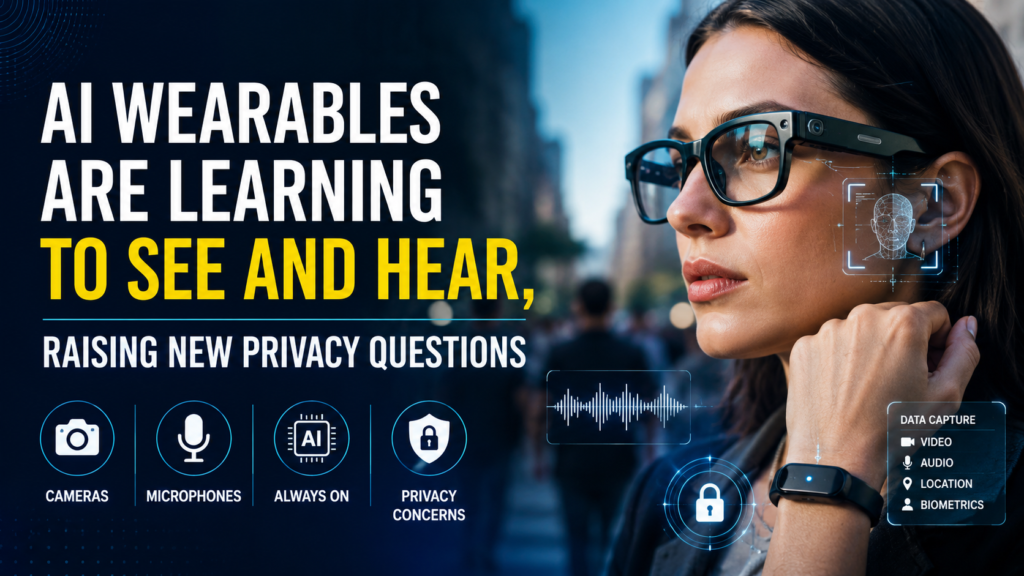
The next phase of artificial intelligence may be worn rather than opened on a screen. Cameras and microphones are moving into glasses, wristbands, clips, and jewelry, giving AI assistants a continuous view of daily life. That access could make digital services more useful, but it also challenges established expectations about consent, confidentiality, and control over personal information.
Bring AI Assistants Into Everyday Life
Meta’s Ray-Ban smart glasses, developed with EssilorLuxottica, combine cameras, microphones, speakers, and AI features in a familiar frame. The category has already gained commercial traction: EssilorLuxottica reported that Ray-Ban Meta glasses had sold 2 million units since launch as of February 2025. Samsung is expected to launch smart glasses later this year, while Amazon, Plaud, Qualcomm partners, and OpenAI are pursuing wristbands, pins, pendants, and other wearable formats.
By observing a user’s surroundings and conversations, these products can identify landmarks, summarize meetings, capture reminders, and recommend follow-up actions. Over time, developers expect AI agents to use that information to perform tasks with fewer instructions.
CNN technology journalist Lisa Eadicicco tested Meta’s Ray-Ban glasses, Amazon’s Bee Pioneer wristband, and Plaud’s Notepin S over several months. The devices proved useful while traveling and after networking conversations, but asking friends and colleagues for recording permission often felt intrusive. As a result, the products sometimes remained unused.
Confront the Growing Consent Problem
The privacy issue extends beyond the wearer. People nearby may be recorded without recognizing that a camera or microphone is active, especially when the technology resembles ordinary eyewear or a small accessory.
Irina Raicu, director of the internet ethics program at Santa Clara University’s Markkula Center for Applied Ethics, said the discreet nature of these products means “the whole notion of consent is kind of disintegrating.” Her warning highlights a practical weakness in wearable design: bystanders cannot make informed choices when recording indicators are difficult to notice.
Meta has added an indicator light and prevents its glasses’ camera from operating when that light is covered. Even so, wearable cameras can enter homes, offices, medical settings, and other spaces where people expect greater privacy.
Prepare for an Always-Aware Computing Market
Amazon sees its Bee wristband as a way to give Alexa broader knowledge of a user’s day. Plaud believes automated recording and summarization could reduce administrative workloads, while OpenAI President Greg Brockman has predicted that AI-agent interaction may eventually displace keyboards and mice.
For GrowBusinessMag readers, the market opportunity is clear, but trust will shape adoption. AI wearables could become valuable productivity tools, provided manufacturers establish visible recording signals, meaningful consent practices, limited data retention, and safeguards that protect everyone within range of the device.