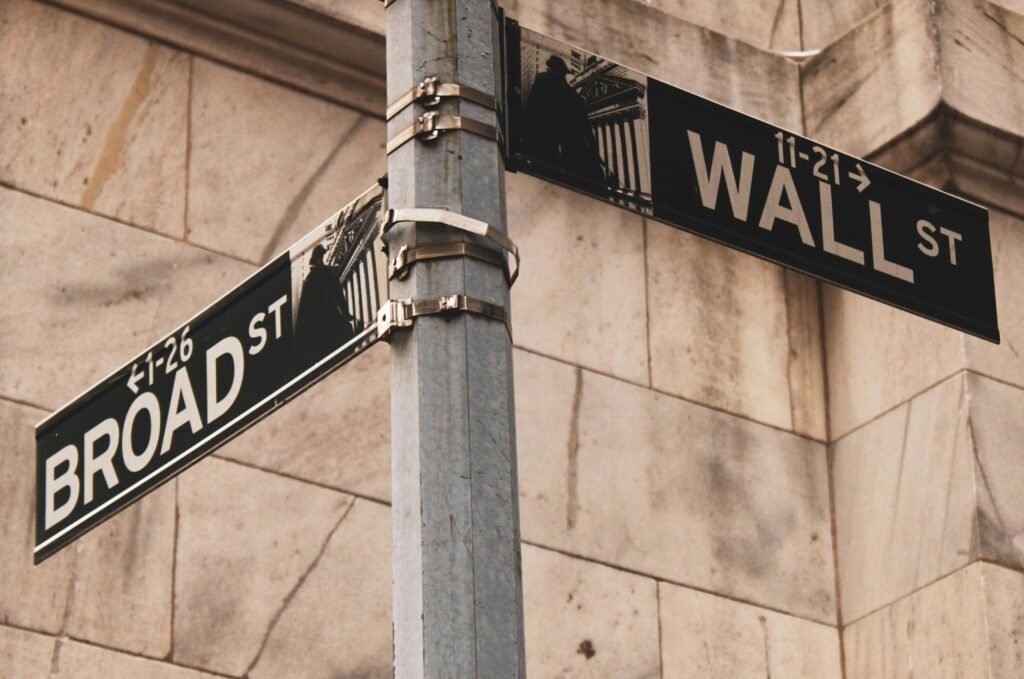
Wall Street’s AI-fueled rally hit another speed bump Tuesday as investors moved to lock in profits from some of the market’s strongest performers, triggering sharp swings across major indexes. The latest bout of selling interrupted a brief rebound and underscored how heavily market sentiment remains tied to a small group of influential technology stocks.
Although buyers stepped in before the closing bell, the session reflected growing sensitivity to valuations after months of outsized gains in artificial intelligence and semiconductor shares.
Chipmakers Lead the Retreat
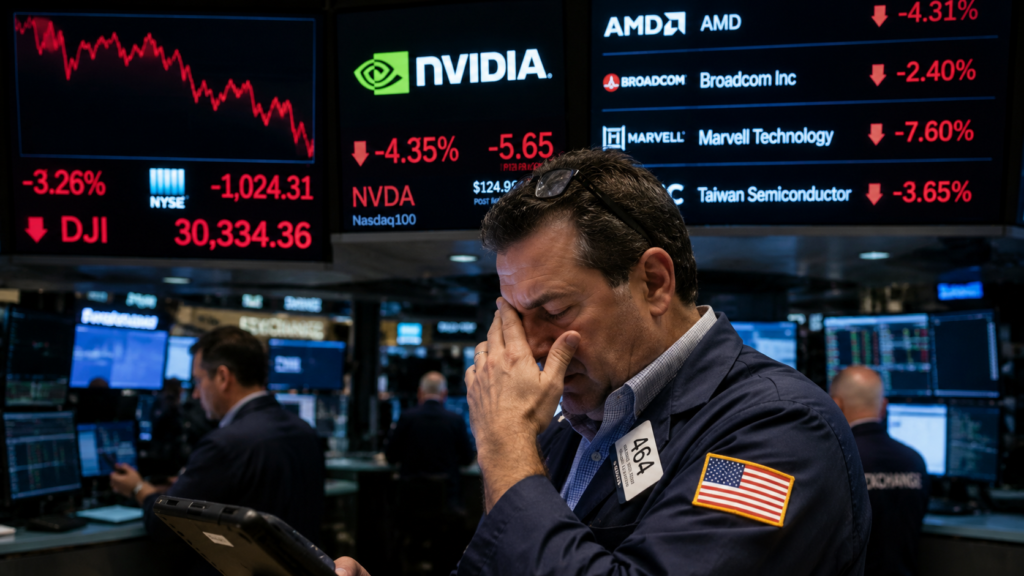
The Nasdaq Composite opened higher before tumbling more than 3.6% during intraday trading. A late-session recovery trimmed the losses, but the index still closed down 0.97%.
The S&P 500 experienced a similar reversal, recovering from a decline of more than 2.2% to finish lower by just 0.26%. In contrast, the Dow Jones Industrial Average gained 86 points, or 0.17%, highlighting a shift toward sectors with less exposure to technology.
Chipmakers absorbed most of the selling pressure. A closely watched semiconductor index dropped nearly 2% after plunging more than 8.5% earlier in the day. Nvidia, currently the largest company in the S&P 500 by market value, finished down just 0.2% after recovering from a decline exceeding 4%. Marvell Technology fell 7.6%, while Broadcom ended 1.1% lower.
The pullback follows a remarkable run for the sector. An exchange-traded fund tracking technology stocks surged roughly 20% in April and another 20% in May before retreating about 5% this month, reflecting investors’ efforts to reassess valuations after the AI boom’s rapid ascent.
Investors Shift Focus Beyond AI
Market professionals largely viewed the sell-off as a pause rather than a change in the broader investment thesis surrounding artificial intelligence.
Bill Northey, senior investment director at US Bank Asset Management, said periods of consolidation are common after exceptional market performance. His assessment reflects a broader view on Wall Street that investor enthusiasm may be cooling temporarily, but demand for AI infrastructure and advanced computing remains firmly in place.
Beneath the headline declines, market breadth painted a more constructive picture. More than 350 stocks in the S&P 500 finished higher even as the benchmark index closed lower, suggesting weakness was concentrated among a handful of mega-cap technology companies rather than spreading across the broader market.
SpaceX IPO and Economic Factors Add Pressure
Another factor influencing trading activity is the anticipated SpaceX initial public offering. Some investors appear to be preserving capital or repositioning portfolios ahead of what is expected to be one of the most closely watched public offerings of the year.
Meanwhile, lower oil prices helped ease inflation concerns and pushed Treasury yields modestly lower. Even so, the benchmark 10-year Treasury yield remains above 4.5%, a level that continues to compete with equities for investor capital and can weigh on high-growth sectors such as technology.
Outlook
Despite the recent turbulence, the broader market remains firmly in positive territory for the year. Since reaching record highs on June 2, the S&P 500 has declined about 3% while the Nasdaq has fallen roughly 5%, yet both indexes continue to hold substantial year-to-date gains. For many investors, the recent weakness represents a valuation reset rather than a collapse in confidence. As earnings expectations, interest rates, and AI spending trends continue to shape sentiment, volatility is likely to remain part of the market landscape, GrowBusinessMag reports.