
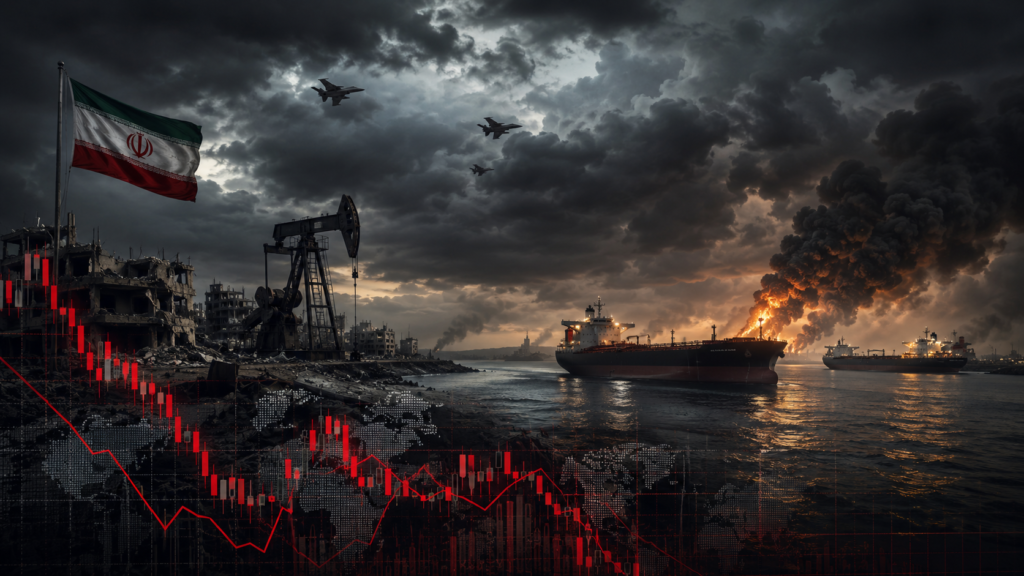
Financial markets are struggling to balance geopolitical risk against hopes for a diplomatic breakthrough as the US-Iran conflict intensified this week. US forces launched a second round of airstrikes on Iran on June 10-11, 2026, prompting Iranian retaliation against Gulf states and Jordan. With former President Donald Trump vowing additional strikes Thursday if Iran rejects a peace deal, investors are increasingly focused on the economic fallout rather than the military developments alone.
Oil Markets Remain Focused on Supply Risks
The biggest concern for global markets remains energy security. A tanker attack in the Gulf of Oman and Iran’s threat to close the Strait of Hormuz have elevated fears of supply disruptions. The waterway carries roughly one in every five barrels of oil traded globally, making it one of the most critical chokepoints in the world economy.
Despite these risks, Brent crude settled at $88.94, down 2.71%, as traders reacted to reports suggesting potential ceasefire discussions. The decline highlights a market caught between immediate supply concerns and expectations that diplomacy could prevent a prolonged disruption.
Stocks Reflect Rising Uncertainty
Equity markets responded negatively as investors reduced exposure to risk assets. The S&P 500 closed at 7,266.99, down 1.62%, while the Nasdaq fell 1.98% to 25,169.50. The Dow Jones Industrial Average dropped 1.87% to 49,918.78.
The selloff reflects concerns that higher energy costs could squeeze corporate margins, slow consumer spending, and complicate central bank policy. Technology stocks, which are particularly sensitive to interest-rate expectations and growth forecasts, led declines.
Precious Metals Fail to Attract Strong Safe-Haven Demand
Interestingly, traditional safe-haven assets did not rally. Gold fell 0.45%, while silver declined 0.54%. Investors appeared more focused on inflation data and the possibility of future rate hikes than on geopolitical hedging.
Meanwhile, the US 10-Year Treasury yield remained elevated at 4.52%, suggesting bond investors continue to expect persistent inflation pressures despite escalating geopolitical tensions.
Strait of Hormuz Threat Extends Beyond Energy
For businesses, the Strait of Hormuz risk reaches far beyond oil markets. Any disruption could increase shipping costs, delay deliveries, and create bottlenecks across manufacturing, retail, and industrial supply chains. Companies with significant exposure to Middle East trade routes may face rising transportation and insurance expenses if tensions continue.
As GrowBusinessMag readers assess the situation, the key indicators to watch are developments around the Strait of Hormuz, additional military actions, and shifts in energy prices. Markets currently appear to be pricing in a contained conflict, but any threat to global energy flows could quickly change that outlook and trigger broader volatility across asset classes.