
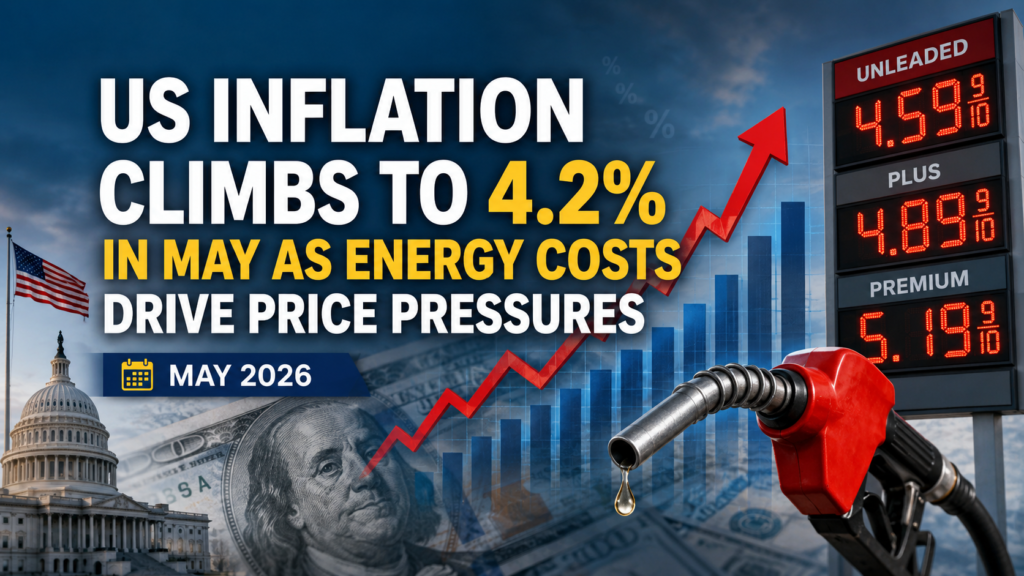
Rising fuel costs pushed US inflation above the 4% mark in May for the first time in three years, adding fresh pressure on households already grappling with elevated living expenses. According to the Bureau of Labor Statistics, the Consumer Price Index (CPI) increased 4.2% from a year earlier, up from 3.8% in April, while monthly prices rose 0.5%.
The latest inflation reading suggests that geopolitical tensions and energy market disruptions are once again becoming key drivers of consumer prices, even as broader inflation trends remain comparatively restrained.
Energy Prices Lead Monthly Increase
Consumer prices climbed 0.5% in May, in line with economists’ forecasts. Energy costs were responsible for roughly 60% of the monthly increase, making them the primary force behind the stronger inflation reading.
Oil market volatility linked to the conflict involving the United States, Israel, and Iran contributed to higher gasoline prices, which quickly filtered through to transportation and household budgets. The impact was significant enough to outweigh easing pressures in several other consumer categories.
Food inflation, meanwhile, showed signs of cooling. Overall food prices increased 0.2% during the month, while grocery prices edged up just 0.1%, both slower than April’s gains. That moderation helped prevent a broader acceleration in consumer costs.
Core Inflation Remains More Stable
Beneath the headline figure, inflation trends appeared less alarming. Core CPI, which excludes food and energy prices, rose 0.2% from April and registered a 2.9% annual increase, coming in below many market expectations.
Sung Won Sohn, professor of finance and economics at Loyola Marymount University, noted that the latest rise was concentrated primarily in energy, particularly gasoline, rather than spreading widely across the economy. From a policy perspective, that distinction matters because broad-based inflation is often harder to contain than a sector-specific price shock.
The divergence between headline and core inflation suggests that, for now, energy remains the central inflation story rather than a widespread surge in consumer demand.
Federal Reserve Faces Growing Pressure
The report marks the first major inflation release since Kevin Warsh took over as Federal Reserve chair, succeeding Jerome Powell. The timing places added attention on how policymakers respond if price pressures remain elevated through the summer.
With inflation moving higher and the labor market still showing resilience, many economists expect interest rates to remain unchanged in the near term. Some analysts have also raised the possibility of tighter monetary policy should inflation continue to drift upward.
Consumers are already feeling the strain. Inflation-adjusted wages fell 0.7% annually in May, worsening from a 0.3% decline in April, according to government data. As paychecks lose purchasing power, discretionary spending could face increasing pressure in the months ahead.
Outlook
While current forecasts suggest inflation will remain well below the 9.1% peak reached in 2022, May’s data serves as a reminder that energy shocks can quickly alter the economic landscape. If fuel prices remain elevated, inflation may stay above the Federal Reserve’s comfort zone for longer than expected, creating a challenging environment for both policymakers and consumers, GrowBusinessMag reports.