A High-Flying AI Fund Reverses Course
A dramatic reversal at a highly leveraged US hedge fund has intensified concerns about speculative artificial intelligence investments and the growing concentration of global stock markets.
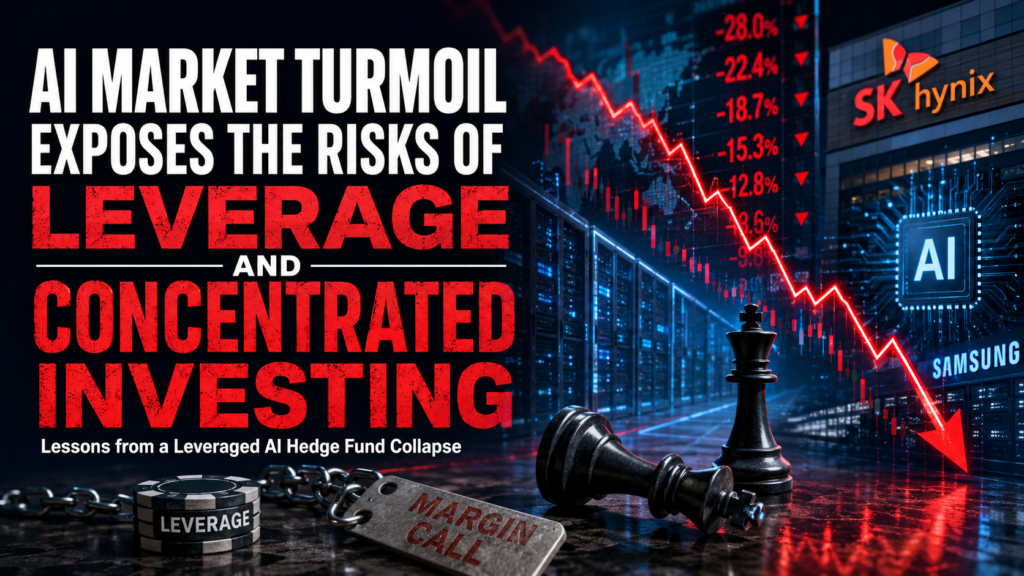
Situational Awareness, a San Francisco-based hedge fund founded by former OpenAI researcher Leopold Aschenbrenner, was forced to sell most of its publicly traded holdings after suffering heavy losses and receiving margin calls from lenders. The fund had reportedly gained more than 400% earlier this year before several of its AI-focused investments declined sharply.
Citadel, one of the world’s largest hedge funds, acquired much of the fund’s public portfolio. Situational Awareness reportedly continues to hold private investments, including a significant stake in AI company Anthropic.
Leverage Magnifies the Damage
Situational Awareness built its strategy around the expectation that artificial intelligence demand would drive sustained spending on data centers, memory chips, cloud computing and electricity infrastructure. Its investments included South Korean chipmaker SK Hynix, data-storage company Sandisk and AI cloud provider Nebius.
The fund also relied heavily on borrowed money to increase its market exposure. Leverage can strengthen returns when prices rise, but it can quickly deepen losses when markets turn. As portfolio values fall, lenders may issue margin calls, requiring investors to provide more collateral or sell assets.
Industry observers note that the fund’s experience illustrates a familiar market risk: concentrated positions become especially vulnerable when they are financed with debt and several related assets decline at the same time.
South Korea Becomes a Pressure Point
The fund’s difficulties followed sharp declines in technology and semiconductor stocks, particularly in South Korea. According to figures cited in the original CNN report, the KOSPI index rose as much as 116% from the beginning of the year to its June 22 peak before falling 28%.
SK Hynix, one of the fund’s major investments, dropped about 40% from its late-June high before rebounding after reports that Situational Awareness had sold its shares.
South Korea’s market is particularly exposed to concentrated selling because SK Hynix and Samsung together account for roughly half of the KOSPI’s value. The index has triggered nine circuit breakers this year as leveraged trading by institutions and individual investors intensified market swings.
South Korean authorities have responded by introducing restrictions on leveraged exchange-traded funds tied to individual stocks.
Broader Markets Remain Resilient
The volatility has also reached US semiconductor shares. The PHLX Semiconductor Index gained almost 90% during the second quarter before falling more than 20% in July, placing it in a technical bear market.
Even so, the turmoil does not necessarily mean the broader AI investment boom is collapsing. The S&P 500 remained less than 3% below its record high, while major US indexes moved higher on Friday as investors returned to technology stocks.
The episode instead highlights the danger of combining borrowed money with highly concentrated investments. When crowded trades reverse, forced selling can spread volatility across markets and affect hedge funds, pension managers and individual retirement accounts.