
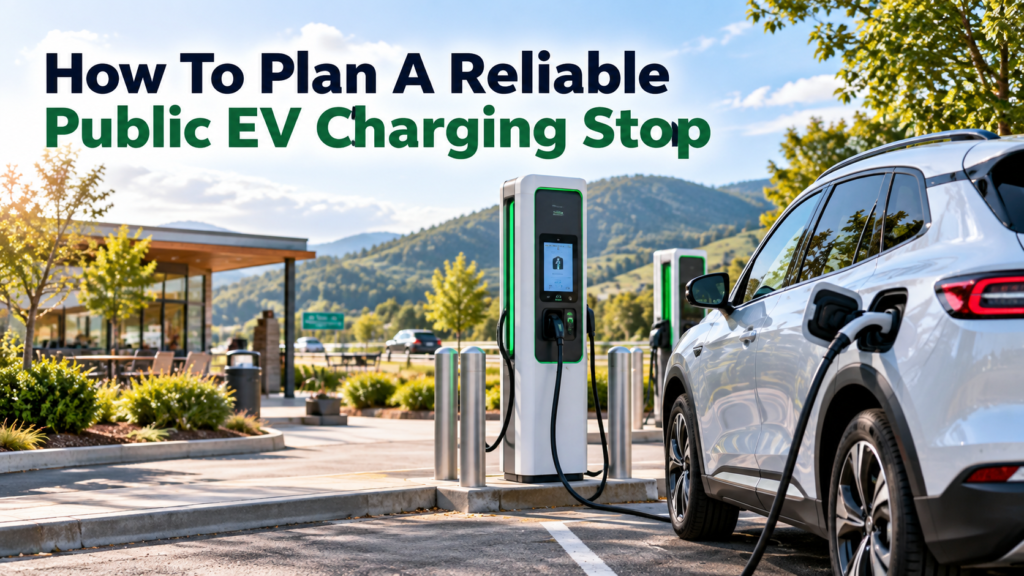
Public EV charging is easiest when it is planned as part of the drive rather than treated as a last-minute errand. Before taking a longer trip, understand your vehicle’s charging capabilities, choose practical stops, and leave room to adjust when a station is busy or unavailable. Start with a breakdown of DC fast charging to get a clearer picture of why some public chargers can add range more quickly than others.
A reliable stop is about more than selecting the highest power rating on a map. The best choice may be a site with several stalls, dependable access, nearby restrooms, and enough remaining battery range to continue to another option if needed.
Why Charging Stop Planning Matters
Charging stops affect the entire route. A charger can be listed online but occupied, temporarily unavailable, blocked by another vehicle, or affected by a local outage. Planning reduces the pressure to make a rushed decision when the battery is low.
Think about the stop as a break for both the vehicle and its occupants. A location near food, restrooms, a store, or indoor seating may be more useful than a faster charger in an isolated lot. For communities and site hosts, the planning considerations for public charging locations also show why access, siting, and user needs matter.
Check Your Vehicle’s Charging Needs
Every EV has limits that determine how it charges. A vehicle can connect to a high-power station, but it will only accept as much power as its battery system and current conditions allow. Check your owner’s manual or vehicle display for the connector type, maximum DC charging capability, and estimated range.
Plan for the next leg, not necessarily a full battery
Estimate how much energy you need to reach the next dependable stop or your destination with a comfortable cushion. Charging often slows as the battery approaches a high state of charge, so adding only the range you need can be more efficient on a road trip. Avoid arriving with only a few miles of estimated range remaining.
Choose A Practical Location
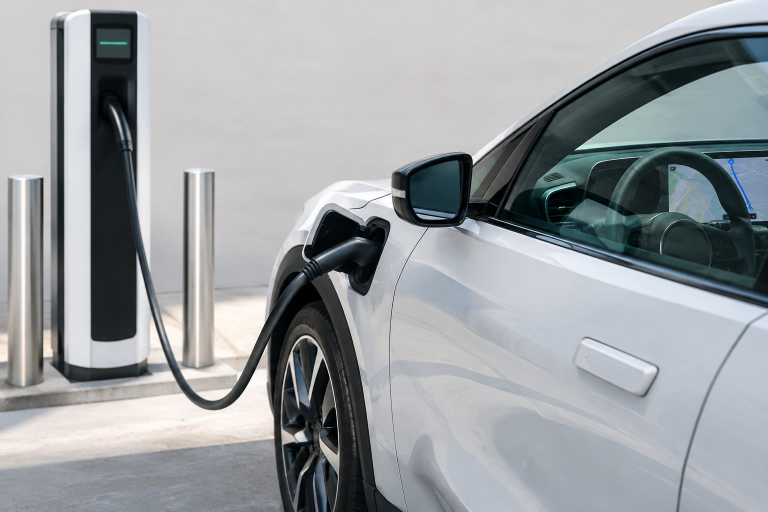
The fastest listed charger is not automatically the best stop. Favor locations that are easy to reach from your route and have clear signs, visible parking spaces, multiple charging stalls, and routine activity. Good lighting is especially valuable for evening stops.
- Confirm the station is near the road or highway you are already using.
- Look for nearby restrooms, food, shade, or a place to wait comfortably.
- Consider whether the site has room to maneuver without blocking traffic.
- Check that accessible routes and adjacent spaces can remain clear.
Check Live Charger Status Before Leaving
Use your vehicle’s navigation system or a charging map shortly before departure to review the station’s current status. Look for the number of available stalls, operating hours, connector compatibility, reported outages, and recent driver comments when available.
Live information is useful, but it is not a guarantee. Status can change while you are driving, which is why a primary stop should always be paired with another reachable choice.
Build A Backup Plan
Choose a second charging location before you begin the trip, then make sure you can reach it without draining your reserve. Save its address or add it as an alternate destination in navigation. A backup can be another fast-charging site, or a slower charger in an area where you can safely wait.
For example, if you arrive at a busy station and see a long queue, a prepared driver can redirect to a nearby location instead of waiting until the battery level creates urgency. Flexibility is one of the most useful tools for public charging.
Prepare For Payment And Account Issues
Payment issues can delay a session even when the equipment is working. Keep the appropriate charging apps up to date, verify that each account has a current payment method, and carry a physical payment card when possible. Some sites may use app-based activation, contactless payment, membership access, or a combination of methods.
Reviewing how public EV charging works can help drivers understand common charging levels, connector types, and the basic process for using public equipment. Save customer support information for any network you expect to use on a longer trip.
Use Charging Time Wisely
A charging stop can serve several purposes at once. Take a meal break, stretch, use the restroom, review the next segment of the route, and check current traffic or weather. Return to the vehicle before you have the charge needed for the next leg, especially at busy locations where another driver may be waiting.
Do not remain plugged in longer than necessary. Some sites have parking rules or idle fees, and promptly moving the vehicle helps keep shared equipment available.
Focus On Safety And Accessibility
Park fully within the marked space and follow the instructions shown on the charger. Keep charging cables as clear of walking paths as possible, avoid blocking adjacent stalls or accessible routes, and stay aware of moving vehicles in the parking area. At night, choose well-lit sites with visible activity when practical.
If a connector, cable, screen, or pedestal appears damaged, do not attempt to repair it. End the session if necessary and report the issue through the support method shown at the station.
Plan For Weather And Traffic Changes
Temperature, precipitation, wind, elevation changes, and stop-and-go traffic can affect energy use. Treat the vehicle’s projected range as an estimate, not a promise, and leave additional room in the plan during severe heat, cold, snow, or heavy rain.
Before leaving, check road conditions and identify a comfortable indoor waiting option when the weather is poor. Winter travelers should also keep practical emergency supplies in the vehicle, such as water, warm layers, and a blanket.
A Simple Pre-Trip Checklist
- Confirm the route and destination.
- Check the current battery level and expected range.
- Verify connector compatibility and charging limits.
- Select a primary charging stop with useful amenities.
- Save a backup station that remains within reach.
- Review live availability, hours, and payment options.
- Check traffic, weather, and road conditions.
- Leave enough battery range to change the plan if needed.
Conclusion
Reliable public EV charging comes down to simple preparation. Check what your vehicle needs, choose a practical location, confirm live details before departing, and keep a reachable backup ready. With a flexible plan and a reasonable range cushion, charging stops can become a predictable part of the trip rather than a source of stress.