
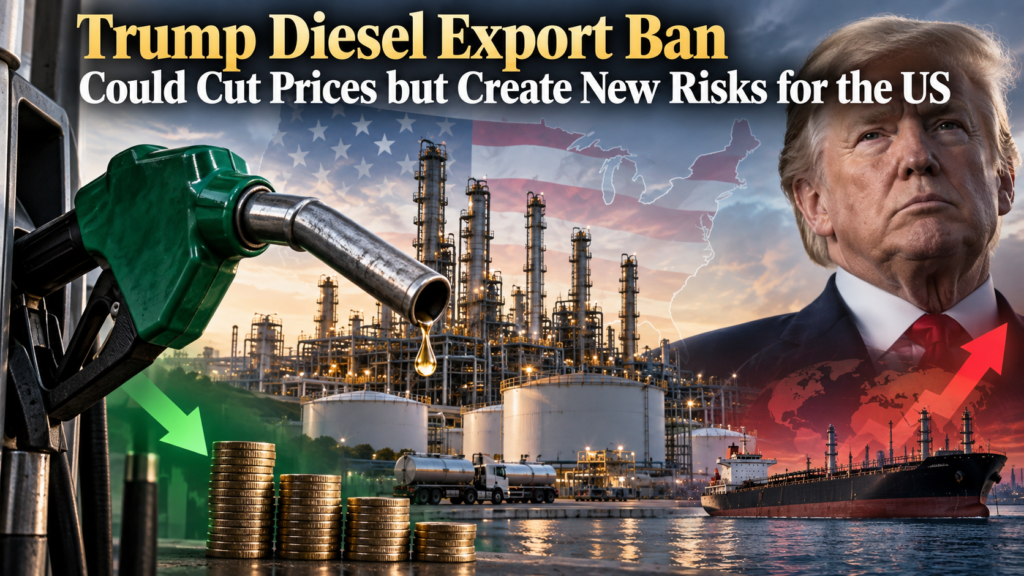
A possible Trump diesel export ban is drawing attention as record fuel costs increase pressure on American farmers, trucking companies and consumers. Some Republican lawmakers have urged President Donald Trump to restrict US diesel exports so more fuel remains available domestically. However, energy-market specialists warn that the policy could produce uneven price relief while creating new problems for refineries, coastal states and global fuel markets.
As of September 22, 2026, the Trump administration has not announced a diesel export ban.
Increase Domestic Diesel Supplies
Restricting exports could temporarily increase diesel availability in major US refining regions. Areas such as the Gulf Coast and Midwest could experience lower wholesale prices because fuel normally shipped overseas would remain in domestic markets.
The proposal comes during an exceptional global supply squeeze. Reuters reported on September 21 that US retail diesel prices had exceeded $6 per gallon while American fuel inventories remained unusually low. Global supplies have also been disrupted by conflict in the Middle East and refinery disruptions linked to the war in Ukraine.
| Area | Potential Effect |
|---|---|
| Gulf Coast | More local diesel supply |
| Midwest | Possible short-term price relief |
| East Coast | Higher exposure to global prices |
| Refining sector | Reduced incentive to maximize output |
Protect Regional Fuel Markets
An export restriction would not necessarily reduce diesel prices nationwide. The East and West Coasts rely more heavily on fuel imports and have limited infrastructure for moving large quantities of Gulf Coast diesel across the country.
If US exports were removed from the international market, global diesel prices could rise further. Coastal US buyers purchasing fuel at internationally linked prices could therefore face higher costs even while prices decline elsewhere.
Maintain Refinery Production
Energy analysts also warn that export restrictions could reduce refinery incentives. US refinineries currently operate at very high utilization rates while helping compensate for lost international supply. Reuters reported that US refineries were operating near 97% utilization during the current diesel shortage.
If refiners lose access to overseas buyers, they could eventually process less crude. Because refineries simultaneously produce diesel, gasoline and jet fuel, lower refinery output could tighten supplies across several fuel markets.
Reduce Global Supply Disruptions
The underlying diesel problem extends beyond US export policy. Russia has restricted diesel exports following refinery disruptions, while Middle Eastern supply interruptions have tightened global markets. Industry analysts cited by Reuters expect diesel inventories to remain constrained into 2027.
Conclusion
A Trump diesel export ban could increase domestic supply and lower prices in some regions temporarily, but its nationwide impact remains uncertain. Higher global prices, coastal-market exposure and reduced refinery output could offset part of the initial benefit. Longer-term diesel prices will also depend heavily on refinery capacity, inventories and international supply disruptions.