Genesis has become an increasingly familiar name in the luxury-car market, but many shoppers still ask the same basic question: who makes Genesis cars?
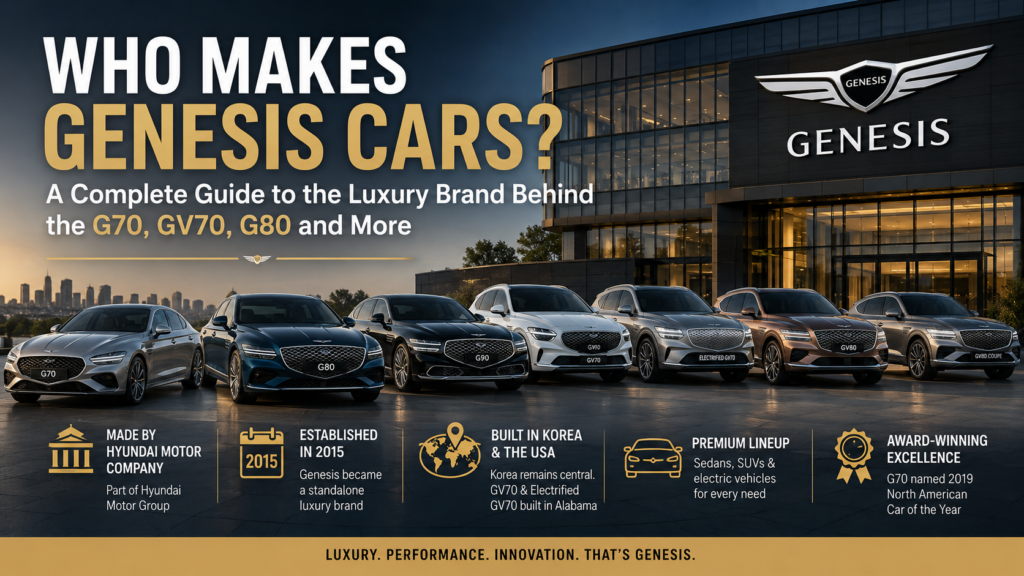
Genesis is the luxury automotive brand of Hyundai Motor Company, which is part of the larger Hyundai Motor Group. That corporate relationship places Genesis in the same wider organization as Hyundai and Kia, but Genesis operates as a distinct premium marque with its own vehicles, styling, branding, product strategy and customer experience.
The distinction is important for anyone researching a Genesis purchase. Modern Genesis vehicles are not simply Hyundai models fitted with different badges. Genesis was established as a standalone luxury brand in 2015 after the Genesis name had previously been used on a Hyundai sedan. Since then, the company has developed a full range of luxury sedans, SUVs and electric vehicles designed to compete in established premium-market segments. Hyundai Motor Group identifies November 2015 as the point when Genesis officially began operating as Korea’s dedicated luxury automotive brand.
Understanding who owns Genesis, where its cars are built and how it relates to Hyundai and Kia can make it easier to evaluate the brand when comparing luxury vehicles.
Understand Who Owns and Manufactures Genesis Cars
Genesis operates under Hyundai Motor Company, the South Korean automaker behind the Hyundai vehicle brand. Hyundai Motor Company itself belongs to Hyundai Motor Group, the wider automotive organization that also includes Kia.
That makes Hyundai Motor Company the most direct answer to the question of who makes Genesis cars.
Genesis benefits from the engineering resources, manufacturing infrastructure and technology development available within the broader Hyundai organization, but its vehicles are designed for the luxury market rather than Hyundai’s mainstream product range.
Genesis officially presents itself as a luxury automotive brand and markets a dedicated lineup of premium sedans, SUVs and electric vehicles. Its current U.S. website separates Genesis products entirely from Hyundai-branded vehicles, reinforcing that Genesis operates as an individual consumer-facing marque rather than as a Hyundai trim level.
For car shoppers, a useful way to think about the relationship is this:
Hyundai Motor Group is the broader corporate family, Hyundai Motor Company is the automaker behind Genesis, and Genesis is its luxury vehicle brand.
Kia belongs to the same larger automotive group, but Kia does not manufacture or own Genesis.
Trace the Genesis Brand From Hyundai Model to Independent Luxury Marque
The Genesis name existed before Genesis became a separate luxury brand.
Hyundai introduced a sedan named Genesis in 2008. The vehicle was originally sold with Hyundai branding and helped establish the Genesis name in the premium sedan market. Hyundai Motor Group documents 2008 as the beginning of the model that would later become closely associated with the standalone Genesis brand.
The major change came in November 2015, when Hyundai Motor Group established Genesis as a dedicated luxury automotive marque. That move transformed Genesis from the name of an individual Hyundai vehicle into the identity of an entire premium brand.
Follow the Hyundai Genesis to Genesis G80 Transition
The history of the current G80 illustrates the transition particularly well.
The original Hyundai Genesis sedan arrived in 2008. Following the creation of Genesis as an independent luxury marque in 2015, the sedan adopted the G80 name in 2016. Hyundai Motor Group specifically records that progression from Genesis to G80.
That history can occasionally confuse used-car shoppers.
A used vehicle marketed as a Hyundai Genesis comes from the period when Genesis was still a model under the Hyundai name. A Genesis G80, by contrast, belongs to the dedicated Genesis luxury brand.
The connection is historical, but the branding structure changed substantially after 2015.
Recognize the G90’s Role in Establishing the Brand
Genesis also used a flagship luxury sedan to define its new position in the market.
When Genesis became an independent marque, the company introduced the EQ900 in South Korea, known internationally as the Genesis G90. Hyundai Motor Group identifies the vehicle as the brand’s first flagship sedan after the Genesis marque was established.
The G80 followed as another foundational model, and Genesis eventually expanded beyond sedans into SUVs and fully electric vehicles.
That development helped transform Genesis from a sedan-focused luxury newcomer into a broader premium automotive brand.
Find Where Genesis Vehicles Are Manufactured
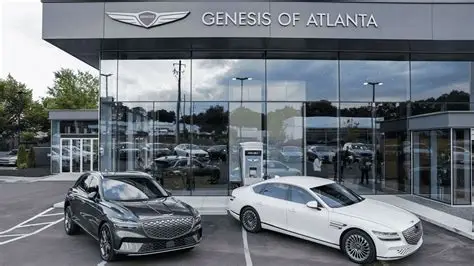
Genesis is a Korean luxury brand, and South Korea remains an important production base for its vehicles. However, Genesis models are not manufactured exclusively in South Korea.
Manufacturing locations depend on the vehicle, model year and destination market.
Locate Genesis Production in South Korea
Genesis has longstanding manufacturing ties to Hyundai Motor Company’s production operations in Ulsan, South Korea.
The brand’s Korean origins remain central to its identity, while Hyundai Motor Company’s established manufacturing infrastructure gives Genesis access to large-scale production capabilities.
Genesis vehicles built in Korea can be exported to international markets, including North America.
Buyers who specifically want to know where an individual Genesis was assembled should check the certification label and vehicle documentation rather than assuming that every vehicle carrying the Genesis badge came from the same factory.
Production allocation can change as manufacturers update plants, introduce new generations and shift regional supply strategies.
Identify Genesis Production in Montgomery, Alabama
Genesis production has also expanded to the United States.
Hyundai Motor Manufacturing Alabama, commonly known as HMMA, began assembling the Genesis Electrified GV70 in Montgomery, Alabama, in February 2023. HMMA described it as the first Genesis model assembled in the United States and the first Genesis vehicle assembled outside South Korea.
The Montgomery operation subsequently expanded its Genesis production. HMMA reported that production of the gasoline-powered Genesis GV70 began at the plant in May 2023. By 2025, the company listed both the Genesis GV70 and Electrified GV70 among the models being produced at the Alabama facility.
For U.S. shoppers, this means some Genesis SUVs may be domestically assembled, while other Genesis vehicles continue to come from South Korean factories.
Review the Current Genesis Model Lineup
Genesis has grown considerably since becoming a standalone brand.
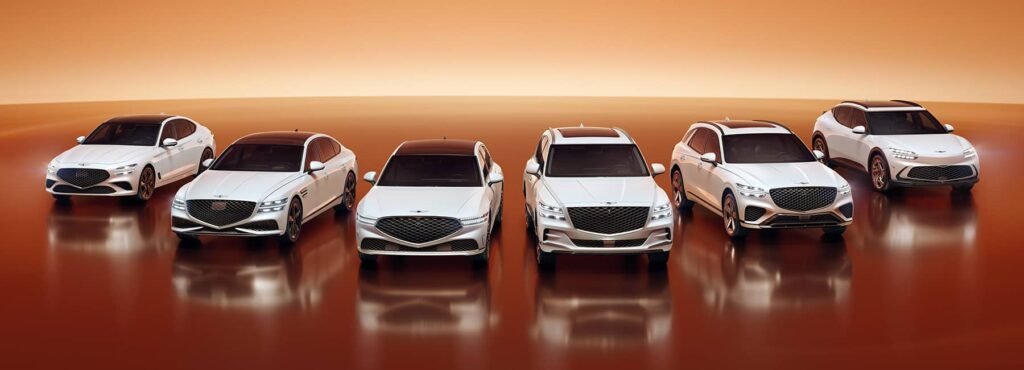
As of August 2026, Genesis’ U.S. consumer lineup includes the G70, G80, G90, GV60, GV70, Electrified GV70, GV80 and GV80 Coupe, with model-year availability varying across individual vehicles. Genesis’ official U.S. shopping tools currently display these vehicles across its sedan, SUV and electric categories.
Genesis G70
The G70 is Genesis’ compact luxury sport sedan.
It sits at the smaller end of the brand’s sedan range and targets shoppers looking for a more performance-oriented luxury sedan rather than a large executive vehicle.
Genesis currently offers the 2026 G70 in the United States and describes it as a luxury compact sedan.
Within the lineup, the G70 serves a different role from the larger G80 and flagship G90, giving Genesis representation in several traditional premium-sedan categories.
Genesis G80
The G80 is Genesis’ midsize luxury sedan and arguably the model with the closest connection to the brand’s origins.
Its lineage reaches back to the original Hyundai Genesis sedan launched in 2008. Following the establishment of the Genesis luxury brand, the vehicle became the G80 in 2016.
The current Genesis U.S. website lists the 2027 G80, demonstrating that the model remains a central part of the company’s sedan portfolio.
For buyers, the G80 occupies the middle ground between the more compact G70 and the larger G90.
Genesis G90
The G90 is Genesis’ full-size flagship sedan.
Its role is to represent the highest level of the brand’s conventional sedan range, with an emphasis on premium comfort, technology and executive-car positioning.
Genesis currently markets the 2026 G90 in the United States.
The G90 is also historically significant because its predecessor helped establish the identity of Genesis immediately after the luxury marque was formed.
Genesis GV60
The GV60 is a fully electric Genesis crossover.
Rather than being a gasoline model converted into an EV derivative, the GV60 occupies a dedicated place in Genesis’ electric-vehicle range.
Genesis’ U.S. listings continue to include the GV60 as an electric model in 2026.
Its smaller crossover format gives electric-vehicle shoppers an alternative to the larger Electrified GV70.
Genesis GV70
The GV70 is a compact luxury SUV and an important part of Genesis’ crossover portfolio.
It competes in one of the most active areas of the premium automotive market, where buyers often prioritize the versatility of an SUV without moving into a large three-row vehicle.
The 2026 GV70 remains part of the Genesis U.S. lineup.
The GV70 is also notable because Hyundai Motor Manufacturing Alabama currently identifies it as one of the Genesis vehicles manufactured at its Montgomery plant.
Genesis Electrified GV70
The Electrified GV70 brings battery-electric power to the GV70 family.
Genesis currently markets the 2026 Electrified GV70 in the United States. The company lists it separately from the gasoline GV70, reflecting its distinct electric drivetrain and EV-focused specifications.
The model also holds an important place in Genesis manufacturing history because it became the first Genesis assembled in the United States when production began at Hyundai Motor Manufacturing Alabama in 2023.
Genesis GV80
The GV80 is the brand’s midsize luxury SUV.
It represents the larger, more upscale end of the conventional Genesis SUV portfolio and is currently offered in the United States for the 2026 model year.
Genesis offers multiple GV80 configurations, giving shoppers options across different equipment and powertrain levels.
The GV80’s introduction was particularly important for Genesis because it expanded the brand beyond the sedan market and into the highly competitive premium SUV category.
Genesis GV80 Coupe
The GV80 Coupe is a more performance- and design-oriented derivative of the GV80.
Genesis currently lists a 2026 GV80 Coupe alongside the standard GV80 in its U.S. vehicle offerings.
Its sloping profile gives Genesis a model aimed at shoppers who want SUV practicality combined with a more coupe-inspired appearance.
Compare Genesis With Hyundai and Kia
One of the most common misconceptions about Genesis is that its vehicles are simply expensive Hyundais.
The corporate connection is real, but that description oversimplifies how the brands are positioned.
Separate Genesis From Hyundai
Hyundai serves a broad mainstream automotive market, while Genesis is specifically positioned as a luxury brand.
Genesis develops its vehicles around premium-market expectations, including upscale design, interior materials, technology, comfort and customer experience. Its U.S. site explicitly describes its products as luxury SUVs, sedans and electric vehicles.
The two brands may benefit from capabilities developed within the same automotive organization, but they use different branding, model names and market strategies.
A Genesis G80, for example, is not sold as a Hyundai G80. It belongs entirely to the Genesis marque.
Distinguish Genesis From Kia
Kia also belongs to Hyundai Motor Group, but Genesis is not a Kia subsidiary.
Kia operates its own vehicle lineup, branding strategy and market identity. Genesis serves as the group’s dedicated luxury marque, while Kia competes across broader mainstream and increasingly premium-adjacent segments.
The shared corporate family can allow technologies, manufacturing knowledge and platforms to benefit from group-level development, but each brand presents products for its own target customer.
Recognize Genesis’ Distinctive Design Language
Genesis has developed recognizable visual elements to help separate its vehicles from Hyundai and Kia.
The brand frequently uses its Crest Grille and signature Two-Line lighting treatment. These styling themes appear across current Genesis products and provide continuity between sedans and SUVs. Genesis specifically highlights such features in its current vehicle descriptions.
That consistency helps Genesis establish a family appearance in much the same way longstanding luxury manufacturers use recurring grille, lighting and body-design signatures.
Evaluate Genesis’ Luxury-Market Position
Genesis entered the luxury market much later than many of the brands against which its products are compared.
BMW, Mercedes-Benz, Audi, Lexus, Cadillac and other premium manufacturers have considerably longer histories in their respective luxury markets. Genesis has therefore had to establish recognition in a relatively short period.
Its strategy has involved expanding from executive sedans into compact sport sedans, luxury SUVs and electric vehicles.
The result is a range that now allows Genesis to participate in several major premium-car categories rather than relying on a single flagship model.
Consider the Brand’s Growing Industry Recognition
Genesis has received industry recognition during its development as an independent luxury brand.
One notable example came when the Genesis G70 won the 2019 North American Car of the Year award. Hyundai Motor Group documents the award as an important milestone for the model and brand.
Such recognition does not guarantee that every Genesis will be the right vehicle for every shopper, but it provides evidence that the brand’s products have been evaluated competitively within the broader automotive market.
Genesis has also continued to develop newer products and derivatives while maintaining the G70, G80 and G90 sedan structure established during its early years.
Judge Genesis on the Individual Vehicle
For buyers, brand reputation should be only one part of the purchasing decision.
A shopper considering a Genesis should compare the specific vehicle against similarly priced competitors based on measurable factors such as:
- purchase price and trim equipment;
- warranty terms;
- crash-test information;
- fuel economy or electric range;
- driving characteristics;
- passenger and cargo space;
- dealer availability;
- maintenance requirements;
- insurance costs;
- resale expectations; and
- ownership services available in the buyer’s location.
These factors can differ substantially between a G70, GV70, G90 and Electrified GV70.
A broad statement about the Genesis brand cannot substitute for evaluating the exact model and model year being purchased.
Verify Manufacturing Details Before Buying a Specific Genesis
If country of manufacture matters to you, verify the actual vehicle rather than relying solely on general information about the brand.
Genesis vehicles may be sourced from different factories depending on model year, market and production planning. The GV70 and Electrified GV70 are good examples because both have been produced in Montgomery, Alabama, while Genesis also has extensive manufacturing operations connected to South Korea.
The vehicle’s certification label, window sticker and VIN-related documentation can provide more specific information about an individual example.
This is especially relevant when researching used vehicles. Two Genesis vehicles with the same model name but different model years may not necessarily have identical production histories, specifications or available features.
Consider the Hyundai Relationship as a Strength, Not the Whole Story
Knowing who makes Genesis cars provides useful insight into the company’s engineering and manufacturing foundation.
Genesis did not begin as a small independent luxury startup. It was created by Hyundai Motor Company and operates with access to the resources of a major global automotive organization.
At the same time, Genesis has spent more than a decade developing an identity separate from Hyundai’s mainstream brand.
Its own naming system, dedicated sedans and SUVs, luxury-focused styling and growing electric lineup show that Genesis is intended to stand independently in consumers’ minds.
For GrowBusinessMag readers researching a potential purchase, the most useful conclusion is that the Hyundai connection explains who stands behind Genesis, while the individual Genesis model determines whether the vehicle actually meets a buyer’s needs.
Frequently Asked Questions About Who Makes Genesis Cars
Who makes Genesis cars?
Hyundai Motor Company makes Genesis vehicles. Genesis is Hyundai Motor Company’s dedicated luxury automotive brand and operates within the wider Hyundai Motor Group. The brand was formally established as a separate luxury marque in November 2015.
Is Genesis just a luxury Hyundai?
Genesis is owned by Hyundai Motor Company, but it operates as a distinct luxury brand rather than as a Hyundai trim level. Genesis has its own vehicle lineup, branding, design identity and luxury-market positioning.
Is Genesis owned by Kia?
No. Kia does not own Genesis. Kia and Genesis are separate automotive brands within the wider Hyundai Motor Group corporate family.
Are Genesis cars made in the United States?
Some are. Hyundai Motor Manufacturing Alabama began producing the Genesis Electrified GV70 in Montgomery in February 2023, making it the first Genesis vehicle assembled in the United States. Production of the gasoline GV70 followed in May 2023, and HMMA currently identifies both vehicles among the models manufactured at the plant.
What Genesis models are available now?
As of August 2026, Genesis’ U.S. lineup includes the G70, G80, G90, GV60, GV70, Electrified GV70, GV80 and GV80 Coupe, although individual model years and availability can vary.
Final Answer: Who Makes Genesis Cars?
Genesis cars are made by Hyundai Motor Company, and Genesis serves as the company’s dedicated luxury automotive brand within Hyundai Motor Group.
The brand has clear Hyundai roots. The Genesis name first appeared on a Hyundai sedan introduced in 2008, but the relationship changed significantly when Genesis was formally launched as a standalone luxury marque in November 2015. The original Genesis sedan subsequently became the Genesis G80, while the G90 helped establish the new brand’s flagship luxury position.
Genesis has since expanded far beyond its sedan origins. Its current U.S. portfolio covers compact and full-size luxury sedans, SUVs, coupe-style SUVs and battery-electric vehicles.
Manufacturing has expanded as well. South Korea remains central to the brand’s production heritage, while the GV70 and Electrified GV70 have also been assembled at Hyundai Motor Manufacturing Alabama in Montgomery. The Electrified GV70 became the first Genesis built outside South Korea when U.S. production began in 2023.
For shoppers, the most important distinction is simple: Genesis shares a corporate and engineering foundation with Hyundai, but it is positioned and operated as a separate luxury brand. Anyone considering a Genesis should therefore evaluate it against other vehicles in its price and luxury segment rather than assuming its ownership structure tells the entire story.