
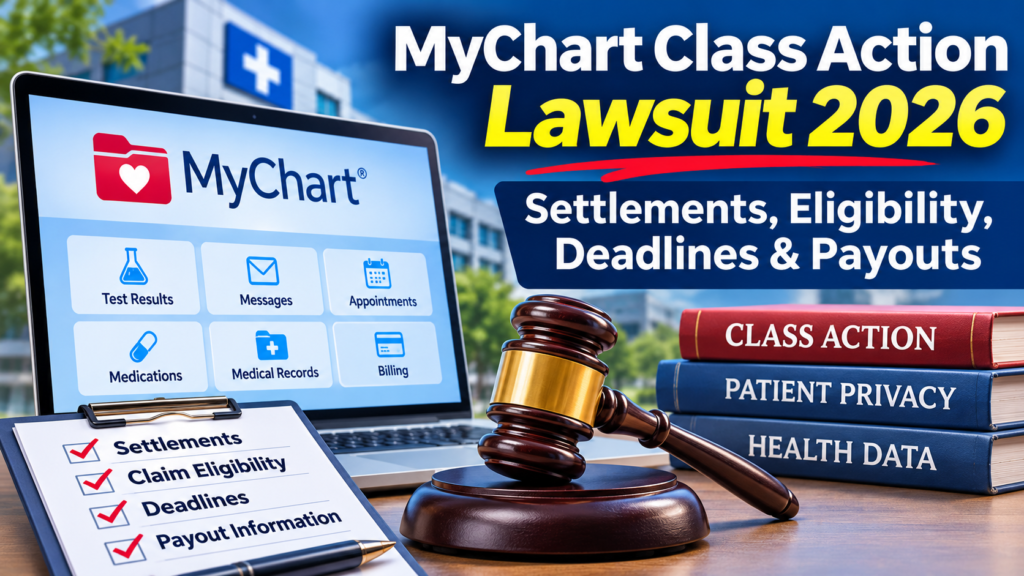
The MyChart class action lawsuit refers to several legal cases involving healthcare organizations accused of improperly sharing patients’ personal and health information through website tracking technologies. These lawsuits primarily concern the alleged use of Meta Pixel, Google tracking tools, and similar technologies on hospital websites and patient portals.
Several healthcare providers, including Wellstar Health System, Cone Health, Inova Health Care Services, and Memorial Health Services, have reached settlements in litigation involving patient privacy allegations. The agreements include multimillion-dollar settlement funds, specific eligibility requirements, and deadlines for affected individuals to submit compensation claims.
MyChart is a patient portal developed by Epic Systems and used by hospitals and healthcare providers throughout the United States. Patients use it to access test results, communicate with medical professionals, schedule appointments, review prescriptions, and manage medical bills.
However, there is no single nationwide MyChart class action settlement that automatically compensates every person with a MyChart account. Most settlements involve particular healthcare organizations, defined time periods, and specific allegations concerning online tracking technologies.
As of November 10, 2026, the $4.25 million Wellstar settlement has a claim deadline of November 10, 2026. Other major settlements, including those involving Inova and Cone Health, have already closed their claim periods.
This guide explains the current MyChart lawsuit settlements, the allegations behind the cases, the requirements for compensation, and the steps patients can take to verify their eligibility.
1. Identify the MyChart Class Action Lawsuits Involving Healthcare Providers
The first step in understanding the MyChart class action lawsuit is identifying which healthcare organization is involved. MyChart is widely used across the healthcare industry, but the privacy lawsuits generally concern individual hospitals and health systems rather than one universal lawsuit covering the entire platform.
Epic Systems develops MyChart, while participating healthcare organizations use the software to provide patients with access to their health information. Each healthcare organization may operate its own patient portal, website, and supporting technology systems.
Many lawsuits allege that third-party tracking technologies collected or transmitted information about patients’ online interactions without legally sufficient authorization. Plaintiffs contend that some of these disclosures violated federal electronic communications laws or state privacy statutes.
Healthcare organizations involved in these cases have generally disputed wrongdoing, and their decisions to settle do not necessarily establish legal liability.
Review the Major MyChart Privacy Settlements
Several significant cases had settlement claim periods during 2026.
| Healthcare organization | Settlement amount | Claim deadline | Current filing status |
|---|---|---|---|
| Wellstar Health System | $4.25 million | November 10, 2026 | Deadline today |
| Inova Health Care Services | Up to $3.147 million | April 6, 2026 | Closed |
| Cone Health | $1.765 million | October 5, 2026 | Closed |
| Memorial Health Services | $750,000 | August 21, 2026 | Closed |
These amounts represent separate settlement funds, not payments guaranteed to individual patients.
Each agreement establishes its own requirements for eligibility, payment calculations, administration expenses, and court approval.
A person who qualifies for one settlement does not automatically qualify for another. Patients should identify their healthcare provider and review the corresponding official settlement notice before taking any action.
2. Review the Latest MyChart Class Action Settlement Updates for 2026
The latest MyChart class action settlement developments involve claim deadlines, court approval proceedings, and compensation arrangements affecting patients of several healthcare systems.
The most immediate deadline concerns Wellstar Health System, whose settlement administrator lists November 10, 2026, as the final date for submitting valid claims. The administrator also identifies December 1, 2026, as the scheduled final approval hearing.
Other settlements reached earlier filing deadlines. Although their claim periods have closed, the final payment process may depend on court decisions, claim validation, and potential appeals.
Examine the Wellstar Health System Settlement
Wellstar Health System agreed to a $4.25 million settlement in Doe v. Wellstar Health System, Inc., Case No. 1:24-cv-01748.
The lawsuit alleged that tracking technologies on Wellstar’s website or patient portal disclosed personal information to third parties without appropriate authorization.
The official settlement class period runs from February 19, 2020, through July 22, 2026.
Qualifying class members who submit valid claims may receive a proportional cash payment after applicable costs and court-approved deductions.
The deadline for submitting an online claim or postmarking a mailed claim is November 10, 2026. The final approval hearing is scheduled for December 1, 2026.
Wellstar denies wrongdoing, and the court has not determined that the allegations are true.
Official settlement website: https://www.wellstardataprivacysettlement.com/
Examine the Inova Health Care Services Settlement
The Inova settlement concerns Lugo v. Inova Health Care Services, Case No. 1:24-cv-00700-PTG-WEF.
The lawsuit alleged that Inova collected and disclosed patients’ personal and protected health information through tracking technologies on public-facing websites.
Inova disputes the allegations and maintains that it did not disclose the private information described in the complaint.
The agreement provides for a settlement fund of up to $3,147,390.04.
The class definition addresses individuals who had an Inova MyChart account and may have visited an Inova public-facing website between April 29, 2022, and April 29, 2024, under the conditions described in the settlement notice.
The claim deadline was April 6, 2026. The administrator confirms that submissions are no longer being accepted.
Official settlement website: https://www.healthpixelsettlement.com/
Examine the Cone Health Settlement
Cone Health agreed to establish a $1.765 million settlement fund in Singh v. The Moses H. Cone Memorial Hospital Operating Corporation, Case No. 1:24-cv-00558.
The lawsuit alleged that Cone Health improperly tracked information from individuals accessing its website, including its MyChart patient portal.
The settlement covers qualifying individuals who accessed the relevant MyChart portal or completed a submission form on a Cone Health website between September 1, 2016, and November 3, 2022.
Cone Health denies the allegations and agreed to settle to avoid the costs and risks of further litigation.
The claim deadline was October 5, 2026, and the final approval hearing was scheduled for November 5, 2026.
The administrator’s published hearing schedule should not be treated as confirmation that final approval has already been granted.
Official settlement website: https://www.conepixelsettlement.com/
Examine the Memorial Health Services Settlement
The Memorial Health Services case, Valladolid v. Memorial Health Services, Case No. 23STCV05059, involved allegations that patients’ personally identifiable information was disclosed through Meta Pixel and other tracking technologies.
The complaint alleged violations of the California Invasion of Privacy Act.
The settlement applies to qualifying individuals who accessed the Memorial Health Services MyChart patient portal between March 7, 2022, and July 8, 2022.
Memorial Health Services denied wrongdoing but agreed to settle the case.
The claim deadline was August 21, 2026, and a final approval hearing was scheduled for September 17, 2026.
Eligible individuals who submitted timely claims may receive a proportional payment from the available settlement fund, subject to the approved agreement and administration process.
Official settlement website: https://www.mhspixelsettlement.com/
3. Examine the Privacy Allegations Behind the MyChart Lawsuits
The MyChart privacy lawsuits focus on whether certain healthcare organizations improperly disclosed patient-related information through third-party tracking technologies.
Website tracking technologies can help organizations measure visitor activity, understand website performance, and evaluate advertising campaigns. However, these tools may also collect information about individual interactions and transmit it to outside companies.
In healthcare environments, the information involved may be particularly sensitive because online activity can reveal a person’s relationship with a medical provider or details about healthcare services.
The legal disputes concern whether particular disclosures occurred, what information was transmitted, whether the information was legally protected, and whether the disclosure was authorized.
Examine Meta Pixel Tracking
Meta Pixel is a technology used to measure website activity and advertising performance.
Depending on its configuration, a tracking pixel can collect information about webpage visits, browser activity, and events associated with particular user interactions.
Plaintiffs in healthcare privacy lawsuits have alleged that some tracking implementations sent information connected with medical appointments, patient accounts, or healthcare activity to Meta.
The information transmitted varies by website configuration. The presence of Meta Pixel alone does not establish that an individual’s complete medical record was shared.
Examine Google Tracking Technologies
Google Analytics and related tools help website operators understand how visitors interact with online services.
These technologies may collect information about webpage activity, device characteristics, and user behavior.
In the healthcare setting, privacy questions arise when collected information can identify a patient or reveal protected health details.
Several lawsuits allege that healthcare organizations used tracking technologies without obtaining the authorization required for particular disclosures.
The outcome of each claim depends on the applicable law and the evidence concerning the actual information transmitted.
Examine Patient Portal Activity
Authenticated patient portals can contain sensitive information that is not available on ordinary public websites.
A logged-in patient may access prescriptions, laboratory results, appointment details, healthcare messages, or billing information.
The U.S. Department of Health and Human Services recognizes that tracking technologies on authenticated healthcare webpages can involve protected health information.
However, the type of information available to a tracking tool depends on the portal’s implementation and the technology’s configuration.
A patient should not assume that all portal information was disclosed merely because a healthcare organization appears in a lawsuit.
4. Distinguish MyChart Privacy Lawsuits From Traditional Data Breaches
A MyChart tracking-pixel lawsuit is not necessarily the same as a cybersecurity data breach lawsuit.
A traditional data breach often involves unauthorized access to information through compromised credentials, malicious software, security vulnerabilities, or other incidents.
Tracking-pixel litigation commonly involves allegations that an organization intentionally installed analytics or advertising technology that transmitted information to outside companies.
Both types of incidents can create privacy concerns, but they involve different facts, legal issues, and potential remedies.
Identify Tracking-Technology Disclosures
Tracking technologies may collect data during ordinary website use.
For example, a website may send an event to an analytics service when a visitor selects a button or opens a particular webpage.
If that event contains identifying information or protected health details, additional legal requirements may apply.
A lawsuit may therefore concern the website operator’s technology choices rather than unauthorized access by a hacker.
Identify Cybersecurity Breaches
A cybersecurity breach can involve an attacker gaining access to a network, database, account, or other system.
Depending on the incident, compromised information may include names, contact details, medical records, insurance information, or financial information.
Healthcare organizations may have separate notification obligations when protected information is compromised.
Patients should review the description of a reported incident before concluding that it is related to one of the MyChart tracking-pixel settlements.
Determine the Appropriate Response
Patients affected by a tracking-related settlement should review the class definition and official claim process.
Patients affected by a cybersecurity incident should follow the organization’s breach notification instructions and consider relevant account security precautions.
Some incidents may warrant contacting the healthcare provider’s privacy office or submitting a regulatory complaint.
The appropriate response depends on what happened and the information potentially involved.
5. Evaluate HIPAA and Privacy Laws Relevant to the MyChart Class Action Lawsuit
The legal basis for a MyChart class action lawsuit depends on the specific allegations and applicable law.
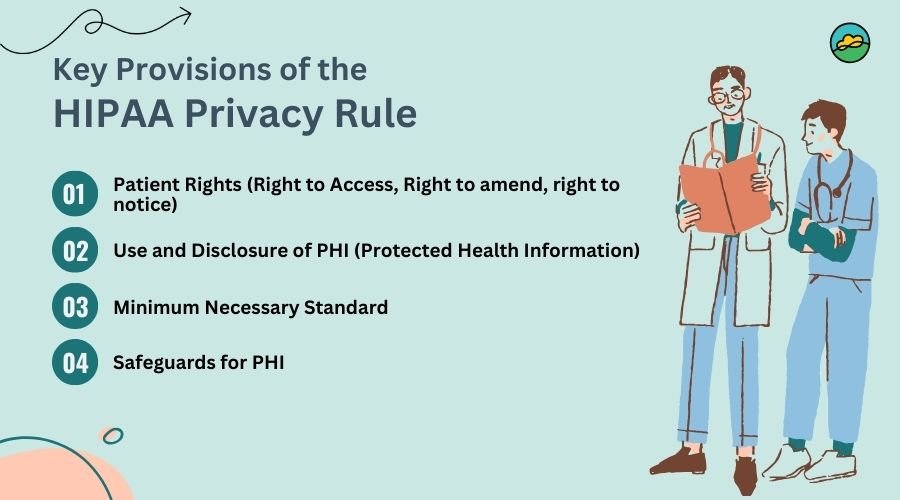
The Health Insurance Portability and Accountability Act, known as HIPAA, establishes privacy and security requirements for covered healthcare organizations and business associates.
Other laws, including the federal Electronic Communications Privacy Act and state privacy statutes, may provide legal grounds for civil claims involving electronic communications or alleged unauthorized disclosures.
These laws do not operate identically, and plaintiffs must satisfy the requirements of the particular causes of action they bring.
Apply HIPAA Principles to Patient Portals
HIPAA generally restricts how covered healthcare organizations may use or disclose protected health information.
Healthcare organizations must identify a legal basis for covered uses and disclosures and implement applicable safeguards.
HHS guidance explains that tracking technologies can raise HIPAA concerns when they collect or transmit protected health information.
In authenticated patient portals, information connected with medical services, appointments, or treatment may fall within HIPAA protections.
A general website cookie banner does not necessarily provide the authorization required for a disclosure of protected health information.
Account for Federal Court Limitations on Tracking Guidance
In June 2024, a federal district court vacated part of HHS’s tracking technology guidance.
The affected interpretation concerned circumstances in which an IP address was linked to a visit to certain publicly accessible healthcare webpages.
The ruling is important because not every visit to a public healthcare webpage automatically establishes the transmission of protected health information.
HHS’s remaining guidance continues to address tracking technologies and HIPAA requirements, including risks associated with authenticated patient portals.
Legal analysis must therefore distinguish public webpages, authenticated systems, and the information actually involved.
Review Federal Electronic Communications Law
The Electronic Communications Privacy Act addresses certain forms of electronic communications interception and disclosure.
Some MyChart-related lawsuits allege that website tracking tools violated provisions of this law.
Relevant questions can include whether a communication was intercepted, whether consent existed, and whether statutory exceptions apply.
Inova’s settlement specifically concerns allegations under the ECPA.
The settlement does not establish that the hospital admitted violating the law.
Review State Privacy Laws
State laws can provide additional legal protections.
California’s Invasion of Privacy Act has been used in litigation involving allegedly intercepted electronic communications.
Other states have their own privacy, consumer protection, or wiretapping laws.
The available legal remedies, filing deadlines, and standards for liability vary by state.
Patients considering individual litigation should obtain advice concerning the laws applicable to their situation.
6. Check Your Eligibility for a MyChart Class Action Settlement
To determine whether you qualify for a MyChart lawsuit settlement, identify your healthcare provider and compare your circumstances with the official settlement class definition.
Eligibility commonly depends on the healthcare organization involved, the relevant dates, and the type of online activity described in the agreement.
Having an active MyChart account does not automatically qualify someone for compensation.
Identify the Healthcare Organization Associated With Your Account
MyChart is used by multiple hospitals and healthcare systems.
Your account may be associated with Wellstar, Inova, Cone Health, Memorial Health Services, or another provider.
Start by identifying the organization responsible for your patient portal.
You can usually find this information through the provider’s official website or previous patient communications.
If you have used multiple healthcare systems, evaluate each separately.
Compare Your Activity With the Relevant Dates
Settlement agreements identify specific class periods.
The Wellstar period runs from February 19, 2020, through July 22, 2026.
The Cone Health period runs from September 1, 2016, through November 3, 2022.
The Memorial Health Services period runs from March 7, 2022, through July 8, 2022.
The Inova period concerns qualifying activity between April 29, 2022, and April 29, 2024.
These dates are not interchangeable. A person whose activity falls within one period may be outside another settlement’s covered dates.
Review Additional Eligibility Conditions
Some settlements require that a person accessed a patient portal.
Others cover additional activity, such as visiting certain public-facing webpages or completing online forms.
The Inova agreement, for example, includes conditions relating to a MyChart account and activity on an Inova public-facing website.
Read the entire class definition to understand what is required.
If you cannot determine whether you qualify, contact the official settlement administrator.
7. Submit a MyChart Class Action Lawsuit Claim Form
Submitting a MyChart settlement claim requires following the instructions established by the specific settlement administrator.
Claimants generally need to confirm eligibility, provide identifying information, and submit the required form before the deadline.
Some administrators provide online and mail-in options. Others use identification numbers supplied through personalized settlement notices.
The official settlement website should identify the available methods and any documentation requirements.
Access the Official Claim Website
For the Wellstar settlement, the authorized administrator provides an online claim portal at:
https://claim.wellstardataprivacysettlement.com/login
The website identifies the lawsuit as Doe v. Wellstar Health System, Inc., Case No. 1:24-cv-01748.
It also provides the settlement notice, claim instructions, and administrator contact information.
Patients should access the website directly rather than relying on unsolicited advertisements or unofficial settlement links.
Complete the Required Information
The Wellstar online claim system generally uses a unique identification number and PIN provided in the settlement notice.
If you did not receive a notice or cannot locate your credentials, the official administrator provides instructions for requesting assistance.
Complete the form accurately and confirm that your information matches the requirements.
Submitting inaccurate information may result in rejection or additional verification requests.
Submit Before the Filing Deadline
The Wellstar claim deadline is November 10, 2026.
Online claims must be submitted by the deadline, and mailed claims must meet the specified postmark requirement.
The official mailing address is:
Wellstar Pixel Settlement
Settlement Administrator
P.O. Box 2197
Portland, OR 97208-2197
The administrator’s official website should be checked for any deadline updates or procedural notices.
Save Your Submission Confirmation
After filing online, retain the confirmation email and confirmation code.
If you submit a claim by mail, keep a copy of the completed form and any available mailing receipt.
These records can help if the administrator requests additional information.
Maintain the contact details associated with your claim so that payment or verification communications can reach you.
8. Calculate the Potential MyChart Lawsuit Settlement Payout
The amount a patient may receive depends on the terms of the specific settlement agreement.
Some settlements distribute a fixed amount to each eligible claimant. Others distribute a net settlement fund proportionally among people who submit approved claims.
The total settlement amount is not the amount available for direct payments before expenses.
Court-approved attorney fees, litigation costs, administration expenses, and service awards may reduce the money available for distribution.
Calculate a Proportional Payment
The Wellstar agreement establishes a $4.25 million settlement fund.
Eligible claimants who submit valid claims may receive a proportional share of the net fund.
For example, suppose a hypothetical settlement has $2 million available for approved claimants after expenses.
If 50,000 valid claims are approved, the average payment would be $40.
If 100,000 claims are approved, the average payment would fall to $20.
These calculations demonstrate the payment structure and are not predictions of the Wellstar payout.
Review the Cone Health Payment Structure
Cone Health’s $1.765 million fund also provides for equal distribution of the net settlement amount among approved claimants.
The final payment depends on the number of valid claims and approved deductions.
A claimant cannot determine the exact payment simply by dividing the total fund by the estimated number of potential class members.
The relevant number is the approved claim count under the settlement’s distribution rules.
Understand the Inova Payment Arrangement
Inova’s agreement makes up to $3,147,390.04 available under its settlement terms.
The agreement provides for cash payments to approved claimants after applicable expenses and deductions.
Final compensation depends on how the settlement is administered and the number of valid claims.
Patients should rely on administrator communications for actual payout information rather than speculative estimates.
9. Track MyChart Settlement Approval and Payment Dates
A MyChart lawsuit settlement payment generally occurs after the required court approval process and completion of claim administration.
The claim filing deadline is not the same as the payment date.
Courts review proposed settlements to determine whether they satisfy applicable legal requirements. After approval, administrators may need to validate claims, resolve administrative issues, and calculate final distributions.
Appeals may also affect the timing.
Follow the Wellstar Court Hearing
The Wellstar final approval hearing is scheduled for December 1, 2026.
The court will consider whether the proposed agreement should receive final approval.
It may also consider requests involving attorney fees, expenses, and representative awards.
A payment schedule cannot be guaranteed before the necessary approvals and administrative steps are completed.
The official administrator has not announced a fixed individual payment date.
Check Previously Closed Settlements
The Inova claim deadline passed in April 2026.
The Memorial Health Services deadline passed in August 2026.
The Cone Health deadline passed in October 2026.
Patients who filed timely claims should follow the relevant administrator’s updates concerning approval, processing, and distribution.
A hearing date listed on a settlement website does not, by itself, prove that approval was granted or that checks have been issued.
Monitor Payment Communications
Settlement administrators may distribute payments by check or approved electronic methods, depending on the agreement.
Claimants should verify any messages requesting updated payment information.
Avoid sharing banking credentials, passwords, or account access codes in response to unsolicited messages.
Use the official settlement website to confirm payment procedures.
10. Protect Your MyChart Account and Personal Health Information
Patients concerned about MyChart-related privacy allegations should review their account security and healthcare provider communications.
The existence of a tracking-pixel lawsuit does not automatically mean that someone obtained a patient’s password or accessed their complete medical records.
Nevertheless, account security remains important because patient portals contain sensitive health information.
Appropriate precautions include using strong passwords, enabling available multifactor authentication, and checking account activity for unfamiliar changes.
Secure Your Login Credentials
Use a unique password for your patient portal account.
Avoid reusing passwords associated with email, shopping, or social media accounts.
Enable multifactor authentication when your healthcare provider supports it.
If you suspect unauthorized account access, contact the provider through its official support channels.
Review Healthcare Privacy Notices
Healthcare organizations publish notices explaining their privacy practices.
These documents describe how patient information may be used, disclosed, and protected under applicable requirements.
Review notices concerning tracking technologies, privacy incidents, or changes to website practices.
If the explanation is unclear, contact the healthcare organization’s privacy office.
Protect Against Settlement Scams
Legitimate settlement administrators may ask for information required to validate a claim.
However, patients should be suspicious of websites requesting upfront processing fees or promising guaranteed large payments.
Verify the administrator’s website address before entering personal details.
Do not supply account passwords or unrelated medical records to unverified third parties.
11. File a Healthcare Privacy Complaint When Appropriate
Patients who believe their protected health information was improperly disclosed may submit a complaint to the U.S. Department of Health and Human Services Office for Civil Rights.
The Office for Civil Rights enforces federal healthcare privacy and security requirements for covered organizations and business associates.
Submitting a regulatory complaint is separate from participating in a class action settlement.
A complaint may lead to an investigation or other regulatory action, but it does not automatically provide financial compensation.
Prepare the Complaint Information
HHS asks complainants to identify the organization involved and describe the conduct they believe violated applicable requirements.
Relevant information can include the dates of the alleged incident, the healthcare provider’s identity, and copies of pertinent communications.
Patients should explain the circumstances accurately without presenting assumptions as verified facts.
Documents supporting the complaint may help officials understand the issue.
Submit Within the Applicable Period
HHS generally requires privacy complaints within 180 days of when the complainant knew about the relevant conduct.
The agency may extend this period when the complainant demonstrates good cause.
Filing procedures and additional information are available through the official HHS complaint process.
Official resource: https://www.hhs.gov/hipaa/filing-a-complaint/complaint-process/index.html
Distinguish Regulatory Complaints From Civil Lawsuits
A HIPAA complaint asks a federal regulator to evaluate potential noncompliance.
A class action lawsuit seeks relief through the judicial system under the legal claims asserted in the complaint.
HIPAA generally does not provide an individual with a private right to sue directly for damages under the statute.
Patients exploring civil claims may need legal advice concerning other federal or state laws.
12. Review Your Options After Missing a Settlement Deadline
Missing a MyChart settlement claim deadline may prevent an eligible individual from receiving compensation through that agreement.
Each settlement specifies how claims must be submitted and whether late or incomplete submissions can be considered.
A person should not assume that an administrator will accept a late claim simply because the lawsuit remains active.
However, administrative mistakes, previously submitted claims, and court-approved changes may require separate consideration.
Contact the Official Administrator
If you believe a claim was submitted on time but was not recorded, contact the administrator.
Provide the claim confirmation number and any documentation showing when the submission occurred.
The administrator can explain applicable procedures for correcting or verifying a submission.
This does not guarantee that a late claim will be accepted.
Review the Settlement Release
Class action settlements often include a release of certain legal claims.
A person who remains within a settlement class may be bound by the final judgment even if no claim was filed.
The scope of the release depends on the specific settlement agreement and applicable law.
Patients considering separate litigation should review the release before assuming they can pursue the same allegations independently.
Seek Legal Advice When Necessary
A qualified privacy attorney can evaluate the facts of an individual situation.
Relevant considerations include the healthcare provider involved, the alleged disclosure, applicable legal claims, evidence, and filing deadlines.
Patients should also determine whether they were included in a previously settled class.
An attorney can explain whether the settlement affects their potential legal options.
13. Follow Future MyChart Lawsuit Developments
MyChart-related privacy litigation continues to evolve as courts evaluate the legal responsibilities of healthcare organizations using online tracking technologies.
Some cases have settled, while others involve unresolved legal questions about consent, electronic communications, and the information collected through websites.
A lawsuit being filed does not establish liability. Similarly, class certification does not automatically establish that compensation is available.
Readers should distinguish allegations, procedural rulings, settlements, and final judgments.
Monitor New Settlement Notices
Patients can search for settlement announcements using the name of their healthcare provider.
Official notices should identify the case, court, parties, class definition, administrator, and relevant deadlines.
A legitimate settlement generally provides access to detailed documents explaining eligibility and legal rights.
Patients should avoid assuming that a newly reported lawsuit already has an active claim form.
Check Court and Administrator Updates
Settlement administrators publish information about claim deadlines, final approval hearings, and payment procedures.
Court records provide additional information about orders and developments affecting settlement approval.
When the two sources appear inconsistent, examine the latest applicable court order and contact the administrator for procedural guidance.
This approach is more reliable than relying on outdated settlement summaries.
Review Healthcare Tracking Requirements
Healthcare organizations must evaluate how third-party technologies interact with protected patient information.
The HHS Office for Civil Rights publishes guidance addressing online tracking technologies and HIPAA responsibilities.
Changes in court interpretation and regulatory guidance may influence future healthcare privacy litigation.
Patients can follow official publications to understand developments affecting healthcare websites and patient portals.
Frequently Asked Questions About the MyChart Class Action Lawsuit
Is the MyChart class action lawsuit real?
Yes. Multiple legitimate lawsuits have involved healthcare organizations accused of improperly sharing patient information through tracking technologies on websites and MyChart portals. Several cases have resulted in settlements. However, there is no universal settlement covering all MyChart users.
Who qualifies for the MyChart lawsuit settlement?
Eligibility depends on the healthcare organization, the relevant dates, and the class definition. For example, Wellstar’s settlement concerns qualifying disclosures during its February 19, 2020, through July 22, 2026 class period. Simply having a MyChart account does not guarantee eligibility.
How much is the MyChart class action settlement payout?
There is no universal payout amount. Wellstar’s $4.25 million settlement and Cone Health’s $1.765 million settlement use proportional distributions. Actual payments depend on approved claims, deductions, and the terms of each agreement.
How do I file a MyChart settlement claim in 2026?
Visit the official website for the settlement involving your healthcare provider. Review the eligibility criteria, complete the approved claim form, and submit it before the deadline. The Wellstar settlement lists November 10, 2026, as its claim deadline.
Is Epic Systems responsible for the MyChart lawsuits?
Epic Systems develops MyChart, but the settlements discussed in this article primarily involve healthcare organizations that operate patient portals and websites. The allegations and defendants vary by case. The presence of Epic software does not establish Epic’s liability.
When will MyChart lawsuit settlement payments be sent?
Payment timing depends on final court approval, claims administration, and any appeals. The Wellstar final approval hearing is scheduled for December 1, 2026, but an exact payment date has not been announced. Claimants should consult their settlement administrator for verified updates.
Conclusion
The MyChart class action lawsuit developments in 2026 highlight significant privacy questions involving healthcare websites, patient portals, and third-party tracking technologies.
Settlements involving Wellstar Health System, Inova Health Care Services, Cone Health, and Memorial Health Services demonstrate how these disputes can lead to compensation arrangements for qualifying patients. However, each case has its own legal allegations, settlement terms, deadlines, and eligibility requirements.
The most important step for patients is identifying the healthcare organization associated with their MyChart account and reviewing the official settlement class definition.
As of November 10, 2026, Wellstar’s $4.25 million settlement lists today as its claim deadline, while several other major settlement filing periods have already closed.
Patients should use verified administrator websites, retain claim confirmations, and avoid advertisements promising guaranteed compensation.
Understanding the differences between tracking-pixel allegations, cybersecurity breaches, HIPAA requirements, and civil settlement claims also helps patients make informed decisions about protecting their health information.
As additional cases develop, official court records, government privacy guidance, and settlement administrator notices remain the most dependable sources for accurate information about MyChart lawsuit eligibility, compensation, and payment timelines.