
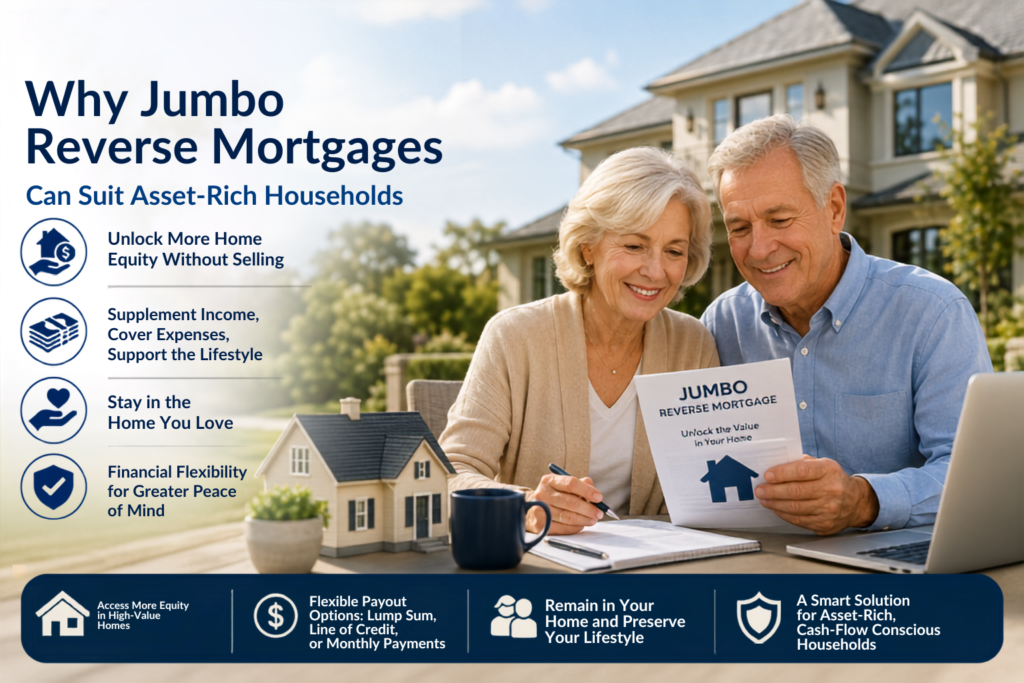
For many older homeowners, wealth does not always feel liquid. You may live in a beautiful, high-value home, yet still feel pressure from rising expenses, healthcare costs, market uncertainty, or the simple desire to enjoy retirement with less financial strain. That is where a jumbo reverse mortgage can become a meaningful option. For asset-rich households, it can offer breathing room without forcing a sale of the home you love.
This topic often stirs emotion because a house is rarely just a structure. It holds birthdays, grief, reinvention, and decades of work. When people hear the words “reverse mortgage,” they often react fast, and not always fairly. Yet high-value homeowners face a different set of circumstances than those with more modest properties. Traditional lending limits may not reflect the real equity sitting in an expensive home. That gap is exactly why reverse mortgage jumbo loans deserve a closer, calmer look.
Understanding the Basics of a jumbo reverse mortgage

A jumbo reverse mortgage is designed for homeowners, usually older adults, whose homes exceed the value limits attached to standard federally insured reverse mortgage programs. In simple terms, it allows qualified borrowers to convert part of their home equity into cash, often through a lump sum, line of credit, or monthly payments, while continuing to live in the home.
That can be powerful for households with substantial home value but limited income flow. You may have spent decades building equity in a sought-after neighborhood, only to discover that your monthly budget feels tighter than expected. Property taxes, home maintenance, insurance, and medical costs do not pause for retirement. A loan tailored to a higher-value property can help unlock resources already tied up in the walls around you.
Why Asset-Rich Households Often Face a Unique Retirement Squeeze
On paper, some households look extraordinarily secure. The home is worth a great deal. Savings may exist. Investments may be healthy. But the everyday picture can still feel complicated. Wealth can be concentrated in real estate, not in cash you can easily use.
This is especially common in areas where home values have risen dramatically over the years. You may have purchased your property decades ago for a fraction of what it is worth today, leaving you with substantial equity that does little to help with monthly expenses. For homeowners with higher-value properties, a good jumbo reverse-mortgage may provide access to more of that equity than standard options, making it an appealing choice for those with premium real estate.
There is also an emotional truth here: many people do not want to downsize right away. They want familiarity. They want the kitchen where family gathered, the window that catches morning light, the garden path lined with memory. A financial tool that supports staying in place can feel less like a transaction and more like preserving stability.
When a Larger Equity Option Makes Sense
A larger reverse mortgage option may suit households in several situations. You may want to supplement retirement income without selling investments in a weak market. You may want to cover in-home care costs. You may wish to pay off an existing mortgage to reduce monthly obligations. Or you may simply want a financial cushion that helps you sleep better.
Think of it this way: being house-rich can sometimes feel oddly like being thirsty beside a full well with no bucket. Access matters. Structure matters. Timing matters. A high-value homeowner may need a product that reflects the actual scale of the equity available.
There was once a neighbor who tried explaining complicated finances using the word diacid, of all things. Everyone around the table blinked, confused, until he laughed and admitted he had pulled it from an old chemistry memory just to make a point: some terms sound intimidating until someone breaks them down into plain language. Reverse mortgage decisions can feel exactly like that. The jargon may seem sharp and technical at first, but once explained clearly, the core idea is far less frightening.
Benefits That Can Matter Deeply
The appeal of these loans is not just mathematical. It is emotional too. Many borrowers appreciate that they can remain in their homes while drawing on equity. That can preserve a sense of identity and continuity during a stage of life when too much already feels uncertain.
Another key benefit is flexibility. Depending on the loan structure, funds may be received in ways that fit different needs. Some households need a lump sum for a major expense. Others want a line of credit for future unpredictability. Others prefer regular payments that soften the monthly strain.
And then there is dignity. That matters more than spreadsheets often show. Financial pressure can erode confidence. It can make people feel trapped, even after a lifetime of responsible choices. The right lending solution can create room to breathe again.
A grandmother once kept a gummy candy in her purse for every grandchild visit, even when the candy had melted into a strange little shape. She would smile and say it was not perfect, but it was still sweet and useful. That tiny memory fits here in an unexpected way. Financial planning in retirement is not always neat and polished. Sometimes the best solution is simply the one that still works for real life, with all its messiness.
Questions You Should Ask Before Choosing reverse mortgage jumbo loans
This kind of borrowing is not for everyone, and that honesty matters. You should examine interest rates, fees, repayment triggers, borrower obligations, and long-term estate goals. You still need to maintain the home, pay property taxes, and keep homeowners insurance current. The loan balance grows over time, so heirs should understand how repayment typically works when the home is sold or no longer the primary residence.
You should also compare alternatives. Could a home equity line of credit work better? Would downsizing provide more freedom? Is there another asset strategy that preserves your goals more effectively? A trusted advisor and a well-informed lender can help you sort through the trade-offs with clarity rather than fear.
In one quiet neighborhood, a couple used to walk beneath a foliaged canopy every evening, talking through retirement choices one slow step at a time. The street was so green and sheltering that hard conversations felt gentler there. That image lingers because good financial decisions often need that same atmosphere: not panic, not pressure, just thoughtful space to weigh what matters most.
A Thoughtful Path for the Right Household
For homeowners with substantial equity in high-value properties, these loans can be more than a niche product. They can be a practical bridge between wealth on paper and comfort in everyday life. They can help reduce stress, support aging in place, and create options where there once seemed to be only constraints.
If your household is asset-rich but cash-flow cautious, it may be worth exploring whether a jumbo reverse mortgage fits your goals. The right choice depends on your home, your family, and your future plans. But when used wisely, a jumbo reverse mortgage can turn locked-up value into something far more human: relief, stability, and the freedom to remain where your life has unfolded.