
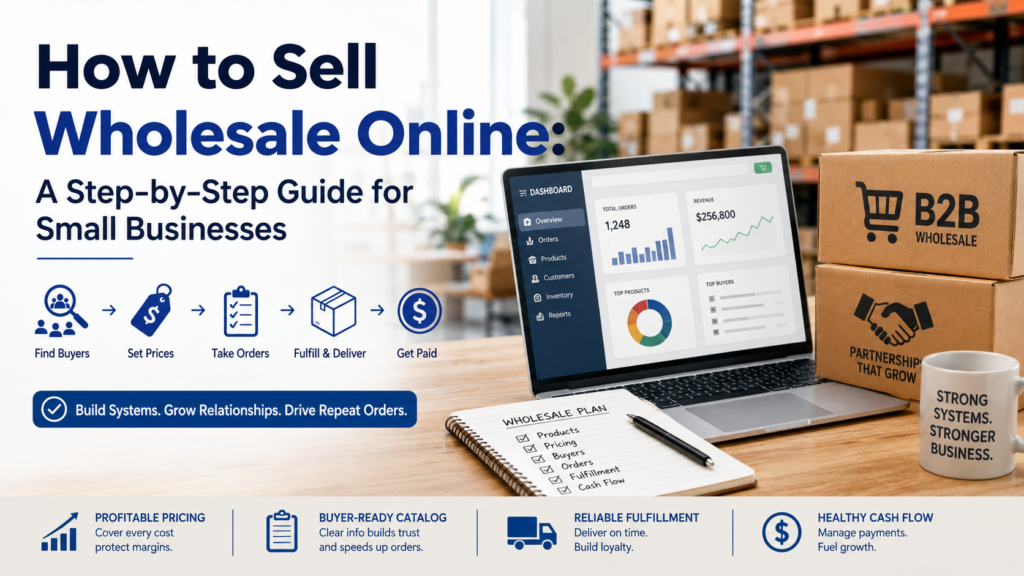
Wholesale can help a small business reach more customers through retail stores, commercial accounts, distributors, and online business-to-business channels. Learning how to sell wholesale starts with recognizing that success is not just about landing a large order. It is about building a repeatable system for pricing, ordering, inventory, fulfillment, and payment.
Unlike direct-to-consumer sales, wholesale typically means selling products in larger quantities at lower per-unit prices to businesses that will resell or use them. That tradeoff can create dependable reorder revenue, but it also puts more pressure on product margins, delivery reliability, and cash flow.
Choose a Wholesale Model That Fits
Start with the channel that matches your capacity. You might sell directly to independent retailers, supply commercial buyers such as hotels or offices, work through a distributor, or join an online B2B marketplace. For a basic definition and background, see this overview of wholesaling.
Each option changes the work involved. Local retailers may place smaller orders and offer faster feedback. Distributors can open broader markets but usually require deeper discounts. A small home goods company, for example, may begin with nearby gift shops, learn which items reorder consistently, then expand to regional accounts once fulfillment is reliable.
Pick Products Buyers Can Reorder

A focused range of reliable products is usually stronger than a large, untested catalog. Prioritize products with stable demand, dependable supply, simple storage requirements, low risk of damage or returns, and sufficient margin for both your business and the buyer.
Test a small group before expanding. Seasonal and trend-led products can attract attention, but steady sellers often provide the reorder activity that makes wholesale sustainable. Ask buyers what sells, what sits too long, and what customers request. Their feedback should guide future purchasing and production.
Handle Business and Tax Requirements
Requirements vary by location, product category, and sales channel. Before accepting orders, confirm your business registration, tax responsibilities, resale documentation, permits, labeling rules, and product safety records. Businesses that need a federal tax ID can review the IRS guidance on an Employer Identification Number.
Food, cosmetics, supplements, alcohol, and children’s products can involve added rules. Keep supplier invoices, certificates, buyer tax documents, and compliance records together so they are easy to retrieve when an account or regulator requests them.
Set Prices With Every Cost in Mind
Wholesale price is not simply your product cost plus a small markup. Include manufacturing or supplier costs, packaging, labor, storage, freight, payment processing, returns, damaged goods, and sales expenses. Gross margin is the amount left after direct product costs. Markup is the increase added to the cost. Contribution margin shows what remains after the costs tied to making and selling that order.
Use minimum order quantities, case packs, and volume discounts to protect profitability. Review prices whenever freight, materials, or supplier rates change. A high-revenue account is not valuable if each order absorbs too much labor or produces too little cash.
Create a Buyer-Ready Catalog

Buyers need clear information before they can confidently order. Your digital catalog or line sheet should include product names, photos, descriptions, wholesale prices, suggested retail prices, product codes, case packs, dimensions, materials, lead times, shipping details, and ordering instructions.
Keep wording simple and information current. Outdated pricing, vague descriptions, or missing minimums can delay approval and create avoidable disputes. Make sure the catalog is easy to open and read on phones and tablets.
Find and Screen Wholesale Buyers
Potential accounts can be found through local store visits, trade shows, industry directories, marketplaces, email outreach, social media research, and referrals. Personalize outreach by referring to the store’s audience, style, or current product mix. Send a concise introduction and catalog rather than a long generic pitch.
Questions to Ask Before Opening an Account
- What products do they currently carry, and where do they sell them?
- What order sizes and reorder frequency do they expect?
- What payment terms do they request?
- Do they need special packaging, labels, or delivery windows?
Build a Simple Ordering Process
Map every step from inquiry to delivery. Buyers should receive a clear order form, written confirmation, invoice, and shipping update. Email forms, wholesale portals, shared spreadsheets, and phone orders can all work if the final details are documented in writing.
Use one source of truth for product data, pricing, available stock, and order status. Before fulfillment, confirm the items, quantities, price, shipping address, delivery date, payment status, and any special instructions.
Plan Inventory and Fulfillment

Wholesale growth can strain inventory before it improves profits. Set reorder points based on sales pace, supplier lead times, safety stock, and supplier minimums. Holding more stock reduces stockout risk, but it also ties up cash and increases the chance of excess inventory.
Choose between self-fulfillment, a third-party logistics provider, or supplier-direct shipping based on order volume and complexity. Packaging, labels, freight costs, and delivery windows all affect buyer satisfaction. A late seasonal shipment can leave a retailer with products after the best-selling period has passed.
Manage Payment Terms and Cash Flow
Payment may be required before shipment, on delivery, or through invoice terms such as Net 30. Delayed terms can help established buyers, but they create risk for a growing seller. Check business details, set credit limits, and consider requiring upfront payment or smaller initial orders for new accounts.
A profitable order can still create a cash problem if supplier bills are due before the buyer pays. Track expected payment dates alongside inventory purchases and payroll obligations.
Track the Numbers That Matter
Review average order value, gross margin by product, reorder rate, order accuracy, on-time shipping rate, days to receive payment, inventory turnover, and customer acquisition cost. Revenue alone cannot show whether an account is healthy.
During the first year, review results monthly by buyer, product, channel, and region. This makes it easier to identify accounts that reorder profitably and products that deserve more inventory.
Avoid Common Wholesale Mistakes
- Underpricing products to win early accounts.
- Accepting large orders without checking capacity.
- Offering too many products before finding reliable sellers.
- Using unclear minimum order rules or inconsistent records.
- Approving credit terms without assessing buyer risk.
- Ignoring retailer feedback after the first shipment.
Final Takeaway
Successful wholesale selling depends on dependable systems, not on a single impressive order. Begin with products that buyers can reorder, pricing that supports real margins, clear buyer materials, and a repeatable fulfillment process. Once cash flow, service, and inventory are under control, adding accounts becomes a measured opportunity rather than a costly scramble.