Perms have returned to modern salons with a more refined reputation than the stiff, overly processed curls many people remember from past decades. Today’s perm services are more customizable, softer, and better suited to different hair lengths, textures, and styling goals. As interest grows in low-maintenance waves, natural-looking curls, and long-term volume, one practical question continues to come up before booking: how long does a perm take?
The answer depends on hair length, hair density, curl pattern, perm type, salon process, and the condition of the hair before treatment. In most cases, a perm appointment takes between two and four hours from consultation to final rinse and styling. Shorter hair and loose wave perms may take less time, while long, thick, color-treated, or resistant hair can require a longer appointment.
Understanding how long does a perm take helps clients plan their schedule, prepare for the appointment, and set realistic expectations before committing to a chemical texture service. A perm is not a quick styling session. It is a structured salon treatment that changes the internal bonds of the hair to create lasting curl or wave.
The salon industry remains a major personal-care market. IBISWorld estimates that U.S. hair salon revenue reached about $60 billion in 2025, showing how strongly consumers continue investing in professional hair services, including color, cuts, styling, and chemical texture treatments.
Understand the Average Time Required for a Perm
For most salon clients, the simplest answer to how long does a perm take is around two to four hours. This includes consultation, shampooing, sectioning, wrapping, applying perm solution, processing, rinsing, neutralizing, removing rods, and basic styling.
The appointment length can vary widely because no two heads of hair respond the same way. Hair thickness, porosity, length, and chemical history all influence how quickly the stylist can work and how long the solution needs to process.
Average Perm Appointment Timeline
| Perm Stage | Estimated Time |
|---|---|
| Consultation | 10–20 minutes |
| Shampoo and preparation | 10–15 minutes |
| Sectioning and wrapping | 30–90 minutes |
| Processing time | 10–30 minutes |
| Rinsing | 5–10 minutes |
| Neutralizing | 10–20 minutes |
| Rod removal and final rinse | 10–20 minutes |
| Styling and aftercare discussion | 15–30 minutes |
A simple perm on short hair may take closer to two hours. A detailed perm on long or dense hair may take four hours or more.
In my experience, the longest part of most perm appointments is not the chemical processing itself. It is the careful wrapping work that determines how natural, balanced, and even the final curl pattern will look.
Compare Perm Timing by Hair Length
Hair length plays a major role in answering how long does a perm take because longer hair requires more sectioning, more rods, and more precise product application.
Short hair can often be wrapped quickly, while long hair demands more time to control tension, protect ends, and create consistent curl formation.
Perm Time by Hair Length
| Hair Length | Estimated Appointment Time |
|---|---|
| Short hair | 2–2.5 hours |
| Medium-length hair | 2.5–3.5 hours |
| Long hair | 3–4.5 hours |
| Very long hair | 4+ hours |
Short hair perms are usually faster because the stylist works with smaller lengths and fewer overlapping sections. Medium hair often requires more design planning, especially if the client wants loose curls or soft waves.
Long hair can take considerably longer because stylists must wrap each section smoothly and avoid uneven tension. If long hair is also thick, the appointment can extend beyond the standard time range.
Evaluate How Hair Thickness Affects Perm Duration
Hair density is just as important as length when estimating how long does a perm take. Thick hair usually requires more rods, more product, and more careful processing than fine hair.
Fine hair may wrap quickly but requires close monitoring because it can process faster. Coarse or resistant hair may take longer to soften and reshape.
Hair Density and Perm Timing
| Hair Type | Timing Impact |
|---|---|
| Fine hair | Faster wrapping, careful processing |
| Medium-density hair | Standard appointment timing |
| Thick hair | Longer wrapping and product application |
| Coarse hair | May require longer processing |
| Resistant hair | Requires careful chemical timing |
Stylists must avoid rushing thick or coarse hair because uneven saturation can create inconsistent curls.
Clients with dense hair should expect a longer appointment and may need additional product or service charges depending on salon pricing.
Understand How Different Perm Types Affect Appointment Length
The type of perm chosen can significantly change the answer to how long does a perm take.
Modern salons offer several perm styles, each with different wrapping methods and timing requirements.
Perm Type Comparison
| Perm Type | Typical Time | Best For |
|---|---|---|
| Traditional perm | 2.5–4 hours | Defined curls |
| Body wave perm | 2–3.5 hours | Soft volume and loose waves |
| Spiral perm | 3–5 hours | Long hair and dramatic curls |
| Digital perm | 3–5 hours | Soft, styled waves |
| Root perm | 1.5–2.5 hours | Volume at the roots |
| Partial perm | 1.5–3 hours | Targeted texture |
| Beach wave perm | 2.5–4 hours | Relaxed, natural waves |
A body wave usually takes less time than a spiral perm because the curl design is softer and often requires less detailed wrapping.
Spiral perms can take much longer because the stylist uses vertical wrapping techniques and often works with longer hair.
Digital perms may require extra time because they involve heat-controlled rods and a more technical process.
Break Down the Main Steps of a Perm Appointment
A perm appointment involves several steps, and each one contributes to the final result. Understanding the process makes it easier to understand how long does a perm take.
Consultation and Hair Assessment
The stylist begins by evaluating hair condition, previous color services, breakage, porosity, and curl goals. This step helps determine whether the hair can safely handle a perm.
A good consultation may include questions about:
- Hair color history
- Bleach or highlights
- Heat styling habits
- Previous chemical treatments
- Desired curl size
- Daily styling routine
Shampoo and Preparation
The hair is washed to remove oils, buildup, and styling products. Clean hair allows the perm solution to work more evenly.
The stylist may avoid heavy conditioners before wrapping because they can interfere with solution penetration.
Rod Selection and Wrapping
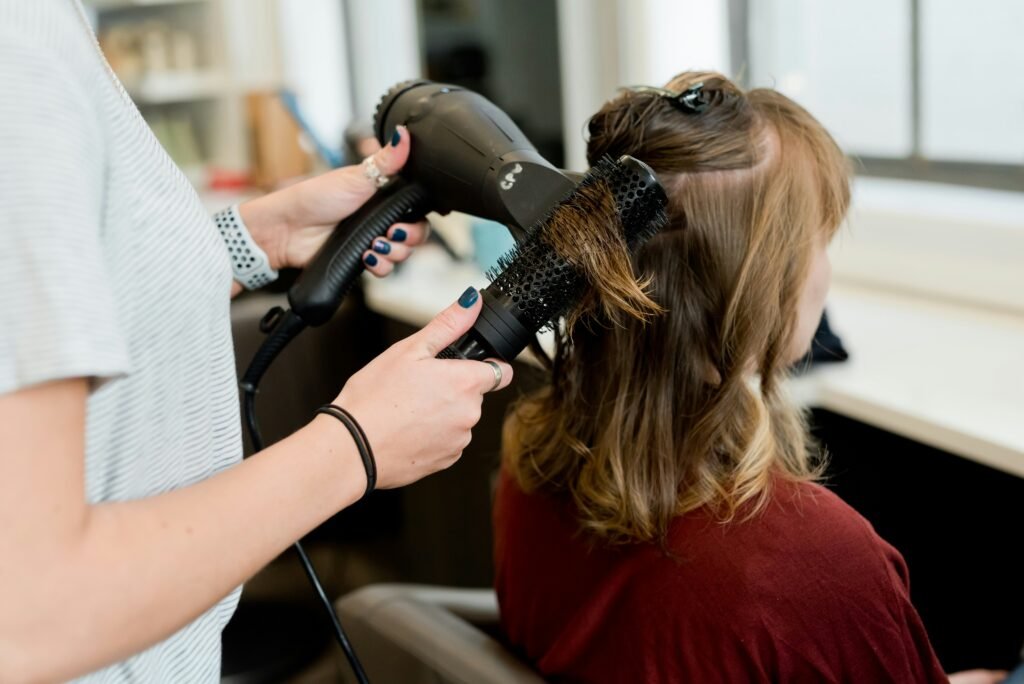
This is often the most time-consuming step. Rod size determines curl size, while wrapping pattern affects the final shape.
Common wrapping patterns include:
| Wrapping Pattern | Result |
|---|---|
| Classic horizontal wrap | Traditional curl structure |
| Spiral wrap | Long, defined curls |
| Bricklay wrap | More natural curl distribution |
| Piggyback wrap | Better results on long hair |
| Root wrap | Volume near scalp |
Processing and Neutralizing
Once the solution is applied, the hair processes for a controlled period. The stylist checks curl development before rinsing and applying neutralizer.
Neutralizer locks the new curl structure into place.
Understand Why Consultation Time Matters
Many people asking how long does a perm take focus only on the chemical portion, but consultation is one of the most important parts of the service.
Perms are chemical treatments, and not every head of hair is a good candidate. Damaged, over-bleached, brittle, or heavily processed hair may not tolerate perm solution safely.
Consultation Factors That Affect Timing
| Factor | Why It Matters |
|---|---|
| Previous bleach | Increases damage risk |
| Hair porosity | Affects chemical absorption |
| Breakage | May limit perm options |
| Desired curl pattern | Determines rod choice |
| Hair density | Influences wrapping time |
| Maintenance expectations | Shapes final recommendation |
A stylist may recommend a strand test before the full appointment if the hair has a complex chemical history.
This extra step may add time but can prevent major damage.
Compare Salon Perms With At-Home Perm Kits
Some clients research how long does a perm take because they are comparing professional salon perms with at-home kits.
At-home perms may appear faster, but they carry higher risk because wrapping precision, product saturation, timing, and neutralizing must be done correctly.
Salon Perm vs At-Home Perm
| Factor | Salon Perm | At-Home Perm |
|---|---|---|
| Timing | 2–5 hours | 2–4 hours |
| Professional assessment | Yes | No |
| Curl customization | High | Limited |
| Damage control | Stronger | Higher risk |
| Wrapping precision | Professional | User dependent |
| Result consistency | More predictable | Less predictable |
A professional perm usually takes longer because the stylist is customizing the result and monitoring the hair throughout the process.
For most clients, the additional time is worthwhile because uneven wrapping or overprocessing can be difficult to correct.
Learn How Hair Condition Changes Perm Timing
Hair condition strongly influences how long does a perm take because healthy hair processes differently than damaged hair.
Healthy hair usually responds more predictably. Porous or damaged hair may absorb solution too quickly, requiring shorter processing and closer monitoring.
Hair Condition Timing Guide
| Hair Condition | Perm Timing Consideration |
|---|---|
| Virgin hair | May require standard or longer processing |
| Color-treated hair | Needs gentler solution and monitoring |
| Bleached hair | Higher damage risk |
| Dry or brittle hair | May not be suitable |
| Resistant hair | May need stronger formula |
| Previously permed hair | Requires careful overlap control |
Stylists often use gentler formulas for chemically treated hair to reduce breakage risk.
A slower, more careful process is usually safer than rushing a perm on compromised hair.
Plan Your Schedule Before Booking a Perm
Because the answer to how long does a perm take can range from two to five hours, clients should plan ahead.
A perm appointment is usually not ideal during a tight lunch break or before another important event. Processing time can vary once the stylist sees how the hair responds.
Scheduling Tips
| Scheduling Step | Benefit |
|---|---|
| Ask for a time estimate when booking | Helps plan the day |
| Mention hair length and thickness | Improves appointment accuracy |
| Share chemical history | Helps stylist prepare |
| Avoid rushing the stylist | Supports better results |
| Leave extra time afterward | Reduces stress |
Clients with long or thick hair should ask whether the salon needs to schedule extra time.
Some salons may require consultation before confirming a perm appointment.
Prepare Properly Before a Perm Appointment
Preparation can influence both timing and results.
Clients should arrive with realistic expectations and avoid heavy styling products before the appointment unless the stylist gives different instructions.
Perm Preparation Checklist
| Preparation Step | Why It Helps |
|---|---|
| Avoid major heat damage before appointment | Protects hair condition |
| Tell stylist about color history | Prevents chemical problems |
| Bring inspiration photos | Clarifies curl goals |
| Avoid deep conditioning right before service | May affect processing |
| Plan for several hours in salon | Reduces appointment stress |
Inspiration photos help stylists understand whether the client wants tight curls, soft waves, root volume, or beachy texture.
The clearer the goal, the more efficiently the stylist can choose rods and wrapping patterns.
Understand Aftercare Time After the Perm
The appointment does not end the moment the rods come out. Aftercare is essential to preserve the curl pattern.
Most stylists recommend avoiding washing, heavy styling, tight ponytails, or aggressive brushing for the first 24 to 48 hours after a perm.
Early Perm Aftercare
| Aftercare Rule | Purpose |
|---|---|
| Avoid shampooing too soon | Protects curl formation |
| Use gentle products | Reduces dryness |
| Avoid heat styling | Prevents stress on hair |
| Do not brush aggressively | Maintains curl pattern |
| Sleep carefully | Reduces frizz and flattening |
Clients asking how long does a perm take should also consider the adjustment period after the salon visit.
Hair may need a few days to settle into its final pattern.
Evaluate How Long Perm Results Last
While appointment timing matters, many clients also want to know whether the time investment is worthwhile.
Most perms last around three to six months depending on hair type, growth rate, curl tightness, and aftercare.
Perm Longevity by Type
| Perm Type | Estimated Longevity |
|---|---|
| Body wave | 2–4 months |
| Traditional perm | 3–6 months |
| Spiral perm | 4–6 months |
| Root perm | 1–3 months |
| Digital perm | 3–6 months |
Loose waves may relax faster than tighter curls.
Haircuts, product choices, and moisture routines also influence how long the style remains attractive.
Recognize When a Perm May Take Longer Than Expected
Even with careful scheduling, some perm appointments take longer than planned.
Reasons for Longer Appointment Time
| Delay Factor | Why It Adds Time |
|---|---|
| Very thick hair | More sections and rods |
| Long hair | More wrapping control |
| Resistant texture | Slower processing |
| Previous color damage | Requires careful monitoring |
| Curl pattern changes | May need extra design work |
| Strand testing | Adds safety evaluation |
Stylists may also pause during processing to check curl formation multiple times.
Those checks protect the hair and improve final results.
Understand the Cost and Time Relationship
Perm pricing often reflects time, skill, product use, and hair complexity.
Longer appointments generally cost more because they require additional labor and materials.
Perm Cost Factors
| Factor | Cost Impact |
|---|---|
| Hair length | Longer hair costs more |
| Hair density | More product and time |
| Perm type | Specialty perms cost more |
| Salon location | Pricing varies by market |
| Stylist expertise | Advanced stylists may charge more |
| Corrective work | Adds complexity |
A short body wave may cost significantly less than a long spiral perm.
Clients should request a quote before the appointment to avoid surprises.
Conclusion
The answer to how long does a perm take depends on hair length, density, condition, curl goal, and perm technique. Most professional perms take between two and four hours, while long, thick, spiral, or digital perms may take closer to five hours.
The process includes consultation, preparation, wrapping, chemical processing, rinsing, neutralizing, rod removal, and styling. While the chemical stage may be relatively brief, careful wrapping and customization often take the most time.
Clients who want the best results should avoid rushing the appointment, communicate their hair history clearly, and follow aftercare instructions closely.
A perm is both a beauty service and a chemical restructuring treatment. When performed carefully, it can provide months of curl, wave, volume, and styling flexibility.
Frequently Asked Questions About How Long Does a Perm Take
How long does a perm take at a salon?
Most salon perms take between two and four hours, depending on hair length, thickness, perm type, and hair condition.
How long does a perm take for short hair?
A short hair perm may take around two to two and a half hours, especially if the hair is not very thick.
How long does a perm take for long hair?
Long hair perms usually take three to five hours because wrapping requires more time and precision.
Does a spiral perm take longer than a regular perm?
Yes. Spiral perms often take longer because the wrapping method is more detailed and commonly used on longer hair.
Can I wash my hair right after a perm?
Most stylists recommend waiting 24 to 48 hours before washing to help preserve the new curl structure.
How long does a perm last?
Most perms last three to six months, depending on hair type, curl size, aftercare, and how quickly the hair grows.