
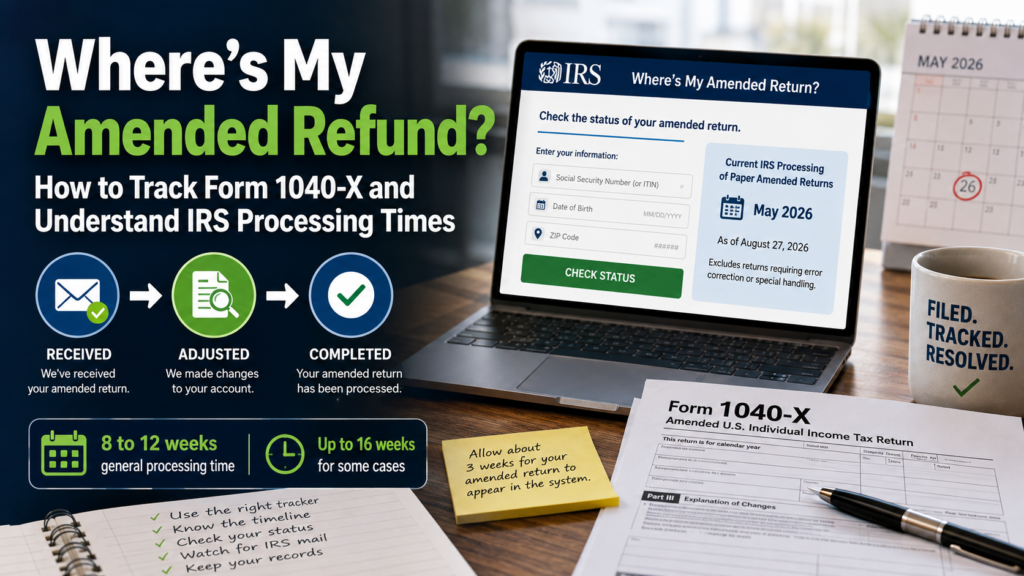
If you are searching “where’s my amended refund?”, the first thing to know is that an amended tax refund follows a different IRS tracking and processing path from a refund claimed on an original tax return. Taxpayers who filed Form 1040-X, Amended U.S. Individual Income Tax Return, should use the IRS Where’s My Amended Return? tool instead of the standard Where’s My Refund? service.
According to current IRS guidance, an amended return generally takes 8 to 12 weeks to process, although some cases can take up to 16 weeks. The IRS also advises that an amended return can take approximately three weeks after submission to appear in its tracking system.
This guide is based primarily on current IRS instructions, IRS processing data, and Taxpayer Advocate Service guidance. Processing times can change, and individual returns can take longer when they require corrections, verification, examination, bankruptcy handling, or other special processing. As of August 27, 2026, the IRS reports that it is processing paper individual amended returns received in May 2026, excluding returns that require error correction or special handling.
Use Where’s My Amended Return to Track Form 1040-X
Start with the IRS Where’s My Amended Return? service if you filed Form 1040-X and want to know where your amended refund stands. This is the IRS tool specifically designed to track amended individual income tax returns. It displays amended-return information for the current tax year and up to three prior tax years.
You will generally need three pieces of identifying information:
- Your Social Security number or other applicable taxpayer identification number
- Your date of birth
- Your ZIP Code or postal code
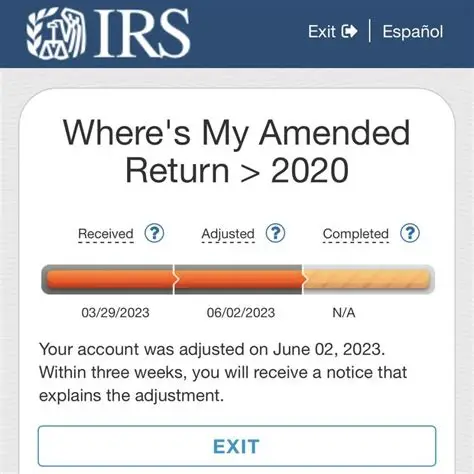
After the IRS authenticates your information, the system can show your amended return in one of three primary stages: Received, Adjusted, or Completed. The IRS uses these stages to show where Form 1040-X is within its processing workflow.
This distinction matters because an amended return changes information previously reported to the IRS. The agency may need to compare your Form 1040-X with your original return, verify updated schedules or forms, recalculate your tax account, and determine whether the correction creates a refund, balance due, or no tax change.
Wait Three Weeks Before Checking Your Amended Refund
Allow approximately three weeks after filing Form 1040-X before becoming concerned that the amended return is not appearing online. The IRS states that it may take up to three weeks for an amended filing to become visible in its system.
This waiting period is especially important for taxpayers who mailed a paper amended return. Delivery confirmation from the U.S. Postal Service or another carrier can prove that the package reached the IRS, but delivery does not mean the return has already been entered into the IRS tracking database.
Electronically filed amended returns can also require time before their status appears. Electronic submission reduces mailing time, but it does not eliminate the IRS review process.
If you check after only a few days and receive no result, that response alone is not evidence that your amended return has been lost. Allow the initial three-week period before taking additional action unless the IRS has contacted you about a specific problem.
Read the Received Status Before Assuming There Is a Delay
Treat a Received status as confirmation that the IRS has your amended return and is processing it. According to IRS amended-return guidance, Received means the filing has entered the processing system.
A return can remain in Received status for a meaningful amount of time. That is normal because an amended return can require more review than an original electronically filed tax return.
For example, a taxpayer might amend a return to:
- Report additional income
- Correct filing status
- Change deductions
- Add or remove a dependent
- Claim or correct a tax credit
- Change tax withholding
- Correct another tax calculation
The IRS specifically identifies changes involving filing status, income, deductions, credits, dependents, other taxes, and withholding as common reasons Form 1040-X may be necessary.
A Received status therefore does not mean that a refund has been approved. It means the amended filing is in the IRS workflow and has not yet reached the final processing stage.
Allow 8 to 12 Weeks for Standard Processing
Use 8 to 12 weeks as the general IRS processing range for Form 1040-X. Some amended returns can take up to 16 weeks, and cases requiring additional review may take longer.
That timeframe should not be confused with the commonly discussed 21-day refund timeframe for many original electronically filed returns. An original return and an amended return are different filing events with different processing requirements.
An amended return may require the IRS to compare:
- Information reported on the original return
- Previous adjustments already made by the IRS
- Corrections reported on Form 1040-X
- Updated schedules and supporting forms
- The revised tax calculation
- The resulting refund or balance due
The IRS must make sure that the starting amounts on the amended return correspond to its account records. The Taxpayer Advocate Service notes that discrepancies between the figures reported on Form 1040-X and the amounts contained in IRS records can create processing problems.
Amended Return Timeline at a Glance
| Stage | General IRS Guidance | What You Should Do |
|---|---|---|
| First 3 weeks | Return may not appear in the tracker yet | Continue waiting |
| Received | IRS has the amended return | Monitor status |
| 8 to 12 weeks | General processing range | Continue checking periodically |
| Adjusted | IRS changed your tax account | Review the adjustment |
| Completed | IRS finished processing Form 1040-X | Watch for IRS correspondence and refund activity |
| Up to 16 weeks | Some amended returns require additional time | Continue monitoring unless instructed otherwise |
| Beyond normal timeframe | Special handling or another issue may apply | Follow instructions shown by the IRS |
These timeframes are not guaranteed payment dates. They represent IRS processing guidance, and an individual amended return can move faster or slower depending on its circumstances.
Check the Current IRS Processing Backlog
Compare your filing date with the IRS Processing Status for Tax Forms dashboard when your paper amended return appears delayed.
As of August 27, 2026, the IRS says it is processing paper amended returns in the Form 1040 series that were received in May 2026. The agency is processing paper original Form 1040-series returns received in July 2026.
That difference is useful because it illustrates how amended returns can trail original returns in the IRS paper-processing pipeline.
The dashboard also contains an important qualification: the published processing month does not include returns requiring error correction or other special handling. Therefore, seeing that the IRS has reached the month in which your amended return was submitted does not guarantee your individual Form 1040-X should already be complete.
Use the dashboard for general workload information and Where’s My Amended Return? for personalized status information. The two resources answer different questions.
Understand the Adjusted Status Before Expecting Payment
Read an Adjusted status carefully. The IRS explains that Adjusted means an adjustment was made to your account, and that adjustment can produce one of three outcomes: a refund, a balance due, or no tax change.
For that reason, Adjusted does not automatically mean your requested refund amount has been approved exactly as filed.
Suppose you amended your return expecting an additional $2,000 refund. The IRS could review the amended filing and determine that the correct adjustment is $2,000, a lower amount, no additional refund, or even additional tax due. The exact result depends on the facts and tax rules applicable to your return.
The IRS may send correspondence explaining the adjustment. Compare any notice with:
- Your original tax return
- Form 1040-X
- Corrected Form 1040 or related return
- Updated schedules
- W-2 or 1099 information
- Credit documentation
- IRS account records
Do not rely only on the word Adjusted when determining the final financial result of an amended return.
Confirm the Completed Status and Review IRS Mail
A Completed status means the IRS has processed your amended return. The IRS states that information connected with the processing will be provided by mail.
Completed is therefore an important milestone, but it should be followed by a review of any IRS correspondence and your tax account.
If the amended return generates a refund, verify the amount against the IRS adjustment rather than assuming it must equal the refund you originally calculated.
A completed amendment could result in:
- An additional refund
- A reduced refund
- A balance due
- No change to the tax owed
- An adjustment that affects another part of your account
Keep the final IRS notice with your tax records because it explains how the agency resolved the amended filing.
Use the Correct Refund Tracker for an Amended Return
Do not use Where’s My Refund? as your primary tracker for a refund created by Form 1040-X.
The IRS specifically states that refund information for Form 1040-X is not available through Where’s My Refund? Taxpayers should use Where’s My Amended Return? for amended-return status.
The two systems serve different purposes.
| IRS Tool | Tracks | Typical Status Information |
|---|---|---|
| Where’s My Refund? | Refunds associated with original individual returns | Return Received, Refund Approved, Refund Sent |
| Where’s My Amended Return? | Form 1040-X amended returns | Received, Adjusted, Completed |
| IRS Processing Status Dashboard | General IRS processing workload | Months currently being processed |
| IRS Online Account | Broader tax-account records | Account activity, transcripts, notices and other available information |
Where’s My Refund? can provide a personalized refund date after an original return has been processed and a refund approved. That workflow is different from the amended-return process.
Review Form 1040-X for Issues That Can Slow Processing
Check whether your amended filing includes all forms and schedules necessary to support the changes you made.
The IRS instructs taxpayers filing an amended return to include copies of forms or schedules that are being changed or that should have been included with the original filing.
For example, changing income may require an updated schedule or income document. Correcting a credit may require a related credit form. Changing another calculation can affect several connected lines on the return.
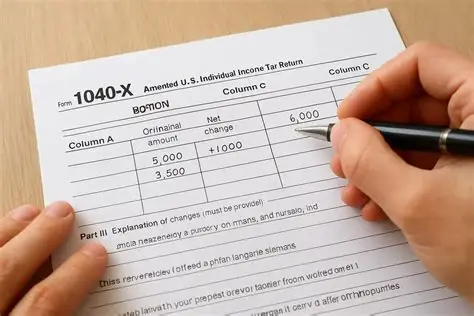
The Taxpayer Advocate Service also warns that an amended return can encounter problems when the amounts shown as the original or previously adjusted figures on Form 1040-X do not match IRS records. Reviewing an IRS transcript can help identify account adjustments that occurred after the original filing.
Common factors that can complicate an amendment include:
- Missing schedules
- Incorrect original figures
- Changes already made by the IRS
- Multiple amendments for the same tax year
- Credit verification
- Income discrepancies
- Identity-related review
- Examination activity
- Bankruptcy processing
- Specialized refund claims
Not every delay means one of these issues exists, but they explain why one Form 1040-X may require more time than another.
Avoid Filing a Duplicate Amended Return Because of a Delay
Do not automatically file another Form 1040-X simply because the first amendment is taking longer than expected.
A second submission can introduce duplicate information into an account that is already being reviewed. Instead, continue using the IRS tracking tools and follow any instructions the IRS provides.
The same principle applies when the amended return remains in Received status longer than you expected. Status duration alone does not establish that the filing has disappeared.
If the IRS needs documentation or clarification, respond using the instructions contained in the notice you receive. Sending unrelated documents or another complete amendment without being asked can complicate the record rather than resolve the original issue.
Call the IRS When the Amended Return Tracker Directs You
Call about your amended-return status when Where’s My Amended Return? directs you to contact the IRS.
The IRS specifically advises taxpayers to call about return status only when the amended-return tool tells them to do so.
The IRS amended-return status number is 866-464-2050. The IRS says the telephone service can be used approximately three weeks after filing and can track amended returns for the current year and up to three prior tax years.
Calling during the first few days after filing normally will not produce useful amended-return information because the filing may not yet be visible in the IRS system.
Have relevant information available before calling, including your taxpayer identification information, the tax year involved, and a copy of Form 1040-X.
Check Whether Where’s My Amended Return Supports Your Filing
Verify that your tax matter is eligible for the online amended-return tracker before treating a missing status as a processing problem.
The IRS states that Where’s My Amended Return? cannot provide status information for certain filings, including:
- Business returns
- Carryback applications and claims
- Injured spouse claims
- A Form 1040 marked as amended or corrected instead of Form 1040-X
- Returns processed by specialized units such as Examination or Bankruptcy
If your case falls into one of those categories, the lack of a standard online status may relate to the type of filing rather than the whereabouts of your refund.
Follow the IRS instructions associated with the applicable claim, notice, examination, or special process.
Verify How Your Amended Refund Will Be Paid
Review the payment information connected with your amended filing if the correction produces a refund.
For tax years 2021 and later, taxpayers who electronically file an eligible amended return may request direct deposit for the resulting refund.
Your filing method and the details submitted with the amendment can affect how the refund is issued. Do not assume that an amended refund will necessarily arrive through the same method as the refund from your original return.
If the IRS has completed the adjustment but you have a question about a missing refund payment, distinguish between two separate issues:
- Whether Form 1040-X has been processed
- Whether an approved refund has been successfully delivered
The amended-return tracker primarily answers the first question. Payment problems may require a different IRS refund procedure.
Check for an Offset Before Assuming the Refund Amount Is Missing
Remember that an expected refund can sometimes be applied to qualifying debts rather than paid entirely to the taxpayer.
An amended return establishes a revised tax result, but the amount ultimately received can be affected by account conditions and applicable federal refund-offset rules.
This is particularly important when the IRS has already adjusted the return but the amount received does not match the overpayment shown on Form 1040-X.
Review notices carefully before concluding that part of the amended refund disappeared. IRS correspondence may explain how the payment was calculated or applied.
For individual circumstances involving a refund offset, injured spouse claim, examination, or another specialized issue, use the IRS guidance applicable to that specific situation rather than relying solely on general amended-return processing estimates.
Track a State Amended Refund Separately
Contact your state tax agency if you also amended a state income tax return. Where’s My Amended Return? is a federal IRS service and does not provide the status of state amended refunds.
A change to your federal return can affect your state return because state income tax systems frequently use figures derived from the federal return. The IRS advises taxpayers to contact the appropriate state tax agency when federal changes may affect state tax liability.
State rules can differ substantially in:
- Processing times
- Electronic filing availability
- Refund tracking
- Supporting documentation
- Statutes of limitation
- Payment methods
- Procedures for reporting federal changes
Track the federal and state amendments as two separate cases.
Keep Your Amended Return Records Until the Case Is Resolved
Maintain a complete record of your amended filing while waiting for the refund.
Your file should normally include:
- Original federal tax return
- Form 1040-X
- Corrected Form 1040, 1040-SR, or 1040-NR when applicable
- Updated schedules
- W-2 and 1099 documents
- Credit or deduction documentation
- Proof of mailing when applicable
- Electronic filing confirmation
- IRS notices
- IRS account transcripts when relevant
The current Form 1040-X instructions tell taxpayers to submit the corrected return and appropriate supporting documentation with the amendment.
Keeping those records together makes it easier to respond if the IRS questions a figure or requests documentation.
It also helps you determine whether an IRS adjustment reflects the changes you intended to make.
Use an IRS Transcript When the Numbers Do Not Match
Consider reviewing your IRS account transcript when the figures on Form 1040-X no longer match what the IRS shows for the original return.
This situation can occur when the IRS corrected an original return before receiving the amendment. If Form 1040-X was prepared using the figures originally submitted rather than the figures subsequently recorded by the IRS, the starting amounts may no longer align.
The Taxpayer Advocate Service specifically identifies mismatches between Form 1040-X column A and IRS records as a source of amended-return processing problems.
A transcript can therefore provide valuable context when:
- The amended refund is different from your calculation
- The IRS previously adjusted the original return
- The amendment seems stalled
- You receive a notice showing unfamiliar amounts
- You are preparing another correction
A transcript is not a replacement for the amended-return tracker, but it can help explain the account activity behind the status.
Respond to IRS Notices by the Stated Deadline
Read and respond to IRS correspondence promptly when your amended return requires additional action.
A notice may request missing documents, explain a change, identify a discrepancy, or provide instructions for disputing an adjustment.
Pay particular attention to:
- The tax year
- Notice number
- Adjustment amount
- Response deadline
- Documentation requested
- Mailing or electronic response instructions
- Contact information
Use the exact response procedure in the notice. Do not send sensitive tax information to an address or contact method that has not been verified through official IRS correspondence or IRS.gov.
This is also an important protection against tax scams. The existence of a delayed amended refund can make taxpayers more vulnerable to messages claiming that a payment is being held until a fee or personal information is provided.
Use official IRS channels to verify unexpected communications.
Escalate a Serious Tax Problem Through the Appropriate Channel
Consider additional assistance when an amended-return issue has moved beyond routine processing and is causing a significant tax problem.
The Taxpayer Advocate Service, an independent organization within the IRS, provides assistance in qualifying situations when taxpayers face certain unresolved IRS problems or financial difficulties. Its amended-return guidance also provides practical information about Form 1040-X processing and common filing problems.
Not every delayed amended refund qualifies for Taxpayer Advocate Service assistance. A Form 1040-X that is simply within the IRS’s published processing timeframe generally remains a routine processing matter.
If you have a complicated amendment involving an audit, substantial tax liability, multiple years, business activity, foreign income, carrybacks, or another technical issue, a qualified tax professional may also be appropriate.
A CPA, enrolled agent, or tax attorney can review the facts of a particular return. The appropriate professional depends on the complexity of the tax matter and whether legal representation is necessary.
Follow This Amended Refund Status Checklist

Use this sequence when you want a practical answer to “where’s my amended refund?”
- Confirm that you filed Form 1040-X.
- Allow approximately three weeks for the amendment to enter the IRS system.
- Use Where’s My Amended Return?, not Where’s My Refund?.
- Enter your taxpayer identification information, date of birth, and ZIP Code.
- Check whether the status says Received, Adjusted, or Completed.
- Allow 8 to 12 weeks for general processing.
- Remember that some cases can require up to 16 weeks or longer.
- Compare a mailed return’s timing with the current IRS processing dashboard.
- Review IRS correspondence after an adjustment.
- Do not file a duplicate amendment just because processing is slow.
- Contact the IRS when its tracker tells you to do so.
- Track any state amended return separately.
Following the sequence helps separate a normal processing delay from a situation that actually requires taxpayer action.
Check These Frequently Asked Questions About Amended Refunds
Where’s my amended refund if I filed Form 1040-X?
Use the IRS Where’s My Amended Return? service. The IRS says an amended return can take about three weeks to appear in the system and generally takes 8 to 12 weeks to process, although some cases take up to 16 weeks.
How long does an amended refund take in 2026?
Current IRS guidance says Form 1040-X generally takes 8 to 12 weeks to process. Some amended returns can take up to 16 weeks, while cases requiring error correction or special handling can take longer.
Why is my amended return still showing Received?
Received means the IRS has the amended return and is processing it. A return can stay at this stage while the agency reviews the corrections and supporting information. Received does not mean the refund has been approved.
Does Adjusted mean my amended refund was approved?
Not necessarily. Adjusted means the IRS made a change to your tax account. According to the IRS, the adjustment can result in a refund, balance due, or no tax change.
Does Completed mean my amended refund has been sent?
Completed means the amended return has been processed. The IRS says information associated with that processing will be provided by mail. Review the IRS notice and monitor the applicable refund payment method.
Can I use Where’s My Refund for an amended tax return?
No. The IRS states that Where’s My Refund? does not provide refund information for Form 1040-X. Use Where’s My Amended Return? instead.
Track Your Amended Refund Using Current IRS Guidance
If you are asking “where’s my amended refund?”, start with the IRS Where’s My Amended Return? tracker and evaluate your status against the correct amended-return timeline. Allow about three weeks for Form 1040-X to become visible, then expect general processing to take approximately 8 to 12 weeks, with some cases requiring up to 16 weeks.
Pay attention to the specific status displayed. Received means the IRS has the amendment and is processing it. Adjusted means an account change has been made and could result in a refund, balance due, or no tax change. Completed means processing of the amended return is finished.
Current workload also matters. As of August 27, 2026, the IRS reports processing paper individual amended returns received in May 2026, excluding returns requiring corrections or other special handling. That provides useful perspective for taxpayers waiting on mailed amendments.
For the most reliable result, use official IRS tracking tools, retain your Form 1040-X and supporting documents, review every IRS notice carefully, avoid duplicate filings, and follow individualized IRS instructions when further action is required. That approach gives you a much clearer answer to where your amended refund stands without relying on misleading refund timelines that apply only to original tax returns.