
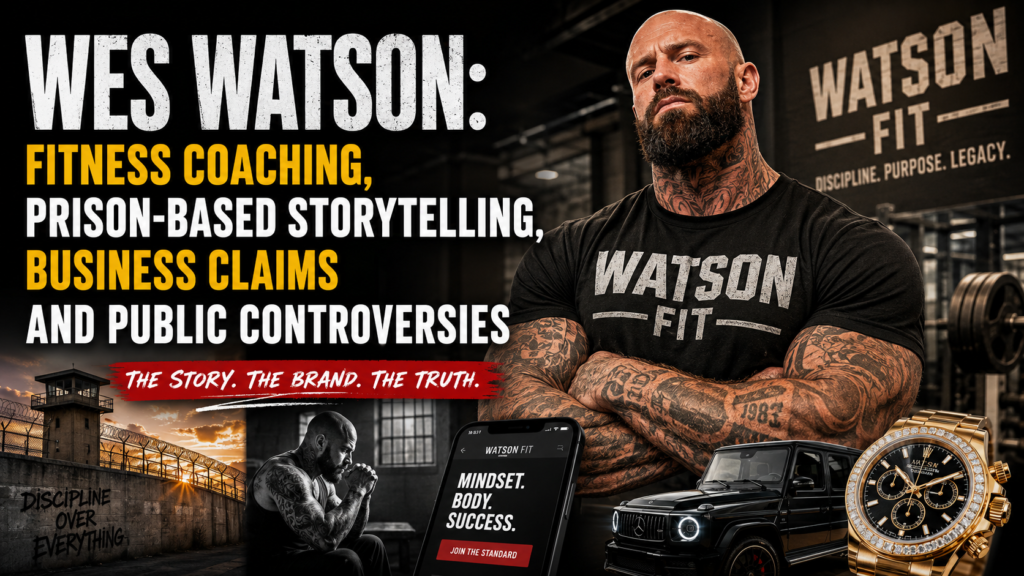
Wes Watson is an American fitness personality, motivational speaker and online coach who built a substantial audience by connecting physical discipline with his experiences in the California prison system. His videos commonly focus on accountability, structured routines, personal responsibility and the belief that repeated actions shape a person’s identity. He later converted that audience into a coaching business marketed under the Watson Fit name.
Watson’s public profile requires careful evaluation because it combines several different areas: autobiographical storytelling, fitness instruction, motivational advice, business coaching and luxury-focused marketing. Some information about him comes directly from his websites, interviews and social accounts, while other details have been established through public records and court reporting. Revenue estimates, net-worth figures and transformation claims are often repeated online without independently audited evidence.
His legal history also became more significant in 2026. Watson pleaded guilty to aggravated battery in July 2026 in connection with a December 2024 confrontation at a Miami-Dade gym. At the time of the plea, local news organizations reported that sentencing remained pending and that he faced separate unresolved charges in Broward County. Those matters should be described according to their documented legal status rather than through speculation or social-media commentary.
This guide examines Wes Watson’s content, coaching philosophy, business model and public record while clearly distinguishing verified information from self-reported claims.
Review Wes Watson’s Rise From Prison Storytelling to Online Coaching
Watson first attracted widespread attention through videos published under the GP Penitentiary Life identity. His official YouTube description presents the channel as a collection of stories and lessons drawn from the California prison system. It also stresses that his reflections on incarceration should not be interpreted as glorification.
His early content used prison experiences as the foundation for broader lessons about discipline. Instead of producing conventional exercise tutorials alone, Watson discussed routines, interpersonal conduct, emotional control and the consequences of destructive choices. He presented incarceration as an environment in which habits, physical readiness and personal standards carried immediate importance.
Watson has repeatedly said in interviews and videos that he served approximately ten years in prison. That duration is central to his personal narrative, although readers should recognize that many detailed accounts of his prison life come from Watson himself rather than from a complete set of independently published correctional records. Interviews can document what a person claims, but they do not automatically verify every detail within the story.
His rise demonstrates how a compelling personal history can become a digital brand. The prison narrative created initial interest, motivational lessons encouraged repeat viewing, and coaching programs provided a commercial product. Podcasts, social clips and guest interviews extended the same message into fitness, entrepreneurship and personal development.
This combination differentiates Watson from trainers who rely mainly on formal education or competitive credentials. His authority is primarily experiential and promotional. He asks audiences to judge his system by his physical transformation, public confidence and claimed financial success.
That distinction matters. Personal experience can be valuable, especially when discussing behavioral change, but it does not replace professional qualifications in areas such as medicine, mental-health treatment, rehabilitation, financial planning or clinical nutrition.
Examine the Discipline Principles Behind His Public Message
Watson’s central teaching is that identity develops through repeated behavior. A person who consistently trains, completes difficult work and follows a structured schedule reinforces an identity built around discipline. A person who repeatedly abandons commitments reinforces the opposite pattern.
This approach places less emphasis on temporary motivation. Watson argues that people should complete important tasks even when they feel tired, discouraged or uninterested. His videos frequently describe routines as non-negotiable, meaning that selected actions should occur regardless of mood.
Four recurring ideas shape this system:
| Principle | Practical application | Intended outcome |
|---|---|---|
| Physical discipline | Complete scheduled training and maintain nutritional consistency | Improve strength, appearance and physical confidence |
| Personal accountability | Accept responsibility for choices instead of blaming circumstances | Increase self-trust and decision-making control |
| Structured routines | Assign fixed times to exercise, work and personal development | Reduce inconsistency and distraction |
| Purposeful work | Connect daily effort to a larger personal or financial goal | Create direction and long-term motivation |
The Watson Fit website presents coaching as a process of identifying actions that clients may not recognize on their own. It also frames physical improvement as part of a wider effort involving mindset, productivity and purpose. These descriptions establish how Watson markets the service, but they should be understood as company claims rather than independent evidence of typical customer outcomes.
Several elements of this philosophy align with widely used behavior-change practices. Scheduled tasks reduce decision fatigue. Progress tracking makes consistency measurable. Clear goals can help people identify whether their behavior supports or conflicts with their priorities.
However, an effective routine must remain realistic. Training through a serious injury, ignoring symptoms of mental illness or sacrificing essential financial obligations does not represent productive discipline. Sustainable performance requires effort, recovery, adjustment and appropriate professional support.
The useful principle is not that every limit should be ignored. It is that avoidable excuses should not be confused with legitimate medical, psychological or practical constraints.
Evaluate His Fitness Advice Through Established Training Standards
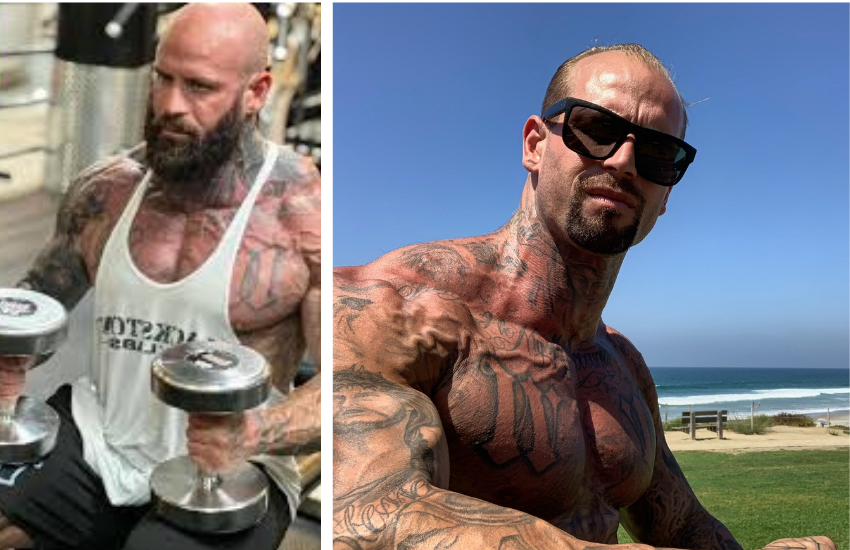
Fitness is one of the most visible parts of Watson’s brand. His muscular physique and intense presentation reinforce his message before any coaching advice is delivered. The visual result serves as marketing evidence for a system centered on resistance training, conditioning, nutrition and consistency.
Watson commonly presents exercise as a test of character. Completing a difficult workout demonstrates the ability to tolerate discomfort and follow through on a commitment. This framing can help some people approach training with greater seriousness.
Sound fitness programming, however, depends on more than intensity. A safe and effective plan should address exercise selection, weekly volume, progression, technique, recovery and the trainee’s medical history.
Resistance training should gradually increase the challenge placed on the muscles. Beginners generally require less volume than advanced athletes, and exercises should match mobility, experience and injury status. Copying an influencer’s advanced routine without adaptation can produce unnecessary fatigue or injury.
Nutrition should support the intended goal. Fat loss requires an energy deficit, while substantial muscle gain generally requires adequate calories, protein and progressive training. Highly restrictive meal plans may create fast changes, but they can also be difficult to maintain.
Recovery allows the body to adapt. Sleep, rest days and workload management are not signs of weakness. They are parts of the training process. Persistent pain, unusual shortness of breath or significant performance decline may require assessment from a qualified health professional.
The Watson Fit platform describes its service as a combination of physical and mental development. Prospective clients should determine whether a program provides individualized workouts, nutritional guidance, form assessment and modifications for injuries or health conditions. They should also ask who creates the plan and which relevant qualifications that person holds.
A coach’s personal physique demonstrates that a method worked for that individual under particular circumstances. It does not prove that the same method is safe, necessary or effective for every customer.
Assess Watson Fit Before Purchasing a Coaching Program
Watson Fit is the main commercial extension of Wes Watson’s public persona. The official website identifies him as the company’s chief executive and promotes coaching that combines fitness, mindset and personal performance.
The business appears to offer more than standardized workout plans. Watson has marketed higher-level support related to business growth, sales, personal branding and income generation. Podcast appearances have promoted large revenue figures and rapid business expansion, but such statements are generally presented by Watson or the interviewer rather than supported by publicly available audited financial statements.
Before purchasing any expensive coaching package, a buyer should request specific written information.
| Area to verify | Information to obtain |
|---|---|
| Program scope | Workouts, calls, messaging access, reviews and business materials included |
| Delivery format | Individual coaching, group sessions, prerecorded lessons or automated plans |
| Coach access | Who answers questions and how often direct contact occurs |
| Total cost | Upfront charges, installments, recurring payments and additional fees |
| Cancellation terms | Deadlines, notice procedures and possible penalties |
| Refund conditions | Eligibility, exclusions and documentation requirements |
| Expected results | Typical outcomes, time frames and factors affecting success |
Written terms matter because motivational sales calls can create urgency. A clear contract allows the customer to compare promises with actual deliverables. Buyers should save the sales page, invoice, agreement and relevant messages before making payment.
Public review sites contain some customer comments about Watson Fit, but the sample is relatively small. A limited number of reviews cannot reliably establish the experience of the full customer base. Reviews may still reveal useful questions about communication, billing or program expectations, but they should not be treated as statistically representative.
Prospective customers should also consider affordability. Coaching should not require someone to neglect housing, food, medical care or essential debt payments. A program may be valuable to one client and financially inappropriate for another.
Strong marketing can demonstrate confidence. It cannot substitute for a transparent agreement, qualified delivery and clearly defined services.
Separate Documented Achievements From Unverified Financial Claims

Watson has built a recognizable media presence. His official YouTube channel contains a large archive of prison stories, motivational videos, fitness discussions and coaching promotions. The channel’s existence, branding and published material are directly verifiable through YouTube.
He also founded or publicly represents Watson Fit, appears on interview programs and promotes paid coaching. These activities establish that he operates as a content creator and commercial coach.
Greater caution is required around claims about his exact wealth or revenue. Articles and podcast descriptions have repeated figures suggesting exceptionally high monthly income, multimillion-dollar businesses or substantial net worth. Many of these numbers originate from Watson’s statements, promotional interviews or entertainment websites rather than audited accounts.
The appropriate wording is therefore “Watson has claimed” or “a podcast description stated,” not “Watson earns” unless reliable financial documents confirm the amount.
Luxury vehicles, jewelry, large homes and expensive clothing are also not financial statements. They may be owned, financed, rented, leased or supplied for promotional purposes. Images alone do not establish equity, cash flow, profitability or net worth.
The same standard applies to client outcomes. A testimonial shows that one person reported a particular experience. It does not reveal the average result, the percentage of unsuccessful clients or the role of other factors.
Reliable evidence of coaching performance would include:
- the number of participating clients;
- clearly defined starting and ending measurements;
- consistent tracking methods;
- the time required to achieve results;
- dropout and refund rates;
- and disclosure of whether testimonials were compensated.
Without that information, transformation stories should be interpreted as individual examples rather than predictions.
Analyze the Communication Style That Drives His Audience
Watson’s delivery is direct, loud and confrontational. He frequently speaks as though he is challenging a viewer personally rather than presenting detached educational material. This style makes his content recognizable and highly suitable for short social-media clips.
His communication often follows a repeatable structure. He identifies a behavior he considers weak or self-defeating, connects it to a larger identity problem and then demands an immediate behavioral change. The viewer is encouraged to stop negotiating with discomfort and complete the required task.
This approach appeals to people who feel trapped in procrastination or inconsistent routines. A forceful message can create a temporary break from indecision. Watson’s personal account of rebuilding after prison also supports the idea that serious past mistakes do not have to determine every future outcome.
His message addresses several psychological needs:
Control: The viewer is told that daily choices remain personally manageable even when larger circumstances are difficult.
Structure: Fixed routines reduce uncertainty about what should happen next.
Belonging: Repeated phrases and shared standards create a community around discipline.
Visible progress: Physical development and financial ambition provide measurable symbols of change.
The same approach has limitations. Confrontational motivation can create shame, anxiety or unrealistic self-judgment in some people. A person with depression, trauma, an eating disorder or compulsive exercise patterns may need support that includes clinical assessment and gradual progression.
A coach’s tone should therefore be evaluated according to personal fit. Some clients respond well to firm accountability. Others perform better with collaborative planning, encouragement and flexible problem-solving.
Harshness should not be confused with competence. A coach can be demanding and knowledgeable, demanding and unqualified, gentle and knowledgeable, or gentle and unqualified. The tone alone does not establish the quality of the underlying service.
Verify His Legal Record Without Relying on Online Rumors
Wes Watson’s legal history has become an important part of his current public profile. Accurate coverage requires a clear distinction between convictions, guilty pleas, arrests, pending charges and allegations.
In July 2026, Watson pleaded guilty to aggravated battery in connection with a December 29, 2024 confrontation at Elevation Fitness in Miami-Dade County. Local reporting stated that surveillance footage showed him striking another man with a weightlifting belt. Watson’s attorney argued that the other man had traveled to confront him and raised the circumstances surrounding the encounter during court proceedings.
Reports published after the plea said prosecutors had proposed a sentence of 21 months in prison, with credit for time served, followed by seven years of probation and mental-health treatment. Those reports also stated that sentencing was scheduled for a later date. A proposed sentence should not be described as a final sentence unless a later court order confirms it.
Separate Broward County matters were also reported in 2026. Broward County’s inmate record shows an arrest for Wesley Thomas Watson on March 17, 2026. Local news coverage described multiple allegations connected to a dating-violence investigation. Those allegations are distinct from the Miami-Dade aggravated-battery plea, and unresolved charges should not be presented as convictions.
Responsible reporting should use precise language:
- A guilty plea means the defendant formally admitted guilt in court.
- An arrest means law enforcement took the person into custody.
- A charge means prosecutors allege that a law was violated.
- An allegation is a claim that has not necessarily been proven.
- A conviction follows a guilty plea or guilty verdict accepted by the court.
- A sentence is the penalty formally imposed by the judge.
This vocabulary prevents both exaggeration and minimization. Watson’s aggravated-battery plea is a documented legal fact. Separate unresolved allegations require continued attribution and should be updated only through court records or reliable reporting.
Compare His Coaching Role With Licensed Professional Services
Watson presents physical fitness, mindset, discipline and financial ambition as connected parts of one transformation. That integration may appeal to clients who prefer a single system rather than several separate advisers.
However, different problems require different qualifications.
A personal trainer can design exercise sessions and monitor training progress. A registered dietitian can address clinical nutrition needs. A licensed therapist can diagnose and treat mental-health conditions. A financial professional can evaluate taxes, debt, investments or retirement planning. A qualified business consultant can examine pricing, operations and customer acquisition.
A motivational coach may help a client establish goals, maintain routines and remain accountable. That role can be useful, but it should not be expanded into medical, psychological, legal or financial authority without appropriate credentials.
Prospective clients should ask four direct questions:
- Which subjects does the coach personally handle?
- Which qualifications support that guidance?
- Which issues are referred to licensed professionals?
- How are risks, limitations and expected outcomes disclosed?
Clear professional boundaries strengthen trust. A credible coach does not need to claim expertise in every field. Instead, the coach explains where the service is useful and where another professional is better suited.
This standard is especially important when a program uses language related to trauma, addiction, mental imprisonment or emotional recovery. Such language may be motivational, but serious psychological conditions require evidence-based assessment and treatment.
Apply the Useful Parts of His Philosophy Safely
People can adopt practical elements of Watson’s message without copying his personality, language or extreme presentation.
Begin by selecting three to five daily commitments. Each commitment should be specific and measurable. “Improve my health” is too broad. “Walk for 30 minutes after lunch” provides a clear action.
Schedule the commitments rather than waiting for motivation. A calendar entry makes the task visible and reduces repeated decision-making. Preparing workout clothes, meals or work materials in advance also makes completion easier.
Track behavior honestly. A simple record can show whether the plan is working. Missed tasks should lead to analysis rather than denial or excessive self-punishment. A pattern of failure may indicate that the goal is unrealistic, the environment is poorly designed or the task lacks personal importance.
Increase difficulty gradually. An untrained person should not immediately copy the exercise volume of an experienced athlete. Consistency at a manageable level creates a better foundation than a brief period of extreme effort followed by injury or burnout.
Connect discipline to a meaningful purpose. Physical appearance may initiate change, but health, family, confidence, career performance or independence may provide stronger long-term reasons.
The most useful interpretation of Watson’s philosophy is disciplined self-respect. That means completing difficult but constructive tasks while also protecting health, relationships and financial stability.
Check Official Sources Before Trusting Online Profiles
Search results for Wes Watson contain official accounts, news reports, fan pages, reaction videos and websites repeating unverified biographies. These sources do not carry equal evidentiary value.
His official YouTube channel provides direct evidence of his published content and how he describes his brand. The Watson Fit website provides direct evidence of the services and claims marketed by his company. These are primary sources for his own statements, but they remain interested sources because they promote his business.
Court records, sheriff databases and reputable local reporting are stronger sources for arrests, pleas and case developments. Commentary channels can provide opinions, but they should not replace official documentation.
Readers should also avoid relying on automatically generated biography sites for birth dates, relationship histories, property values or net-worth estimates. Repetition across several low-quality websites may reflect copying rather than independent confirmation.
Use this source hierarchy:
- Court orders and official public records.
- Direct statements from the person or company.
- Established reporting that cites identifiable documents.
- Recorded interviews with clear attribution.
- Customer reviews and public discussions.
- Anonymous posts, reaction videos and unsourced biography pages.
Each level can provide information, but the level determines how confidently the information should be stated.
Reach a Balanced Assessment of Wes Watson
Wes Watson built a powerful online identity by combining prison storytelling, physical transformation, confrontational motivation and paid coaching. His public content consistently emphasizes discipline, accountability, structured routines and the possibility of rebuilding after serious personal failure.
Several parts of that message can be constructive. Exercise can improve health and confidence. Fixed routines can reduce procrastination. Honest self-assessment can help people change destructive habits. A difficult past does not prevent future improvement.
A balanced assessment must also recognize the limits of his authority and the risks of personality-driven coaching. Financial claims require independent verification. Customer testimonials do not establish average results. A muscular physique does not prove expertise in every health-related field. High-pressure sales should not replace written terms and informed purchasing decisions.
His current legal record must be described with equal precision. Watson pleaded guilty to aggravated battery in the Miami-Dade gym case in July 2026. Separate Broward County allegations were reported as pending, and pending matters should not be described as established guilt.
Wes Watson remains notable because his brand offers more than fitness instruction. It offers a complete identity based on strength, responsibility, visible achievement and rejection of excuses. For supporters, that identity represents transformation. For critics, it raises concerns about aggression, commercial pressure and the gap between marketing claims and independently verified evidence.
The most responsible conclusion lies between unquestioning admiration and unsupported dismissal. Watson has demonstrated an ability to attract attention, publish consistently and commercialize a distinctive personal story. Readers and potential customers should evaluate the underlying advice, qualifications, contracts, evidence and public record separately from the emotional force of the presentation.
Answer Common Questions About Wes Watson
Who is Wes Watson?
Wes Watson is a fitness personality, motivational speaker and online coach known for discussing his experiences in the California prison system. He publishes content under the GP Penitentiary Life identity and promotes coaching through Watson Fit.
How long did Wes Watson spend in prison?
Watson has repeatedly stated that he spent approximately ten years in prison. That figure is widely presented through his own interviews and content, so it should be attributed to him unless supported by a complete independent correctional record.
What does Watson Fit offer?
Watson Fit markets coaching related to physical fitness, mindset, accountability and personal performance. Prospective customers should request written details about the exact services, access level, price, cancellation process and refund terms.
Are Wes Watson’s income and net-worth claims verified?
Publicly repeated figures about his income and net worth are generally based on self-reported claims, interviews or entertainment websites. They should not be treated as independently verified financial facts without audited records.
Did Wes Watson plead guilty in the gym assault case?
Yes. Local news organizations reported that Watson pleaded guilty to aggravated battery in July 2026 in connection with a December 2024 confrontation at a Miami-Dade gym. Reports at that time said final sentencing would occur later.
Is Wes Watson’s coaching suitable for everyone?
No coaching style is suitable for every person. Watson’s confrontational approach may motivate some clients, while others may need a more collaborative method. People managing injuries, mental-health conditions or clinical nutrition needs should seek appropriately licensed professionals.