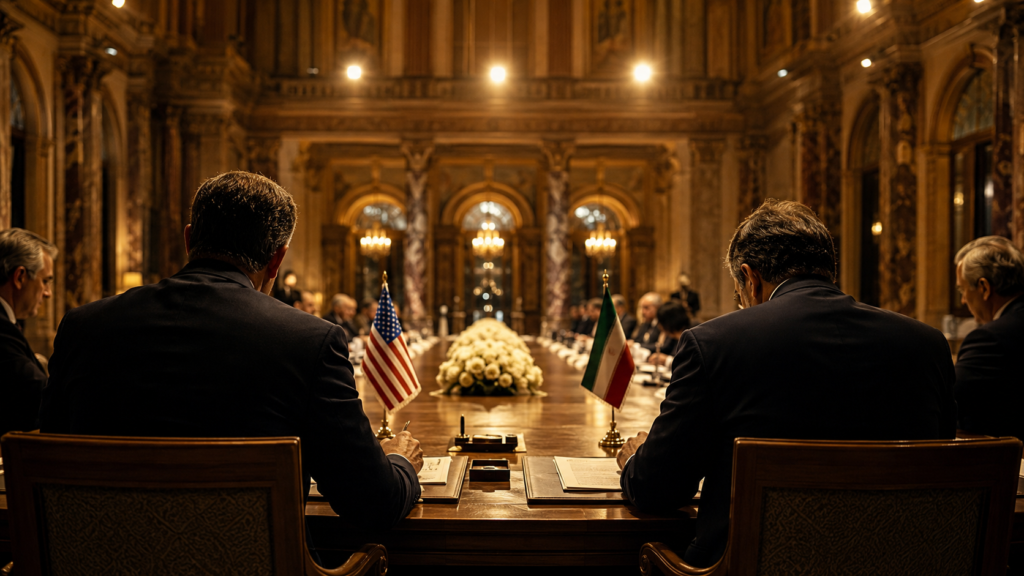
One week after the United States and Iran signed a 14-point memorandum of understanding in France, the agreement has delivered its first measurable economic and strategic results. While questions remain over long-term enforcement, both governments have secured immediate benefits, particularly in energy markets and regional stability. The coming weeks will determine whether these early gains can evolve into a lasting framework for cooperation.
The US Eases Pressure on Global Energy Markets
Washington’s most visible achievement has been the partial reopening of the Strait of Hormuz, one of the world’s most important energy corridors. Kpler recorded 70 vessel crossings on Wednesday, more than double the previous day, although traffic remains below the pre-war average of more than 100 daily transits. Shipping is still restricted by Iranian permit requirements in the northern corridor, while naval mines have limited movement to a single lane. A cargo vessel struck by an Iranian drone on Thursday underscored that commercial shipping remains exposed to security risks.
The reopening has helped reduce fears of a prolonged energy disruption. According to the International Energy Agency (IEA), around 20 million barrels of oil and petroleum products normally pass through the Strait of Hormuz each day, representing roughly 20% of global oil consumption. JPMorgan has described the temporary closure as the largest oil supply shock on record, a scenario President Donald Trump said could have triggered an “economic catastrophe.”
As GrowBusinessMag has previously reported, the crisis sent shockwaves through global energy markets and complicated an already fragile shipping recovery.
Iran Secures Economic Breathing Room
Iran has moved quickly to benefit from the agreement. Following the end of the US naval blockade and the temporary waiver of Treasury sanctions, Tehran exported 3.8 million barrels of crude, according to TankerTrackers. The country can now market roughly 2 million barrels of oil per day, about one-third more than before the conflict, while selling at stronger prices instead of relying on deep discounts.
Tehran is also seeking access to more than $100 billion in frozen overseas assets. Although the memorandum states the funds will become fully available, it does not specify when the transfers will begin. The agreement further outlines a proposed $300 billion privately financed investment fund designed to support Iran’s long-term economic recovery.
Unresolved Issues Continue to Test the Agreement
Not every part of the deal has been settled. President Trump has said UN inspectors would receive permanent access to Iran’s nuclear facilities, but Tehran insists it has only reaffirmed its existing obligations under the Nuclear Non-Proliferation Treaty rather than accepted broader inspection powers.
Lebanon also remains a major flashpoint. Israel has made clear it is not bound by the agreement and has carried out its deepest military operations in Lebanon in a quarter-century. The possibility that economic relief could strengthen Iran’s regional allies continues to fuel criticism of the deal.
Energy analysts also caution that restoring confidence will take longer than reopening shipping lanes. IEA Executive Director Fatih Birol recently noted that “the single most important solution” is the full reopening of the Strait of Hormuz, emphasizing that secure maritime trade remains essential for lasting market stability. As GrowBusinessMag reported, shipping stalls and renewed closures have continued to test that stability in recent weeks.
Outlook
Attention is now shifting to the end of the 60-day ceasefire. If negotiations fail to produce a longer-term arrangement, Iran could begin charging transit fees for vessels using the Strait of Hormuz, creating a new source of revenue while adding fresh costs for global shipping. For now, however, both Washington and Tehran have achieved meaningful short-term gains, helping stabilize energy markets and contributing to the recent easing in oil prices that followed the initial reopening of the strait.