
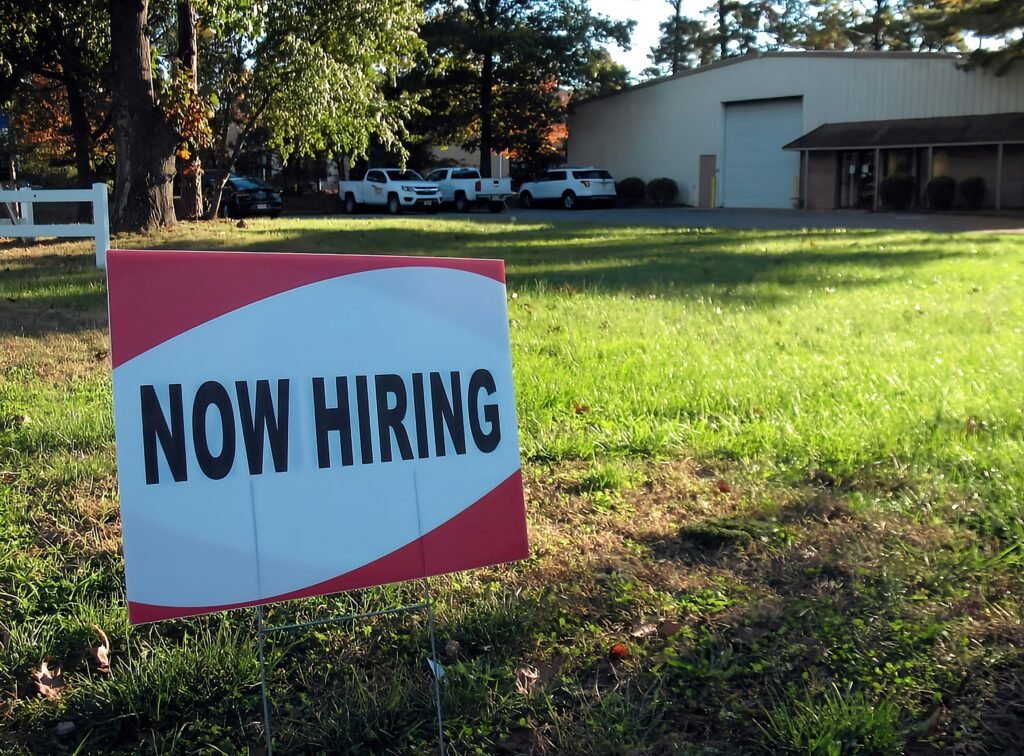
The US labor market delivered an unexpectedly strong performance in May, easing concerns that hiring activity was losing steam. Employers added substantially more jobs than forecast, signaling that businesses remain willing to expand their workforce despite rising costs and ongoing economic uncertainty.
The latest employment figures suggest the labor market is finding firmer footing after a prolonged period of uneven growth. At the same time, policymakers and investors are weighing whether stronger hiring can withstand mounting inflation pressures driven by higher energy prices.
Hiring Beats Expectations Across Key Sectors
According to the Bureau of Labor Statistics, employers added 172,000 jobs in May, comfortably surpassing expectations of roughly 105,000. The unemployment rate remained unchanged at 4.3%, while payroll growth exceeded 100,000 for a third consecutive month, a milestone not achieved since early 2024.
The report also included meaningful upward revisions to prior months. March job gains were revised higher to 214,000, and April payroll growth was adjusted to 179,000. Those revisions pushed the three-month average to 188,000 jobs per month, a significant improvement from 2025, when monthly gains often struggled to gain traction.
From an economist’s perspective, the report points to a labor market that is strengthening in a measured way. Hiring remains healthy enough to support economic activity, but not so strong that it immediately raises concerns about an overheating economy.
Job Growth Expands Beyond Healthcare
A key takeaway from the May report was the broader participation across industries. While healthcare remained a major source of hiring, employment gains also accelerated in leisure and hospitality, local government, construction, manufacturing, transportation, and temporary staffing.
Leisure and hospitality businesses added approximately 70,000 jobs, while government employment increased by 52,000 positions. Healthcare and social assistance contributed another 47,200 jobs, continuing a trend that has supported payroll growth throughout the past year.
Temporary help services also posted a fifth straight month of employment gains. Labor economists often view temporary hiring as an early signal of future workforce demand, making the recent improvement a potentially encouraging sign for broader job creation.
Inflation Concerns Continue to Cast a Shadow
Despite stronger hiring, many workers continue to face pressure from rising living expenses. Annual wage growth slowed to 3.4% in May from 3.6% in April, indicating that paychecks are not increasing as quickly as they were earlier in the year.
Inflation remains a significant challenge. Bureau of Labor Statistics data showed the Consumer Price Index climbed from 2.4% at the start of 2026 to 3.8% in April, with economists expecting further acceleration in upcoming reports. If inflation continues to outpace wage growth, household purchasing power could come under additional strain.
Outlook
The May employment report offers evidence that the labor market remains resilient and increasingly broad-based. However, the next phase of the economic story may depend less on job creation and more on inflation. If price pressures continue to intensify, the Federal Reserve could face difficult decisions that shape both hiring trends and overall economic growth in the second half of the year.