

The Guardians vs Blue Jays matchup gives baseball fans a useful contrast between two American League teams with different strengths, roster construction, and game-management styles. Cleveland often places significant value on pitching execution, defense, baserunning, and situational offense, while Toronto can become especially dangerous when its lineup combines patience, hard contact, and extra-base power.
For readers comparing recent results, researching a future matchup, reviewing betting factors, or trying to understand why one team has an advantage on a particular day, the most reliable approach is to look beyond the final score. Starting pitchers, bullpen availability, confirmed lineups, injuries, recent workload, venue, platoon matchups, and underlying offensive performance all contribute to the outcome.
The 2026 regular-season meetings offer a useful recent sample. Cleveland and Toronto played six times, and the Blue Jays won four of those games. Toronto also finished the series with the stronger overall run differential, although several games demonstrated how quickly control can shift from one team to the other. That makes this matchup especially important to evaluate on a game-by-game basis rather than relying on broad assumptions.
Review the Complete Guardians vs Blue Jays 2026 Results
Begin by reviewing the full series rather than selecting one game that supports a preferred conclusion. The Guardians and Blue Jays met six times during the 2026 regular season. The first three-game series took place in Toronto in April, while the second was played in Cleveland in September.
Cleveland won the opener at Rogers Centre 8-6 on April 24. Toronto responded by taking the next two games 5-3 and 4-2. When the teams met again at Progressive Field in September, Cleveland opened the series with a 6-1 victory before Toronto answered with an 11-0 win and a 6-3 victory.
The resulting 4-2 advantage for Toronto is meaningful, but it should not be interpreted as proof that the Blue Jays automatically held a decisive advantage in every matchup. Cleveland won two games convincingly, and individual pitching matchups produced very different game environments.
| Date | Location | Final Score | Winner |
|---|---|---|---|
| April 24, 2026 | Rogers Centre | Guardians 8, Blue Jays 6 | Cleveland |
| April 25, 2026 | Rogers Centre | Guardians 3, Blue Jays 5 | Toronto |
| April 26, 2026 | Rogers Centre | Guardians 2, Blue Jays 4 | Toronto |
| September 1, 2026 | Progressive Field | Blue Jays 1, Guardians 6 | Cleveland |
| September 2, 2026 | Progressive Field | Blue Jays 11, Guardians 0 | Toronto |
| September 3, 2026 | Progressive Field | Blue Jays 6, Guardians 3 | Toronto |
Toronto scored 33 total runs in the six games, while Cleveland scored 22. That 11-run difference was influenced substantially by Toronto’s 11-0 victory on September 2, so the aggregate total should be interpreted alongside the individual game results rather than in isolation.
Evaluate the Starting Pitchers Before Judging Either Team
The most important step in analyzing a future Guardians vs Blue Jays game is evaluating the scheduled starting pitchers. Team-level statistics provide useful background, but starting pitching can significantly alter the expected outcome of a single MLB game.
A strong starter can suppress a productive lineup for six or seven innings, while an inconsistent starter can force the bullpen into the game early. That distinction matters because bullpen usage changes from day to day. A team that looks strong on paper may be disadvantaged if its best relievers pitched heavily the previous night.
The first pitching characteristics to examine are handedness, strikeout ability, walk prevention, home-run rate, recent pitch count, and velocity. Pitchers with strong command generally have more ways to control an opposing lineup because they can work ahead in counts and expand the strike zone once hitters are behind.
Recent performance deserves attention, but it should be interpreted carefully. A pitcher can post a strong ERA over several starts while allowing unusually hard contact, just as a pitcher can produce a poor ERA despite strong strikeout and walk numbers. Looking at multiple indicators creates a more reliable assessment than relying on one statistic.
For Cleveland against Toronto, limiting free baserunners is especially important. Toronto becomes considerably more dangerous when walks or singles place runners on base ahead of its power threats. Cleveland’s pitchers therefore benefit from forcing the Blue Jays to earn their offense through contact rather than providing additional opportunities through control problems.
Compare Cleveland’s Offensive Approach With Toronto’s Run Prevention
Cleveland’s offense is most effective when it combines on-base ability, contact, speed, and timely extra-base hits. The Guardians do not need to dominate the home-run column in every game to create pressure, but they do need to avoid long stretches of empty plate appearances.
Against Toronto, productive at-bats become especially important. A hitter who advances a runner, forces a long plate appearance, or reaches base ahead of the middle of the order can contribute even without producing a home run. Those incremental advantages often determine whether Cleveland scores two runs or five.
The 2026 results reinforce that point. Cleveland scored eight runs in its April 24 victory and six in its September 1 win. In the four losses, however, the Guardians never scored more than three runs.
That pattern does not establish a universal scoring threshold, but it shows how difficult Cleveland’s path becomes when its offense fails to generate sustained pressure. Toronto has enough offensive ability to punish a team that relies on winning low-scoring games every night.
A useful evaluation should therefore focus on Cleveland’s on-base opportunities, quality of contact, production with runners in scoring position, and ability to prevent double plays. These areas reveal more about offensive performance than batting average alone.
Measure Toronto’s Lineup Depth Across All Nine Spots
Toronto should be evaluated as a complete lineup rather than as a group centered on one or two recognizable hitters. Deep batting orders create challenges because pitchers cannot simply navigate around the most dangerous players.
When several Toronto hitters reach base consistently, the lineup creates repeated high-leverage situations. Pitch counts rise, starters work from the stretch more often, and Cleveland may need to use premium relievers earlier than planned.
The Blue Jays showed multiple methods of generating offense in the September 2026 series. In the 11-0 win on September 2, Toronto produced extensive hard contact and repeatedly created extra-base damage. In the next game, the Blue Jays also benefited from a high number of walks, demonstrating that offensive pressure can come from plate discipline as well as power.
Those two approaches are important because they require different responses. A pitcher can sometimes limit power by working carefully around dangerous zones, but excessive caution can create walks. Conversely, attacking the strike zone aggressively can reduce free passes but increase the risk of hard contact.
The best Cleveland pitching performance therefore requires balance. Pitchers must challenge hitters while still changing speeds, locations, and eye levels enough to prevent Toronto from settling into predictable patterns.
Track José Ramírez and Cleveland’s Most Important Run Producers
Any serious Guardians vs Blue Jays analysis should include Cleveland’s top offensive threats, with José Ramírez receiving particular attention because of his ability to influence the game in multiple ways.
Ramírez can affect a game through power, extra-base hits, plate discipline, speed, and pressure on the defense. His value is not limited to whether he hits a home run. Reaching base ahead of other productive hitters, stealing a base, or forcing pitchers to work carefully can change how an inning develops.
For Cleveland, lineup protection also matters. Toronto can pitch more selectively around a dangerous hitter if the following batters are struggling. When Cleveland receives production from multiple spots in the order, opposing pitchers have fewer opportunities to avoid challenging the team’s best hitters.
This is one reason evaluating only season-long star statistics can be misleading. A team’s strongest hitter can be performing well while the overall offense remains inefficient. The surrounding lineup determines how often individual production turns into runs.
Readers should therefore assess Ramírez within the broader Cleveland batting order. The relevant question is not only whether he is hitting well, but whether the hitters immediately before and after him are reaching base and converting opportunities.
Examine Bullpen Availability Before Projecting the Final Innings
Bullpen strength is one of the most frequently oversimplified parts of baseball analysis. Season ERA and strikeout totals are useful, but they do not tell you which relievers are actually available on a specific day.
If a closer threw 30 pitches the previous night, the manager may avoid using him. If multiple setup relievers worked on consecutive days, a team may have to rely on lower-leverage options in a close game.
That makes daily bullpen usage essential for evaluating Guardians vs Blue Jays. Cleveland may appear to have an advantage based on overall bullpen performance, but Toronto could hold the stronger late-game position if Cleveland’s top relievers are unavailable.
Managers also do not always save their best reliever for the ninth inning. A dangerous part of the lineup may appear in the seventh or eighth, creating a higher-leverage situation than the final inning itself.
This strategic element becomes especially important when José Ramírez or Toronto’s strongest run producers are due to bat. Managers may choose their best matchup at that moment instead of following traditional inning-based roles.
The most trustworthy pregame analysis therefore considers recent relief appearances, pitch counts, handedness, and expected lineup pockets.
Separate Home-Field Effects From Actual Team Quality
The venue matters in Guardians vs Blue Jays games, but home field should not be treated as a decisive factor by itself.
Toronto plays at Rogers Centre, while Cleveland plays at Progressive Field. Each ballpark creates a different environment in terms of familiarity, dimensions, crowd support, travel schedule, and batting order advantage.
The 2026 season series provides a useful warning against overvaluing location. Toronto won two of three games at Rogers Centre, but it also won two of three in Cleveland. The Guardians recorded exactly one victory in each venue.
That pattern suggests the specific pitching and offensive matchups mattered more than simply which team was playing at home.
Venue still deserves consideration because ballpark characteristics can influence certain hitters and pitchers. Weather can also matter in outdoor conditions, and teams batting last gain a tactical advantage in tied late-inning situations.
However, home field should be treated as one component of the analysis rather than a shortcut to a prediction.
Verify the Confirmed Lineups Before Making a Prediction
One of the simplest ways to improve the accuracy of Guardians vs Blue Jays analysis is to wait for confirmed starting lineups before making a strong prediction.
Baseball teams regularly alter their batting orders because of pitcher handedness, injuries, scheduled rest, defensive needs, or recent performance. A lineup posted several hours before first pitch can materially change the expected offensive output.
The absence of one elite hitter can also affect several other players. A replacement may bat lower in the order, another player may move into a run-producing position, and the overall balance of left-handed and right-handed hitters may change.
Lineup position matters because hitters near the top receive more expected plate appearances. Moving a high-on-base player from seventh to second can significantly affect how often the team’s best power hitters bat with runners aboard.
Confirmed lineups therefore deserve more weight than generalized season averages when evaluating a single game.
Readers looking for the most reliable Guardians vs Blue Jays prediction should compare the confirmed batting orders with the scheduled starting pitchers before drawing a final conclusion.
Review Injuries and Roster Changes Before Using Historical Trends
Recent team history is useful only when the current rosters remain reasonably comparable.
MLB teams change throughout the season because of injuries, minor-league promotions, trades, bullpen turnover, rotation changes, and performance-based decisions. A trend created by players who are no longer active may have little relevance to the next matchup.
That is why current injury reports matter. Losing a starting pitcher, middle-of-the-order hitter, shortstop, catcher, or high-leverage reliever can affect the team in different ways.
A catcher injury, for example, may influence pitch calling and opposing stolen-base attempts in addition to offense. A shortstop injury can alter infield defense. The absence of a closer can shift several relievers into unfamiliar roles.
Historical results should therefore be filtered through current roster information. Toronto’s recent success against Cleveland may be informative, but it is not sufficient evidence by itself to predict the next game.
The strongest analysis combines past performance with current personnel.
Use Advanced Statistics Without Ignoring Game Situations
Advanced metrics can improve Guardians vs Blue Jays analysis when they are used to answer specific questions rather than presented without interpretation.
Weighted offensive metrics can help compare hitters across different environments. Strikeout and walk percentages show how effectively players control plate appearances. Expected contact measures can provide insight into whether recent results are supported by the quality of contact.
Pitcher analysis can also benefit from strikeout-minus-walk rate, swinging-strike rate, ground-ball percentage, velocity, and home-run prevention.
However, no statistic perfectly predicts a single baseball game. Even elite pitchers allow home runs. Strong hitters go hitless. Defensive positioning and sequencing can create outcomes that differ sharply from expected performance.
The most responsible use of advanced statistics is probabilistic. Metrics can identify strengths, weaknesses, and likely outcomes, but they should not be presented as guarantees.
This distinction is especially important for betting-related content. Readers should understand that analytics can improve decision quality without eliminating uncertainty.
Interpret Head-to-Head Trends Carefully
Head-to-head records are popular because they are easy to understand, but they should be handled carefully.
Toronto’s 4-2 advantage over Cleveland in 2026 shows which team performed better in that six-game sample. It does not prove that Toronto has a permanent matchup advantage.
Six games represent a small portion of an MLB season. Pitching matchups differ from game to game, and baseball contains significant short-term variance.
The most useful head-to-head trends involve stable individual matchups. If the same hitter repeatedly faces the same pitcher, historical plate appearances may reveal meaningful patterns in pitch recognition or approach.
Even then, sample size matters. Three successful at-bats against a pitcher tell us very little. Dozens of plate appearances provide a more useful starting point, although changes in velocity, repertoire, health, and hitter development can still reduce the relevance of older data.
For that reason, head-to-head information should support current analysis rather than replace it.
Compare the Most Important Guardians vs Blue Jays Matchup Factors

A structured comparison makes it easier to understand where each side can gain an advantage.
| Factor | Cleveland Focus | Toronto Focus |
|---|---|---|
| Starting pitching | Limit walks and keep Toronto from extending innings | Control Cleveland’s contact and baserunning |
| Offense | Reach base ahead of primary run producers | Create traffic and extra-base damage |
| Bullpen | Protect narrow leads with rested leverage arms | Exploit Cleveland if top relievers are unavailable |
| Defense | Convert contact into outs and prevent extra bases | Limit Cleveland’s pressure game |
| Plate discipline | Force Toronto pitchers into deeper counts | Avoid chasing and create free baserunners |
| Power | Capitalize on mistakes in favorable counts | Produce multi-run damage throughout the lineup |
| Baserunning | Create scoring opportunities without relying on homers | Control the running game and prevent advancement |
| Lineup depth | Extend production beyond the stars | Force pitchers to work through difficult at-bats |
No single category determines the game. The objective is to identify which team holds advantages in the categories most likely to matter against the day’s specific opponent.
Monitor the First Three Innings for Early Matchup Signals
The first three innings often reveal whether the pregame analysis is matching reality.
Watch the starting pitchers’ command first. A pitcher who is consistently falling behind hitters may be vulnerable even if he has not allowed runs yet. High pitch counts can also reduce the likelihood of a long outing.
Next, observe contact quality. Hard outs can signal that hitters are seeing the pitcher well, while weak contact may indicate that the pitcher is successfully disrupting timing.
Plate discipline is another useful indicator. If Toronto hitters are laying off Cleveland’s breaking pitches outside the strike zone, the starter may be forced to attack more directly. If Cleveland hitters are chasing Toronto’s secondary pitches, the Blue Jays can control at-bats without throwing many fastballs in dangerous locations.
These early indicators often provide more information than the scoreboard alone.
A team can lead 2-0 despite being consistently outplayed, while another team can trail after several hard-hit balls find defenders. Evaluating the quality of the process provides a more complete understanding of the game.
Watch Walks, Strikeouts, and Extra-Base Hits During Live Play
Three statistics provide especially useful live-game insight: walks, strikeouts, and extra-base hits.
Walks show which pitching staff is giving the opponent free opportunities. A single walk may not matter, but repeated walks increase pitch counts and create situations where one hit can produce multiple runs.
Strikeouts reduce the opponent’s ability to advance runners without a hit. A pitcher who consistently records strikeouts with runners in scoring position can escape situations that would otherwise produce sacrifice flies or productive ground balls.
Extra-base hits are among the clearest indicators of offensive damage. Doubles, triples, and home runs can turn an inning quickly because they advance runners multiple bases without requiring several consecutive hits.
The 2026 series demonstrated this volatility. Cleveland used home-run power effectively in its September 1 victory, while Toronto responded with extensive extra-base damage one day later.
Those back-to-back results are a reminder that offensive performance can change dramatically even when the teams remain in the same stadium.
Evaluate Guardians vs Blue Jays Betting Markets Responsibly

Betting analysis should begin with probability rather than certainty.
The moneyline reflects the market’s assessment of each team’s chances of winning after accounting for factors such as starting pitching, venue, lineup quality, and public betting behavior.
The run line adds the requirement that the favored team win by a certain margin, while totals markets focus on expected combined scoring.
For Guardians vs Blue Jays totals, starting pitching and bullpen condition are particularly important. Two strong starters can create a lower-scoring environment, but an overworked bullpen can change that expectation late in the game.
Lineups also matter. If multiple regular starters are resting or injured, the expected run environment may decline. Conversely, favorable platoon matchups can increase offensive expectations.
Betting markets should never be treated as guaranteed outcomes. Baseball contains substantial variance because a few pitches can determine an entire game.
Anyone using matchup analysis for wagering should set limits, avoid chasing losses, and treat sports betting as entertainment rather than a reliable source of income.
Use Trustworthy Sources for Guardians vs Blue Jays Information
Reliable source selection is essential when following schedules, lineups, injuries, scores, and statistical trends.
Official MLB sources are appropriate for schedules, game status, official scoring, and roster information. Team channels can provide lineup announcements and injury updates. Established statistical databases can provide historical game logs and player performance data.
Information should ideally be cross-checked when it affects an important conclusion. Probable pitchers, for example, can change because of injury, weather, rotation adjustments, or tactical decisions.
The same principle applies to betting lines and projected lineups. Early information may differ substantially from what is available shortly before first pitch.
Readers should also distinguish between factual reporting and opinion. A confirmed lineup is factual information. A prediction that Cleveland will win because of a pitching matchup is analysis.
Keeping those categories separate improves transparency and makes it easier for readers to evaluate the reasoning.
Build a Reliable Guardians vs Blue Jays Prediction Process
A repeatable process produces better analysis than relying on intuition alone.
Start with the confirmed starting pitchers. Compare their recent velocity, workload, strikeout rate, walk rate, home-run prevention, and platoon splits.
Next, review the confirmed lineups. Determine whether important hitters are active, which players have favorable handedness matchups, and whether the batting order creates strong on-base opportunities ahead of power hitters.
Then check bullpen availability. Identify which relievers worked recently and whether either manager may have limited high-leverage options.
After that, consider venue, weather where relevant, defensive quality, recent injuries, and travel schedule.
Finally, compare the available betting price or public prediction with your own probability assessment.
This method does not eliminate uncertainty. Its purpose is to organize the most relevant information so the final judgment is based on evidence rather than narrative.
Apply the 2026 Results Without Overstating Their Meaning
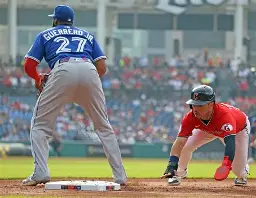
Toronto’s four wins in six games establish that the Blue Jays performed better across the 2026 season series. That is a useful factual conclusion.
It is less reliable to claim that those results guarantee future dominance.
Cleveland demonstrated that it could control Toronto when its pitching and offense aligned. The Guardians won 8-6 in April and 6-1 in September. Toronto, meanwhile, demonstrated both consistency and a higher single-game scoring ceiling during the matchup.
The 11-0 Toronto victory is especially notable because it illustrates how quickly a baseball game can become one-sided. However, using that result alone to judge the teams would ignore Cleveland’s convincing victory one day earlier.
The most defensible takeaway is therefore balanced: Toronto held the stronger overall 2026 head-to-head record, while individual game outcomes remained highly dependent on starting pitching, offensive execution, and game-specific conditions.
Follow the Guardians vs Blue Jays Game With the Right Expectations
Baseball predictions are probabilities rather than certainties.
Even the strongest matchup analysis can be affected by a defensive error, unusual ballpark bounce, missed strike call, injury, weather change, or one mistake pitch.
That uncertainty is part of the reason single-game predictions require caution. A team can have the better starting pitcher, stronger bullpen, and deeper lineup while still losing.
The objective of analysis should therefore be to identify the most likely advantages rather than to pretend the outcome is predetermined.
For Guardians vs Blue Jays, the most reliable areas to monitor are starting pitching, walk prevention, lineup depth, bullpen availability, extra-base power, and situational execution.
When those factors point strongly toward one team, confidence can increase. When the advantages are split, a close game becomes more likely.
Guardians vs Blue Jays Conclusion
The Guardians vs Blue Jays matchup rewards detailed analysis because the two teams can win through different combinations of pitching, offensive pressure, bullpen execution, and situational baseball.
Toronto won four of the six meetings during the 2026 regular season and outscored Cleveland 33-22. Those results provide useful recent evidence, but they do not replace game-specific analysis.
The most reliable way to evaluate a future Cleveland Guardians vs Toronto Blue Jays matchup is to begin with the confirmed starting pitchers, then review the lineups, bullpen availability, injuries, recent performance, and venue. Historical results can provide supporting information, but current conditions should carry more weight.
Readers should also distinguish between facts and projections. Scores, lineups, and player statistics can be verified. Predictions remain informed judgments that contain uncertainty.
That evidence-based approach provides a clearer, more trustworthy understanding of the matchup and helps fans interpret both pregame expectations and live-game developments with greater accuracy.
Guardians vs Blue Jays FAQs
Who won the Guardians vs Blue Jays 2026 season series?
The Toronto Blue Jays won four of the six regular-season games against the Cleveland Guardians in 2026. Toronto won two games at Rogers Centre and two at Progressive Field.
How many times did the Guardians and Blue Jays play in 2026?
The teams played six regular-season games. Three took place in Toronto in April, and three were played in Cleveland in September.
What was the largest margin of victory in the 2026 series?
Toronto recorded the largest margin when it defeated Cleveland 11-0 on September 2, 2026.
Which factor matters most in a Guardians vs Blue Jays prediction?
The starting pitching matchup is usually the best place to begin. Bullpen availability, confirmed lineups, injuries, platoon advantages, and recent performance should also be considered before making a prediction.
Are Guardians vs Blue Jays head-to-head records reliable for predictions?
They are useful as supporting information but should not be used alone. Rosters, starting pitchers, injuries, and bullpen conditions change frequently, making current game information more valuable than older results.
Where do the Guardians and Blue Jays play their home games?
The Cleveland Guardians play their home games at Progressive Field in Cleveland, Ohio. The Toronto Blue Jays play at Rogers Centre in Toronto, Ontario.