
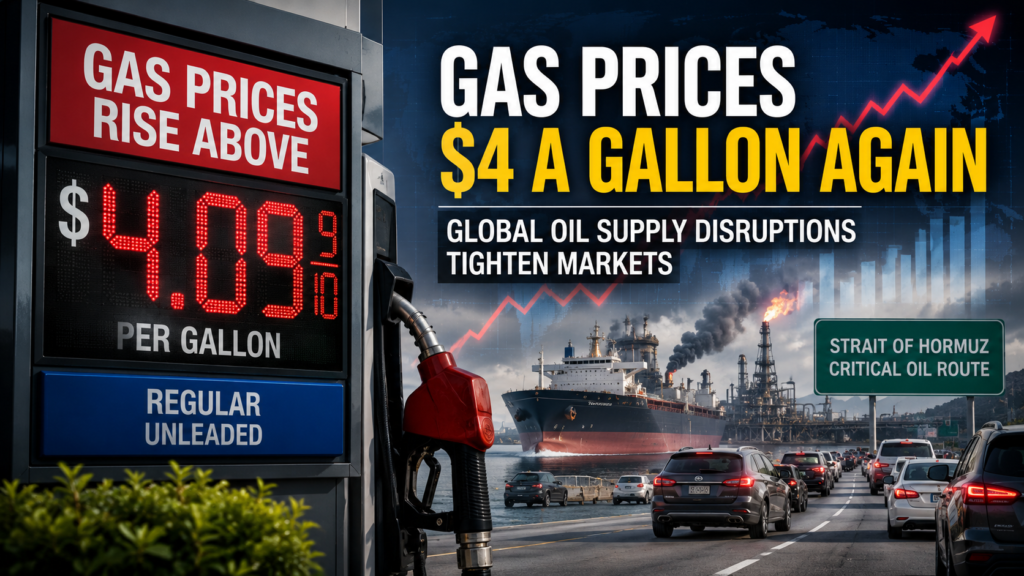
American motorists are once again paying more at the pump as the national average price of gasoline has climbed above the $4-per-gallon mark. The latest increase reflects mounting pressure on global energy markets after renewed disruptions to oil shipments through the Strait of Hormuz, a critical trade route for the world’s crude supplies. Higher oil prices, tightening fuel supplies, and strong seasonal demand are combining to keep gasoline costs elevated, with analysts expecting little relief in the short term.
Gas Prices Cross the $4 Threshold Once More
According to AAA, the national average price for a gallon of regular gasoline edged above $4 on Monday, returning to a level many consumers associate with higher household expenses and increased travel costs.
The increase marks a sharp rise from the $2.98 per gallon national average recorded before disruptions to oil shipments began. Earlier this year, prices climbed to a four-year high of $4.56 per gallon before easing after hopes that shipping lanes through the Strait of Hormuz would reopen. Those gains proved temporary, however, as renewed attacks on vessels attempting to leave the region once again interrupted oil flows. Over the past week alone, the national average has risen by roughly 13 cents.
Global Supply Pressures Push Oil Markets Higher
The jump in gasoline prices closely follows gains in crude oil markets. Brent crude briefly traded above $90 per barrel, its highest level since early June, after rising about 16% during the past week. West Texas Intermediate, the U.S. benchmark, has also gained approximately $12 per barrel this month, reflecting growing concerns over global supply.
Additional disruptions have further tightened fuel markets. Recent drone attacks on Russian refineries have reduced refining capacity, forcing Russia to import gasoline after years as a net exporter. The shift has heightened concerns about the availability of refined petroleum products worldwide, adding upward pressure to wholesale fuel prices.
A key indicator of market sensitivity is the Strait of Hormuz itself. According to the U.S. Energy Information Administration (EIA), roughly 20 million barrels of oil passed through the Strait of Hormuz each day in 2024, representing about 20% of global petroleum liquids consumption. That volume highlights why even temporary disruptions in the waterway can quickly influence fuel prices around the world.
Regional Fuel Prices Show Wide Differences
Despite the national average exceeding $4 per gallon, pump prices continue to vary significantly by state. Indiana reports one of the country’s lowest statewide averages at approximately $3.35 per gallon, while California remains the most expensive market at around $5.49 per gallon. Washington and Hawaii also continue to average above $5 per gallon, according to AAA.
Retail fuel prices often decline more slowly than they rise because station owners adjust prices based on replacement costs for wholesale gasoline. Many independent stations operate on narrow margins, making them cautious about lowering prices until wholesale costs show sustained declines.
As GrowBusinessMag has observed across energy markets, fluctuations in global supply chains increasingly affect transportation costs, household budgets, and operating expenses for businesses that rely on fuel-intensive logistics.
Outlook
Industry observers note that elevated crude oil prices, ongoing shipping disruptions, and strong summer driving demand are likely to keep gasoline prices under pressure in the weeks ahead. With Labor Day travel still approaching and supply risks remaining unresolved, motorists should be prepared for continued price volatility unless global oil flows stabilize and refining conditions improve.