
Leading appliance manufacturers, including LG, Samsung, Whirlpool, GE Appliances, Maytag, and Electrolux, offer washer and dryer sets with different drum capacities, cleaning technologies, drying systems, and smart features. Some models prioritize affordability and straightforward operation, while others provide automatic detergent dispensing, moisture-sensing dryers, steam cycles, and Wi-Fi connectivity.
The best washer and dryer set is not necessarily the most expensive or feature-rich option. It is the combination that matches your laundry volume, available space, household budget, and installation requirements.
This comprehensive buying guide explains how to choose washer and dryer sets based on verified energy-efficiency standards, appliance specifications, independent testing, and practical ownership considerations. It also highlights important buying mistakes, maintenance requirements, and questions to ask before purchasing.
Research note: This guide draws on U.S. Environmental Protection Agency ENERGY STAR guidance, manufacturer specification principles, and Consumer Reports’ published appliance evaluations, including its July 2026 review of matching washer and dryer sets. Recommendations reflect published research and established appliance-selection practices, not claims of personal hands-on testing. Product availability, pricing, and installation requirements vary by market.
1. Choose the Best Washer and Dryer Set for Your Laundry Needs
Start by identifying how frequently your household washes clothes, what types of fabrics you clean, and how much laundry you normally process in one cycle. A household that washes daily loads of children’s clothing needs different equipment from someone who washes a few loads each weekend. Selecting washer and dryer sets based on real usage helps prevent unnecessary spending on oversized appliances or advanced features that provide little practical benefit.
Most households can choose between front-load washer and dryer sets, top-load combinations, stackable laundry pairs, compact machines, and integrated laundry centers. Front-load models generally offer excellent water efficiency and flexible installation. Top-load washers provide convenient access from above, while stackable sets help preserve floor space. Compact and ventless systems are particularly useful in apartments where traditional dryer ventilation may not be available.
The right choice also depends on long-term convenience. A larger family may benefit from a high-capacity washer and sensor dryer, while a smaller household may prefer an efficient, moderately sized pair. In its July 2026 analysis, Consumer Reports evaluated 70 matching washer and dryer pairs, demonstrating the value of assessing the performance of both appliances rather than choosing on brand reputation alone.
2. Compare Front-Load and Top-Load Washer and Dryer Sets
Compare front-load and top-load washing machines according to cleaning performance, water efficiency, accessibility, and maintenance requirements. Front-load washers use a horizontally rotating drum that tumbles garments through wash water. Top-load machines typically use either a traditional central agitator or a low-profile impeller to move clothes through the cleaning cycle. Both systems can deliver satisfactory results when properly loaded and operated.
Front-load washers generally use less water than traditional top-load agitator machines and often achieve higher spin speeds. ENERGY STAR reports that certified front-load washers use approximately 50% less energy and water than conventional top-load agitator washers. Compared with top-load impeller models, certified front-load washers can still provide approximately 25% better energy and water efficiency. These comparisons describe broad technology categories, so individual appliance performance must still be checked.
Top-load washers remain attractive because users can load laundry without bending to reach a front-mounted drum. Some models also offer deep-fill options and shorter wash programs. Front-load machines, however, are often better suited to stacking installations and high-efficiency laundry rooms. Their door gaskets require regular cleaning and drying to prevent moisture buildup. Buyers should consider these differences alongside independent washing performance results instead of assuming that either design is universally superior.
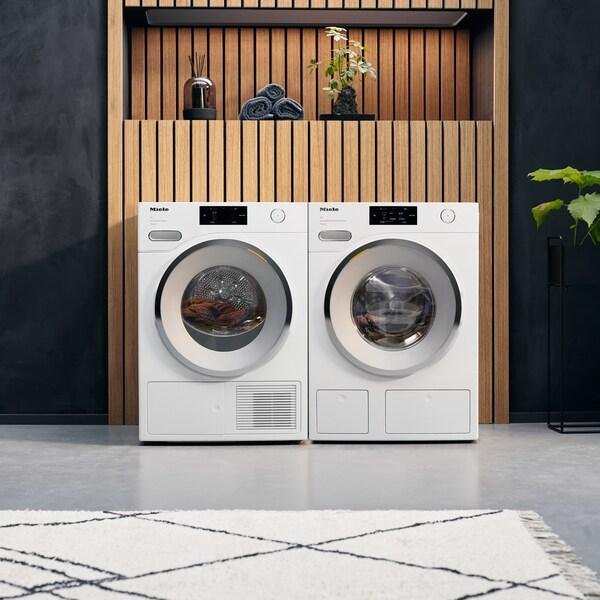
Front-load washer and dryer sets
Suitable for energy-conscious households, stackable installations, efficient spin performance, and coordinated front-access laundry layouts.
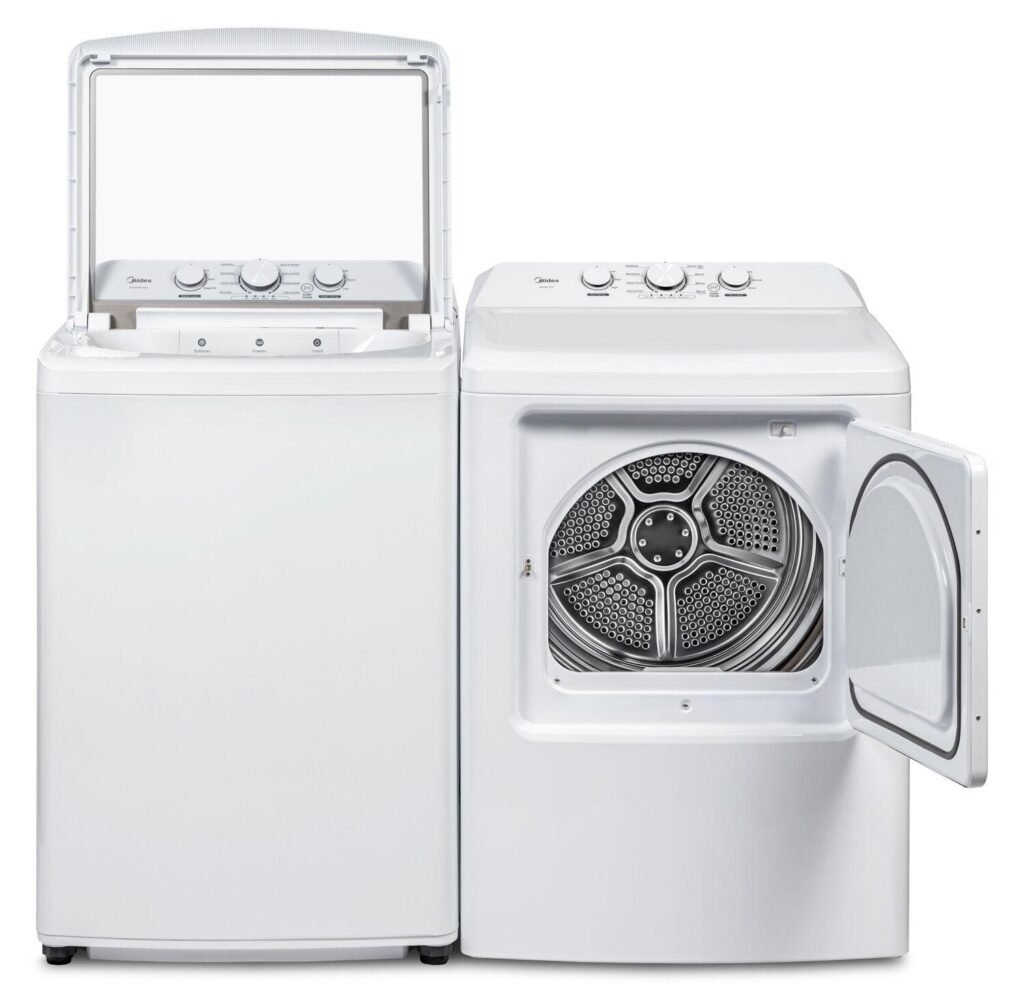
Top-load washer and dryer sets
Suitable for buyers who prefer loading from above, traditional controls, and a choice between agitator and impeller washing systems.
3. Measure Your Laundry Space Before Buying a Matching Pair
Measure the available laundry area before choosing any washer and dryer set. The most important dimensions include width, depth, ceiling height, and the clearance needed for doors, plumbing connections, electrical outlets, and dryer ventilation. A laundry pair that fits the floor measurements may still be impossible to install if doors cannot open fully or if the exhaust duct needs additional space.
Many full-size U.S. washing machines and dryers are approximately 27 inches wide per appliance, although dimensions vary by manufacturer and configuration. A side-by-side installation must accommodate both machines, the required spacing between them, and the manufacturer’s specified installation clearances. Stacked appliances require adequate vertical space, while pedestal installations increase the overall height. Measure entrances, corridors, and stairways as well as the final installation location.
Homes with narrow laundry closets may benefit from compact washer and dryer sets or integrated laundry towers. Ventless dryers can reduce the need for an external exhaust duct, but they still require suitable electrical connections, airflow clearances, and a way to manage condensed water. Always consult the installation manual for the exact model before ordering. Product photographs and general size categories do not provide sufficient installation information.
4. Select the Right Washer and Dryer Capacity for Your Household
Choose washer capacity according to your household’s regular laundry volume and the largest items you expect to wash. Washing machine capacities in the U.S. are commonly expressed in cubic feet, while many international models use kilograms of rated laundry load. Greater capacity allows more clothing to be washed together, but it does not automatically improve cleaning performance.
Small households may find a washer between 2.0 and 3.5 cubic feet sufficient, depending on laundry habits. Families of three or four may prefer approximately 3.5 to 4.5 cubic feet, while households with five or more people may benefit from machines offering 4.5 cubic feet or greater. Dryers usually need a larger drum volume than washers because wet fabrics must tumble freely for consistent drying. However, drum dimensions and usable load limits can vary among models with similar capacity ratings.
Bedding requires special attention. Large comforters, blankets, and thick towels take up more space than ordinary clothing and must move freely during washing. A washer advertised as large-capacity may still be unsuitable for a particular oversized comforter. Check the manufacturer’s recommended bedding load sizes and verify that the paired dryer can accommodate the washed items without overcrowding.
| Household or laundry need | Suggested washer capacity | Buying consideration |
|---|---|---|
| Single person or couple | 2.0–3.5 cu. ft. | Compact size and efficient small-load operation |
| Family of 3–4 | 3.5–4.5 cu. ft. | Balanced capacity and everyday convenience |
| Family of 5 or more | 4.5–5.5+ cu. ft. | Frequent large loads and family bedding |
| Heavy bedding use | 4.5+ cu. ft. | Drum dimensions and approved comforter capacity |
| Apartment with limited space | Compact capacity, often 2.0–2.5 cu. ft. | Appliance dimensions and ventless drying options |
These are general guidelines rather than manufacturer-defined household limits. Actual capacity requirements depend on laundry frequency, textile weight, and model design.
5. Match the Dryer Type to Your Home’s Electrical and Ventilation System
Select dryer technology based on your home’s available connections and long-term energy priorities. Common dryer types include vented electric dryers, gas dryers, ventless condenser dryers, and heat pump dryers. Each type handles moisture and heat differently, affecting purchase cost, installation complexity, energy consumption, and drying times.
Conventional electric dryers use electrical resistance heating, while gas models use a gas burner to produce heat and electricity to operate their controls and motor. Both typically discharge moisture through an exterior exhaust duct. Condenser dryers collect moisture from circulating air without requiring a conventional outdoor vent. Heat pump dryers use a refrigeration-based system to remove moisture while recovering and reusing heat, often achieving much higher energy efficiency than conventional electric dryers.
ENERGY STAR explains that heat pump dryers eliminate the need for an outdoor exhaust vent and can provide operating savings over their service life, although their initial cost can be higher.
ENERGY STAR
Installation details still matter. Many U.S. full-size electric dryers require a dedicated 240-volt electrical circuit, while requirements differ internationally. Check the appliance’s voltage, frequency, power rating, plug type, and installation instructions before purchasing, especially when considering imported appliances.
6. Prioritize Energy-Efficient Washer and Dryer Sets
Compare energy-efficiency information before selecting a laundry pair because utility costs continue throughout the appliance’s operating life. An efficient washer uses less electricity and water to clean an appropriate load, while an efficient dryer reduces the energy required to remove moisture. The combined performance of both machines matters more than the efficiency rating of either appliance in isolation.
In the United States, ENERGY STAR certification provides a recognized basis for comparing qualifying appliances. According to ENERGY STAR, certified clothes washers use approximately 20% less energy and 30% less water than regular washers on average. The program uses Integrated Modified Energy Factor (IMEF) and Integrated Water Factor (IWF) to assess washer performance. A higher IMEF indicates better energy efficiency, while a lower IWF indicates better water efficiency. These figures enable comparison among appropriately categorized products.
Buyers should also review the EnergyGuide label, which provides standardized estimates of annual energy consumption and operating costs for U.S. models. Actual household expenses depend on electricity prices, hot-water heating, cycle selection, and annual laundry volume. For the dryer, moisture-sensing controls and heat pump technology can make a meaningful difference. Comparing standardized efficiency information is more reliable than accepting broad marketing claims such as “energy-saving” without supporting data.
7. Compare Washing Cycles and Fabric-Care Features
Evaluate washing programs according to the types of clothing and household textiles you regularly clean. Most modern washing machines offer normal, delicate, heavy-duty, quick wash, and rinse-and-spin options. More advanced models may provide bedding, allergen-focused, steam-assisted, wool, sportswear, and automatic load-sensing programs. Useful settings should improve cleaning or protect fabrics rather than simply increase the number of selectable cycles.
Temperature control, spin speed, detergent dispensing, and water-level adjustment are especially important. Higher spin speeds can remove more water before drying, while lower spin speeds may be appropriate for delicate textiles. Automatic detergent dispensing can reduce repeated measuring and help control excess detergent use. Steam-assisted cycles may provide additional stain-treatment or fabric-refreshing capabilities, but their effectiveness depends on the appliance design and selected program.
Dryer settings should complement the washer’s washing options. Sensor drying, low-heat cycles, delicate drying, wrinkle prevention, and timed drying cover most household needs. Wool garments, synthetic fabrics, and garments with special finishes may require specific drying instructions. Read clothing-care labels and avoid relying on automated appliance settings when the textile manufacturer specifies different treatment.
8. Evaluate Smart Washer and Dryer Features Before Paying Extra
Consider smart features only when they solve a recurring laundry problem or provide meaningful convenience. Wi-Fi-enabled appliances may allow users to monitor cycles, receive completion notifications, troubleshoot selected errors, and download additional wash programs. Some matching washer and dryer sets can share cycle information so the dryer recommends an appropriate drying program based on the completed wash.
Automatic load detection, detergent dispensing, and moisture sensing can reduce everyday adjustments. Certain models provide app-based energy monitoring or maintenance reminders, helping users identify operating habits and service needs. However, the availability of these functions varies by brand, model, software version, and region. Internet connectivity does not necessarily mean the washer or dryer can be started remotely without safety-related steps at the appliance.
Smart technology also introduces considerations involving app support, wireless connectivity, software updates, and data privacy. A disconnected smart appliance should still perform essential washing and drying tasks through its physical controls. Buyers who prefer long-term simplicity may be better served by a dependable machine with excellent core cycles and automatic moisture detection rather than expensive connectivity features they rarely use.
9. Compare Trusted Washer and Dryer Brands Using Verified Performance
Compare leading appliance brands by examining the specific models they manufacture, their warranty coverage, local repair networks, and independent performance testing. Major manufacturers offer several product tiers, so a premium model and an entry-level appliance from the same brand may deliver very different results. Brand familiarity alone cannot establish which laundry pair provides the best overall value.
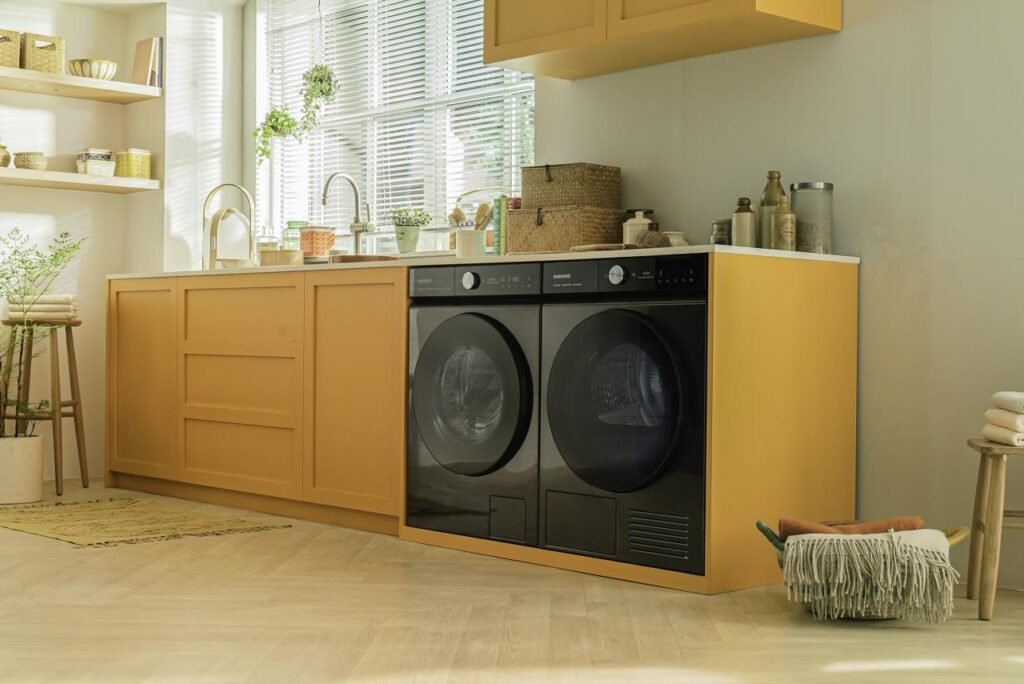
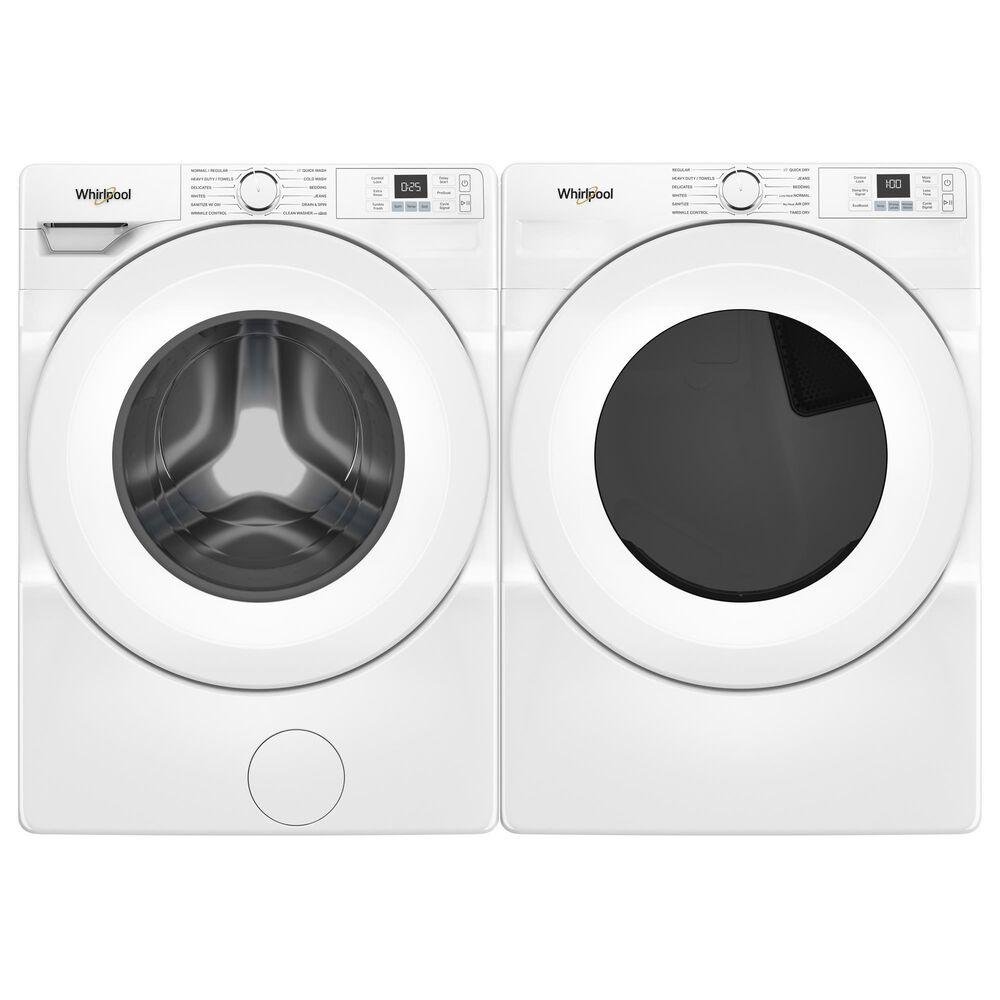
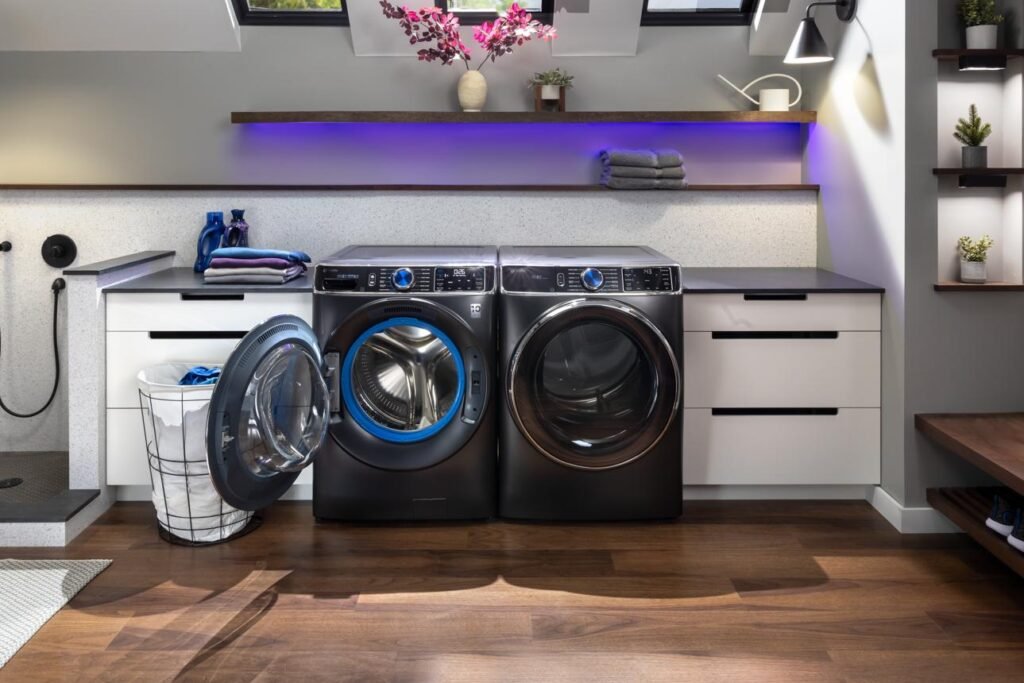
LG produces front-load, top-load, and integrated laundry systems, including large-capacity models and selected Wi-Fi-connected appliances. Samsung offers matching laundry pairs with smart controls and various automatic programs. Whirlpool and Maytag provide several conventional and high-efficiency configurations. GE Appliances offers top-load, front-load, and specialty laundry systems, while Electrolux emphasizes front-load laundry solutions in many markets. Miele and Bosch also offer compact appliances suitable for selected space-constrained installations.
Consumer Reports’ July 2026 matching-set evaluation identified qualifying pairs from brands including GE, Insignia, LG, Miele, and Samsung. Its findings were based on combined washer and dryer performance, efficiency, and testing results rather than simply matching finishes or features.
Before choosing any brand, verify current model numbers, actual specifications, warranty provisions, and authorized service availability in your area.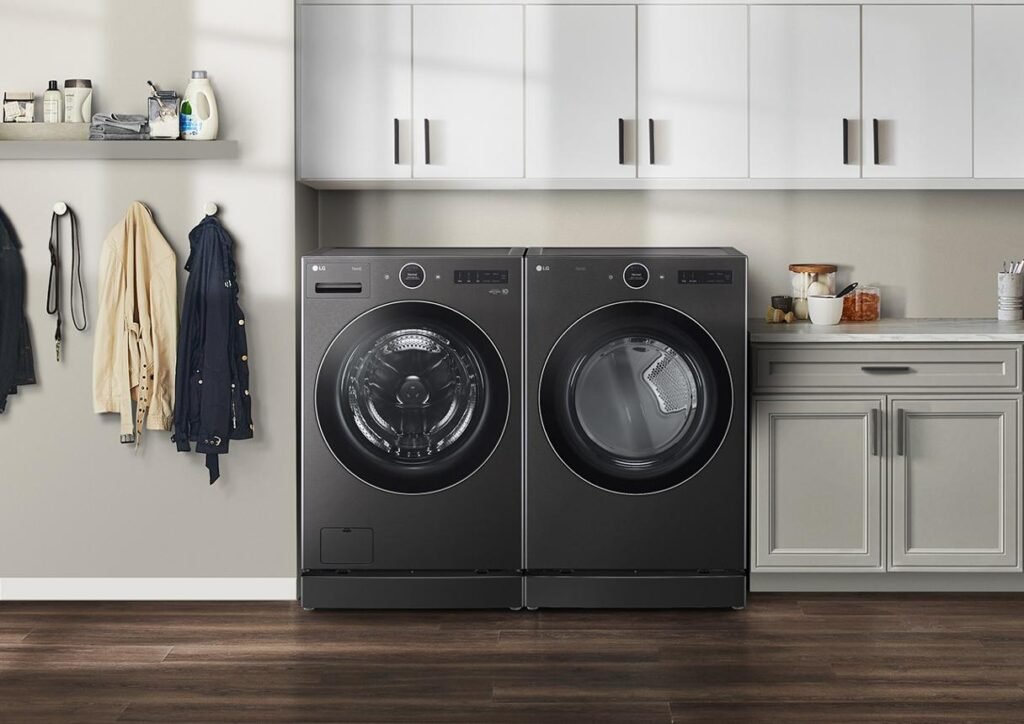
LG
Consider for front-load, large-capacity, and integrated laundry tower configurations. Compare individual models for efficiency and controls.
Samsung
Consider for smart-connected appliances, coordinated design, and automatic laundry programs on selected models.
Whirlpool
Consider for a range of traditional and high-efficiency laundry configurations, including straightforward everyday controls.
GE Appliances
Consider for front-load and top-load choices, varied capacities, and selected advanced laundry features.
10. Choose Stackable Washer and Dryer Sets for Small Spaces
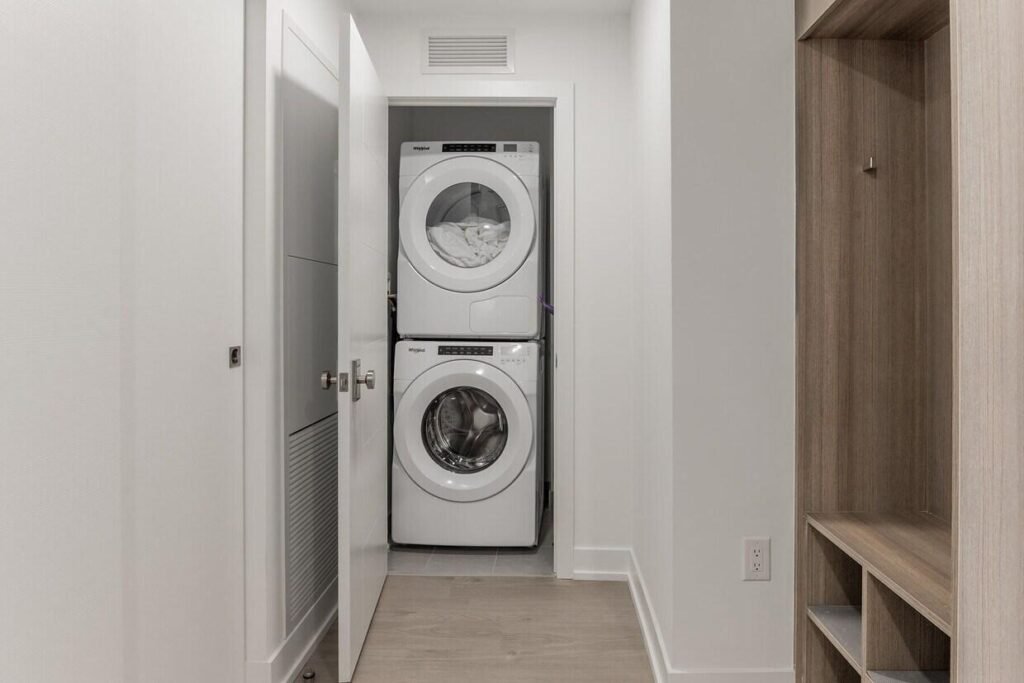
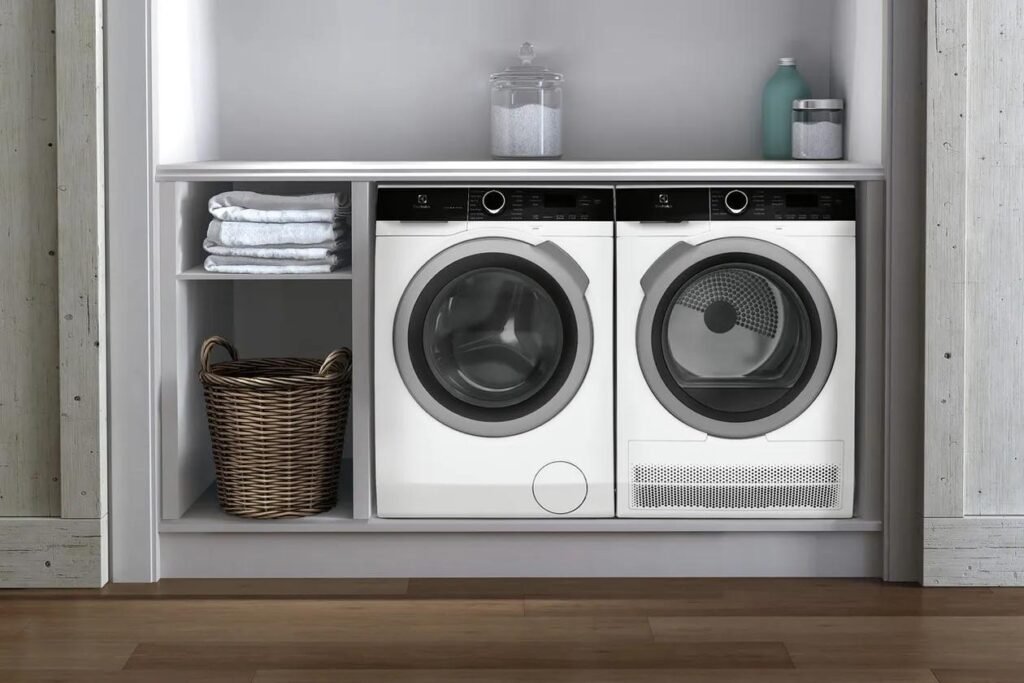
Select a stackable washer and dryer set when preserving floor space is more important than having two appliances positioned side by side. Stacked laundry systems place the dryer above the washer, allowing both functions to occupy approximately the floor area of one machine. This configuration is commonly used in apartments, condominiums, closets, and smaller utility rooms.
Most independent stackable pairs use front-load washers because their doors allow the dryer to be positioned directly above them. The appliances must be approved for stacking, and manufacturers typically specify a compatible installation kit. Integrated laundry towers offer another solution by combining the washer and dryer into a coordinated vertical assembly, sometimes with centralized controls for easier access. These designs differ from an all-in-one washer-dryer that performs both functions in one drum.
Stacking introduces additional installation considerations, including ceiling clearance, ventilation, floor stability, and accessibility for maintenance. The upper appliance should never be installed without approved mounting hardware. Buyers should also consider whether shorter household members can comfortably operate elevated dryer controls. An integrated tower with centrally positioned controls may provide an easier experience than independently stacked machines with controls at the very top.
11. Calculate the Total Cost of Washer and Dryer Set Ownership
Evaluate washer and dryer sets using the total cost of ownership rather than the advertised purchase price alone. A low-cost laundry pair may be economical initially but consume more electricity or water over time. A more expensive high-efficiency pair may reduce operating expenses, although savings depend on utility rates, laundry frequency, and expected appliance lifespan.
The full purchase cost can include delivery, installation, stacking hardware, electrical components, dryer connections, appliance removal, and optional pedestals. Premium finishes, smart functions, automatic dispensing, and large drums may increase the retail price. Budget-friendly sets generally focus on standard cleaning and drying functions, while midrange models often provide a useful balance of capacity, sensor drying, and efficiency. Premium models justify their price most clearly when their additional features support frequent or specialized laundry needs.
A practical ownership calculation combines the initial purchase and installation expenses with estimated utility consumption and expected maintenance costs. For example, a dryer that saves 150 kilowatt-hours annually would reduce electricity spending by $30 per year at $0.20 per kilowatt-hour. Over ten years, that represents $300 in electricity savings before accounting for price changes, maintenance, or repairs. Such calculations are illustrative, but they help buyers determine whether an efficiency upgrade is financially worthwhile.
12. Verify Washer and Dryer Installation and Safety Requirements
Confirm electrical, plumbing, drainage, and ventilation compatibility before purchasing a washer and dryer set. Washing machines require appropriate water supply connections, a suitable drain, and an electrical outlet meeting the manufacturer’s requirements. Dryers have additional heating and moisture-removal needs, which can make installation more complex than the washer installation.
For vented dryers, the exhaust system must direct moisture outdoors through an approved duct. Restricted dryer airflow can increase cycle duration, reduce drying performance, and contribute to overheating. Gas dryers require suitable gas connections and safe exhaust installation. Ventless dryers do not need a conventional exterior dryer duct, but they still require the specified electrical supply, ventilation clearance, and condensate management. Licensed professionals should perform regulated electrical and gas work where required.
The appliance location also needs a stable, level surface. Excessive vibration can result from uneven flooring, incorrect installation, shipping materials left in place, or poorly balanced loads. If purchasing a stackable set, verify the approved stacking configuration. Never assume two appliances are safely stackable because they have similar exterior dimensions or are manufactured by the same company.
13. Check Appliance Warranties, Repair Support, and Reliability
Examine the warranty for both the washer and dryer before finalizing a purchase. Warranty coverage often differs between major components, smaller mechanical parts, electronics, and service labor. Some manufacturers advertise extended coverage for drive motors or selected parts, but that does not necessarily include the entire appliance or the cost of labor.
Reliability should be evaluated through independent test results, verified owner feedback, service history where available, and replacement-part accessibility. Pay particular attention to repeated complaints involving washer drainage, control boards, drum bearings, door locks, heating components, and dryer airflow. Individual reviews may reflect unusual circumstances, so consistent patterns across numerous owners are more informative than isolated experiences.
Service support matters because a laundry pair may remain in use for many years. Authorized repair availability, replacement parts, and warranty administration can affect downtime and repair expense. When buying imported washer and dryer sets, confirm that the seller provides a valid local warranty and that qualified technicians can service the models. A discounted appliance with limited local parts support may become more expensive over its useful life.
14. Maintain Washer and Dryer Sets to Protect Performance
Follow the maintenance schedule in each appliance’s owner’s manual to keep the laundry pair functioning efficiently. Washing machines can accumulate detergent residue, dirt, and moisture, while dryers collect lint and require unobstructed airflow. Regular inspection and cleaning help preserve appliance performance and reduce avoidable service problems.
For front-load washers, clean the rubber door gasket, detergent drawer, and accessible drain filter as directed. Leave the door or dispenser open when recommended to allow moisture to evaporate after washing. Use detergent formulated for the appliance’s washing system and avoid excessive quantities. High-efficiency washers generally require high-efficiency detergent, while overloading any machine can reduce cleaning action and increase mechanical stress.
For dryers, remove lint from the accessible lint screen after every load, and inspect or clean the exhaust duct according to the manufacturer’s guidance and operating conditions. Heat pump dryers may require cleaning of additional filters or accessible heat-exchanger components. ENERGY STAR also recommends avoiding overdrying and maintaining proper airflow to improve dryer efficiency.
15. Avoid Common Mistakes When Shopping for Washer and Dryer Sets
Avoid choosing appliances primarily because they match visually or carry a familiar brand name. Coordinated appearance is useful, but compatible capacity, reliable cleaning performance, and installation suitability provide greater long-term value. Buyers should evaluate the washer and dryer individually before deciding whether the matching pair delivers the features and performance they need.
Common purchasing mistakes include selecting an oversized washer for limited household use, ignoring the dryer’s ventilation requirements, forgetting to measure door clearances, and assuming that every washer and dryer from the same manufacturer can be stacked. Some shoppers also pay extra for smart functions while overlooking moisture sensors, appropriate fabric-care settings, or local service support. Others compare washer capacity without confirming whether the dryer can handle a corresponding full load.
Avoid relying exclusively on promotional labels such as “best selling,” “premium,” or “ultra-efficient.” Instead, examine published specifications, recognized energy ratings, independent testing, manufacturer installation instructions, and the final delivered price. This evidence-based approach reduces the likelihood of purchasing a visually attractive laundry set that performs poorly in the intended household environment.
16. Compare Retailer Offers and Verify the Final Purchase Details
Compare washer and dryer sets from authorized retailers, appliance specialists, manufacturer websites, and established online sellers. A matching bundle can sometimes cost less than purchasing the two appliances separately. Consumer Reports notes that coordinated purchases may offer meaningful savings, but shoppers should still compare the included appliances and their individual performance before accepting a package offer.
Before delivery, measure the access route and prepare the installation area. After receiving the appliances, inspect them for transportation damage, verify that the supplied models match the purchase agreement, and retain invoices and warranty documentation. Run the manufacturer’s recommended initial checks to confirm that water connections, drainage, spin operation, heat production, and dryer moisture removal function correctly.
Frequently Asked Questions About Washer and Dryer Sets
Which washer and dryer sets are best for most families?
A midrange front-load washer and matching sensor dryer are strong choices for many families because they balance capacity, efficiency, and fabric care. However, a top-load set may be more suitable for households that prefer easier loading from above. Compare individual models and local service availability before choosing.
Is it cheaper to buy a washer and dryer together?
Buying a washer and dryer together can be cheaper when retailers offer package discounts or seasonal promotions. However, a bundle is not automatically the best value. Compare the combined price with separate appliance prices, and include delivery, installation, and accessories.
How long should a washer and dryer set last?
Many residential washing machines and dryers are used for approximately 10 to 13 years, although actual service life varies considerably. Usage frequency, manufacturing quality, maintenance, and repair availability influence longevity. Manufacturer warranties should not be interpreted as predictions of appliance lifespan.
Are stackable washer and dryer sets as effective as side-by-side models?
Yes. When the same compatible appliances can be installed either stacked or side by side, their basic washing and drying performance does not change simply because of their position. Installation, airflow, stability, and accessibility still need to meet the manufacturer’s requirements.
Are heat pump washer and dryer sets worth the additional cost?
A heat pump dryer can be worthwhile for households seeking lower electricity consumption, gentler drying temperatures, or ventless installation. The financial benefit depends on the initial price difference, electricity rates, and frequency of use. Some heat pump models also have longer drying cycles than conventional dryers.
Can I mix different washer and dryer brands?
Yes. A washer and dryer from different manufacturers can operate together when each appliance is installed independently and has suitable capacity. However, smart communication features may not function across brands. Stacking different brands is not advisable unless the exact installation is explicitly approved by the manufacturers.
Conclusion: Choose Washer and Dryer Sets That Deliver Long-Term Value
The best washer and dryer sets combine dependable cleaning performance, efficient drying, appropriate capacity, and practical features that match everyday household needs. Whether selecting a front-load pair, top-load combination, stackable system, or compact ventless solution, the most successful purchase begins with accurate measurements and clearly defined laundry requirements.
Energy efficiency, manufacturer-approved installation, independent performance testing, warranty coverage, and accessible repair services should guide the final decision. A matching appliance pair can simplify daily laundry, but compatibility and performance matter more than decorative finishes or advanced features that offer little benefit.
By comparing washer and dryer specifications carefully and considering both purchase expenses and long-term operating costs, buyers can select a laundry pair that fits their home, protects clothing, and delivers reliable performance for years.
Sources and Research References
The following resources support the appliance-efficiency, buying, and performance guidance used throughout this article.
-
ENERGY STAR: Clothes Washers — Certification, water and energy efficiency, and washer selection guidance.
-
ENERGY STAR: Washer Efficiency Criteria — Technical definitions and qualification requirements for IMEF and IWF.
-
ENERGY STAR: Clothes Dryers — Dryer efficiency, heat pump technology, and energy-saving considerations.
-
Consumer Reports: Best Matching Washer and Dryer Sets of 2026 — Independent matching-pair evaluations, updated July 6, 2026.
-
Consumer Reports: Washing Machine Buying Guide — Washer configurations, features, matching considerations, and purchase guidance.
Editorial standard: This article distinguishes general buying guidance from independently tested product performance. It does not claim personal appliance testing, individual model reliability results, or guaranteed savings. Model-specific specifications should always be confirmed before purchase.