
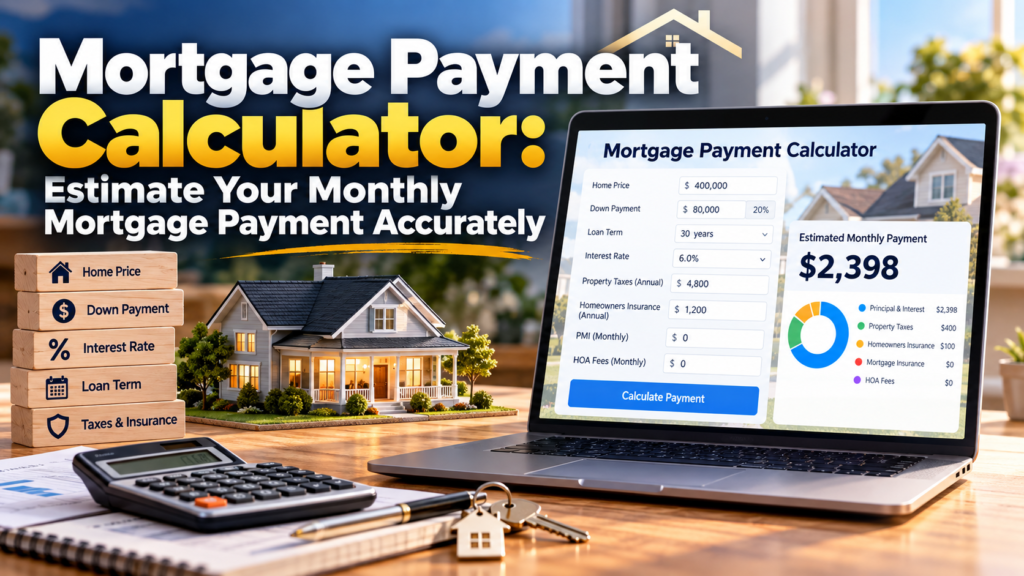
A mortgage payment calculator estimates how much you may pay each month when financing a home. Entering the loan amount, interest rate, and repayment term provides an estimated principal-and-interest payment. Adding property taxes, homeowners insurance, mortgage insurance, and homeowners association fees produces a more realistic estimate of the total monthly housing payment.
The calculation is particularly useful when comparing home prices, down payments, mortgage rates, and loan terms. For example, you can calculate how a 6% interest rate compares with 7%, determine how much a larger down payment reduces your payment, or compare the monthly cost of a 15-year mortgage with a 30-year mortgage.
A calculator should still be treated as a planning tool rather than a mortgage quote or approval. Actual payments depend on the final loan terms, property taxes, insurance premiums, mortgage program, lender requirements, and other costs associated with the property.
Enter the Home Price and Down Payment
Begin by entering the home’s purchase price and your expected down payment. These two figures determine how much of the purchase price initially needs to be financed.
The basic calculation is:
Loan amount = Home price – Down payment
For example, consider a $400,000 home with an $80,000 down payment.
$400,000 – $80,000 = $320,000
The estimated mortgage principal is therefore $320,000.
The same down payment can be expressed as a percentage:
$80,000 ÷ $400,000 = 20%
A larger down payment generally produces a smaller loan balance. A smaller principal usually means a lower monthly principal-and-interest payment and less interest paid over the life of the mortgage, assuming the other loan terms remain unchanged.
The down payment can also affect mortgage insurance and potentially the pricing or availability of particular mortgage products.
However, buyers should avoid looking at the down payment in isolation. Purchasing a home can also require closing costs, prepaid taxes, insurance premiums, inspections, moving expenses, immediate repairs, and cash reserves.
Keeping adequate savings after closing can therefore be as important as reducing the mortgage balance.
Calculate the Amount You Need to Borrow
Subtract the down payment from the purchase price to determine the starting mortgage balance.
Suppose you purchase a $500,000 home with $75,000 down.
$500,000 – $75,000 = $425,000
The mortgage calculator should use approximately $425,000 as the starting principal, assuming no other financed amounts are added.
If you know your down payment as a percentage rather than a dollar amount, calculate it first.
For a $500,000 home with 10% down:
$500,000 × 0.10 = $50,000
Then calculate the mortgage:
$500,000 – $50,000 = $450,000
The loan amount is one of the most important inputs because the interest calculation is tied to the outstanding principal.
Borrowing an additional $50,000 does not simply mean repaying another $50,000. Interest charged during the repayment period increases the total amount paid.
For that reason, compare both the monthly payment and long-term borrowing cost when evaluating different home prices.
Enter the Mortgage Interest Rate
Enter the annual interest rate associated with the mortgage you are considering. The rate determines how much interest accrues on the outstanding principal and has a direct effect on the required monthly payment.
For example, consider a hypothetical $400,000, 30-year fixed-rate mortgage.
| Interest rate | Approx. monthly principal and interest |
|---|---|
| 5.0% | $2,147 |
| 5.5% | $2,271 |
| 6.0% | $2,398 |
| 6.5% | $2,528 |
| 7.0% | $2,661 |
| 7.5% | $2,797 |
These estimates cover principal and interest only. They do not include property taxes, homeowners insurance, mortgage insurance, HOA fees, or other homeownership expenses.
The example demonstrates why interest-rate differences matter. Increasing the rate from 6% to 7% on this hypothetical mortgage increases principal and interest from approximately $2,398 to $2,661 per month.
That is approximately $263 more per month, assuming the same loan amount and 30-year term.
The actual rate available to a borrower can depend on the loan product, market conditions, credit characteristics, loan-to-value ratio, term, property type, discount points, and lender pricing.
Use a current lender quote when making a serious purchase decision rather than relying on a generic rate displayed in a calculator.
Compare the Interest Rate With the APR
Do not assume that the mortgage with the lowest advertised interest rate necessarily has the lowest overall borrowing cost.
The interest rate is used to calculate interest on the mortgage balance. The annual percentage rate, or APR, is designed to provide a broader measure of borrowing cost by incorporating the interest rate and certain loan charges.
For example, one lender could advertise a lower mortgage rate that requires the borrower to purchase discount points. Another could offer a slightly higher rate with lower upfront costs.
The first option could produce a lower monthly payment while requiring substantially more cash at closing.
APR can help borrowers compare certain costs, but it does not answer every mortgage-comparison question. The length of time you expect to keep the mortgage also matters because paying substantial upfront costs to obtain a lower rate may take years to recover through monthly savings.
A mortgage calculator can show the payment difference. Your lender’s official disclosures provide the actual terms and costs that should be used for a final comparison.
Select the Mortgage Repayment Term
Choose the number of years available to repay the mortgage. Common fixed-rate mortgage terms include 15, 20, and 30 years, although other structures may be available.
The term affects both the monthly payment and total interest cost.
A 30-year mortgage spreads principal repayment across 360 scheduled monthly payments. A 15-year mortgage generally spreads repayment across 180 payments.
Because the shorter mortgage requires the principal to be repaid much faster, its monthly payment is typically higher.
The benefit is faster principal reduction and generally less total interest when comparing loans with the same principal and interest rate.
| Loan term | Scheduled payments | Typical effect |
|---|---|---|
| 15 years | 180 | Higher payment, faster principal repayment |
| 20 years | 240 | Middle-ground repayment period |
| 30 years | 360 | Lower required payment, slower principal repayment |
Actual mortgage rates can differ by term, so a real-world comparison should use the specific interest rate offered for each mortgage rather than assuming both carry identical rates.
Calculate the Monthly Principal and Interest
A standard fully amortizing fixed-rate mortgage can be calculated using the following formula:
M = P × [r(1 + r)ⁿ] ÷ [(1 + r)ⁿ – 1]
Where:
M = monthly principal-and-interest payment
P = original mortgage principal
r = monthly interest rate
n = total number of scheduled monthly payments
To calculate the monthly interest rate, divide the annual rate by 12.
For a 6% annual rate:
0.06 ÷ 12 = 0.005
A 30-year mortgage contains:
30 × 12 = 360 payments
Consider a $300,000 mortgage at 6% for 30 years.
Using the amortization formula produces an estimated principal-and-interest payment of approximately:
$1,798.65 per month
Rounded to the nearest dollar, that is approximately $1,799 per month.
This amount does not represent the entire cost of owning the property. Property taxes, insurance, mortgage insurance, association fees, maintenance, and other expenses can significantly increase the household’s actual housing costs.
Add Property Taxes to the Mortgage Estimate
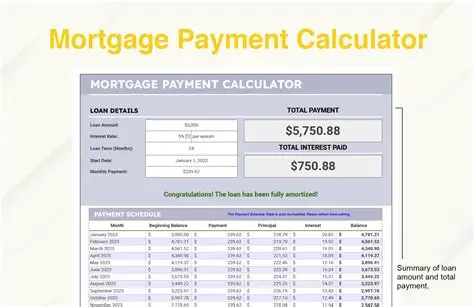
Include property taxes when estimating the amount that housing will cost each month.
Property taxes vary substantially by jurisdiction and property. A rough percentage assumption can be useful during early planning, but the property’s actual tax information provides a stronger estimate.
If the annual property-tax bill is $7,200, the monthly equivalent is:
$7,200 ÷ 12 = $600
Suppose principal and interest equal $2,400 per month.
Adding property taxes produces:
$2,400 + $600 = $3,000 per month
This still does not include homeowners insurance or other applicable costs.
Mortgage servicers frequently collect property taxes through an escrow account. Part of each monthly mortgage payment is deposited into the account, and the servicer uses those funds to pay applicable property-tax bills.
Property taxes can change.
Consequently, a homeowner with a fixed-rate mortgage can see the total amount collected each month change even though the scheduled principal-and-interest portion remains fixed.
Buyers should also investigate how a recent purchase could affect the property’s assessed value rather than assuming the previous owner’s tax bill will always remain unchanged.
Add Homeowners Insurance to the Calculation
Homeowners insurance should be included when estimating the complete monthly housing payment.
Premiums can depend on the property’s location, rebuilding cost, construction characteristics, coverage limits, deductible, insurer, claims history, and exposure to particular hazards.
Suppose the annual premium is $2,400.
The estimated monthly cost is:
$2,400 ÷ 12 = $200
If the mortgage’s principal and interest equal $2,400 and estimated property taxes equal $600, the calculation becomes:
$2,400 + $600 + $200 = $3,200 per month
This provides a more useful affordability estimate than looking only at principal and interest.
However, insurance premiums can change at renewal. A homeowner’s total monthly escrow requirement may therefore increase or decrease even when the mortgage interest rate is fixed.
Some properties may also require coverage beyond a standard homeowners policy depending on the property’s characteristics, location, lender requirements, and applicable risks.
Include Mortgage Insurance When It Applies
Mortgage insurance can increase the cost of financing a property, particularly when the buyer makes a smaller down payment.
For certain conventional mortgages, private mortgage insurance (PMI) may apply when the borrower has a higher loan-to-value ratio.
PMI primarily protects the lender against certain losses if the borrower defaults. It should not be confused with homeowners insurance, which provides property and liability coverage according to the insurance policy.
The cost of PMI is not identical for every borrower. Pricing can depend on the loan-to-value ratio, credit characteristics, mortgage structure, insurer, and other factors.
Government-backed mortgage programs can have their own mortgage-insurance premiums or funding structures, with rules that differ from conventional PMI.
For that reason, avoid using a single universal percentage for every mortgage.
If mortgage insurance applies to your loan, use the amount shown by your lender when available.
Add HOA Fees and Other Required Property Charges

Include homeowners association fees when the property belongs to an HOA or condominium association.
HOA fees can cover services such as common-area maintenance, landscaping, amenities, building services, security, reserves, and other shared expenses. The exact coverage varies by association.
Consider this example:
Principal and interest: $2,400
Property taxes: $600
Homeowners insurance: $200
Mortgage insurance: $125
HOA fee: $300
The estimated monthly housing payment becomes:
$2,400 + $600 + $200 + $125 + $300 = $3,625
That figure is much more informative than the $2,400 principal-and-interest payment alone.
HOA fees can also increase over time. Associations may impose special assessments for significant repairs or other expenses depending on their governing documents and financial circumstances.
Buyers considering association-managed properties should therefore review the applicable financial documents and fee structure rather than focusing only on the current monthly charge.
Calculate the Complete Monthly Mortgage Payment
A practical mortgage payment estimate should include all predictable recurring charges associated with the financing.
A simplified formula is:
Estimated monthly housing payment = Principal + Interest + Property taxes + Homeowners insurance + Mortgage insurance + HOA fees
Principal and interest are commonly abbreviated as P&I.
Principal, interest, taxes, and insurance are often described collectively as PITI.
Consider a hypothetical $400,000 home purchased with a $320,000 mortgage.
| Monthly cost | Example |
|---|---|
| Principal and interest | $2,023 |
| Property taxes | $450 |
| Homeowners insurance | $175 |
| Mortgage insurance | $0 |
| HOA fee | $150 |
| Estimated monthly total | $2,798 |
These numbers are illustrative rather than a loan quote.
The actual amount could be higher or lower depending on the mortgage terms and property-specific expenses.
Maintenance, utilities, repairs, and other costs of homeownership should also be included in a household budget even though they are not normally part of the mortgage payment.
Compare Multiple Down Payment Scenarios
Run the calculator several times using different down payments before deciding how much cash to contribute.
Consider a $500,000 purchase.
A 5% down payment equals:
$25,000
The resulting mortgage would be approximately:
$475,000
A 10% down payment equals:
$50,000
The resulting mortgage would be approximately:
$450,000
A 20% down payment equals:
$100,000
The resulting mortgage would be approximately:
$400,000
Assuming the interest rate and term remain constant, the $400,000 mortgage will have a lower principal-and-interest payment than the $475,000 mortgage.
A larger down payment can also affect mortgage insurance and other loan terms.
However, putting every available dollar into a home can leave a buyer with inadequate reserves for closing expenses, emergencies, repairs, or other financial priorities.
The strongest comparison therefore considers both the mortgage payment and the buyer’s remaining liquidity.
Measure How Interest Rates Change the Payment
Use the calculator to determine how much your payment changes across several realistic interest-rate scenarios.
Suppose you borrow $350,000 using a 30-year fixed-rate mortgage.
At 6%, principal and interest are approximately $2,098 per month.
At 6.5%, they are approximately $2,212 per month.
At 7%, they are approximately $2,329 per month.
Moving from 6% to 7% increases the estimated monthly principal-and-interest payment by approximately:
$2,329 – $2,098 = $231
That difference is approximately $2,772 over 12 months.
The long-term difference can be much greater because mortgage interest is paid over many years.
These calculations demonstrate why buyers should update their affordability estimates when market rates change instead of continuing to rely on an older mortgage calculation.
Estimate the Total Interest Cost
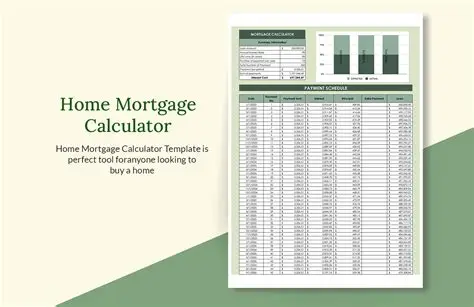
Monthly affordability is only one part of mortgage evaluation. Total interest provides another important measure.
For a standard fixed-rate mortgage, a simplified estimate is:
Total interest = (Monthly principal and interest × Number of payments) – Original principal
Consider a $300,000, 30-year mortgage at 6%.
The monthly principal-and-interest payment is approximately $1,798.65.
Across 360 scheduled payments:
$1,798.65 × 360 ≈ $647,514
Subtract the original $300,000 principal:
$647,514 – $300,000 ≈ $347,514
The borrower would therefore pay roughly $347,500 in interest if the mortgage remained outstanding according to its original amortization schedule, subject to rounding and assuming no extra payments or other changes.
Taxes, insurance, closing costs, mortgage insurance, and other expenses are separate from this calculation.
The example demonstrates why a loan with an affordable monthly payment can still carry a substantial long-term borrowing cost.
Review the Mortgage Amortization Schedule
An amortization schedule shows how each scheduled mortgage payment is divided between principal and interest.
With a typical fixed-rate amortizing mortgage, the required principal-and-interest payment remains constant throughout the scheduled repayment period.
The composition of that payment changes.
Early payments generally contain more interest because the outstanding principal balance is relatively high.
As the balance falls, less interest accrues. A larger portion of subsequent payments therefore goes toward reducing principal.
This progression explains why equity can accumulate slowly through scheduled principal payments during the early years of a long-term mortgage and accelerate later.
An amortization schedule can be especially helpful when comparing loan terms, evaluating refinancing, or estimating the effect of extra principal payments.
Calculate the Effect of Extra Principal Payments
Use a mortgage calculator with an extra-payment feature to estimate how additional principal payments could affect the payoff date and total interest.
Suppose the scheduled principal-and-interest payment is $2,000 per month and the borrower voluntarily contributes another $200 specifically toward principal.
The additional payment reduces the outstanding balance faster.
A lower balance means less principal remains available for future interest calculations. Over time, this can shorten the repayment period and reduce total interest.
The exact savings depend on the interest rate, remaining principal, remaining term, amount of the extra payment, and when the additional payments begin.
Borrowers should check their loan terms and servicing instructions before making additional payments.
When the intention is to reduce principal, verify that the servicer applies the additional amount accordingly.
Paying a mortgage ahead of schedule is also only one possible use of additional cash. Emergency reserves, higher-interest debt, retirement savings, and other financial goals may deserve consideration.
Compare a 15-Year Mortgage With a 30-Year Mortgage
Compare both monthly payments and lifetime interest when evaluating mortgage terms.
A 15-year mortgage generally requires a much larger monthly payment than a 30-year mortgage because the principal must be repaid in half the time.
The shorter schedule can significantly reduce lifetime interest.
A 30-year mortgage spreads the balance across more payments. That reduces the required monthly principal-and-interest amount but usually increases total interest if the loan remains outstanding for the full term.
The comparison should use the actual rate available for each product because lenders may price 15-year and 30-year mortgages differently.
Borrowers should also evaluate financial flexibility.
A higher required payment may accelerate debt repayment, but it creates a larger mandatory monthly obligation. A lower required payment can provide additional cash-flow flexibility, although the borrower may remain in debt longer.
The appropriate structure depends on the borrower’s financial circumstances and loan options rather than on term length alone.
Estimate How Much House Fits Your Budget
Use the mortgage calculator to work backward from a sustainable monthly housing budget.
Start with the complete estimated payment rather than principal and interest alone.
Include:
Principal and interest + property taxes + homeowners insurance + mortgage insurance + HOA fees
Then account separately for maintenance, utilities, repairs, and other homeownership costs.
Lenders may use debt-to-income ratios and other underwriting criteria when determining mortgage eligibility. These calculations compare qualifying monthly debt obligations with qualifying income according to the lender’s rules.
However, mortgage qualification and personal affordability are not the same thing.
A household can have expenses or financial goals that are not fully represented in a lender’s underwriting calculation. Childcare, education, transportation, healthcare, savings targets, retirement contributions, travel, and other priorities can affect how comfortable a particular housing payment feels.
Use lender qualification to understand what financing may be available. Use your complete household budget to determine what payment is sustainable for you.
Account for Closing Costs Before Buying
Do not use the mortgage payment as the only measure of how much cash is required to buy a home.
Closing costs can include lender charges, appraisal costs, title-related charges, recording charges, prepaid interest, initial escrow deposits, taxes, insurance, and other transaction expenses depending on the mortgage and location.
Discount points can create another upfront expense. A borrower may pay points in exchange for a lower interest rate under certain loan structures.
A lower rate can reduce the monthly payment, but paying more upfront does not automatically make the mortgage less expensive for every borrower.
The expected holding period matters.
If the upfront expense requires many years of monthly savings to recover, a borrower who sells the property or refinances relatively soon may experience a different financial outcome from someone who keeps the mortgage for decades.
Compare upfront cash requirements alongside monthly and long-term costs.
Verify Mortgage Calculator Results With Official Loan Documents
Treat the calculator’s output as an estimate until you have actual mortgage terms.
A calculation can produce mathematically accurate principal and interest while still underestimating the amount you will actually pay each month.
Property taxes may differ from the assumed figure.
Homeowners insurance could cost more than expected.
Mortgage insurance may apply.
The property may have association dues.
The lender’s actual interest rate and loan structure may differ from the assumptions used in the calculator.
For U.S. mortgages, borrowers typically receive standardized disclosures during the mortgage process that provide more precise information about the proposed loan’s terms and costs. Review the documents provided by your lender carefully and ask about charges or terms you do not understand.
A mortgage calculator is most effective earlier in the process for scenario planning. The lender’s actual disclosures should replace generic assumptions as specific information becomes available.
Recalculate the Payment When Your Assumptions Change
Update your mortgage calculation whenever a major input changes.
Recalculate if the purchase price changes, you increase or decrease the down payment, the available interest rate moves, you choose another loan term, or you receive more accurate tax and insurance information.
This is especially important during a home search.
For example, a buyer who calculated affordability using a $400,000 home and 6% mortgage rate should not assume the same monthly budget applies to a $450,000 property at 7%.
Both the larger loan and higher rate affect the payment.
Updating the numbers takes only a few moments and provides a much clearer picture of the financial commitment before making an offer or choosing a mortgage.
Use the Mortgage Payment Calculator as a Planning Tool
The greatest value of a mortgage payment calculator is not producing one number. It is allowing you to test multiple financial scenarios before committing to a long-term loan.
Compare different purchase prices.
Change the down payment.
Test several interest rates.
Compare 15-year and 30-year terms.
Add realistic property taxes and insurance.
Include mortgage insurance and HOA fees when applicable.
Then examine both the monthly payment and total interest.
This approach provides a more complete picture than asking only, “How much will my mortgage payment be?”
It helps answer the more useful question: How does this particular mortgage fit into the complete cost of owning this home?
Conclusion
A mortgage payment calculator can provide a reliable estimate of monthly principal and interest when the loan amount, interest rate, and repayment term are entered correctly. A useful affordability estimate should go further by including property taxes, homeowners insurance, mortgage insurance when applicable, and HOA fees.
The calculator can also demonstrate how changing the down payment, interest rate, or loan term affects monthly payments and long-term interest costs. Running several scenarios can help buyers compare financing structures before choosing a property or mortgage.
Calculator results remain estimates rather than loan offers or approvals. Actual costs depend on the mortgage program, lender, borrower qualifications, property, taxes, insurance, association charges, and final loan terms.
For important borrowing decisions, replace estimated inputs with actual figures as they become available and compare the calculator results with the official information provided by the mortgage lender.
Frequently Asked Questions About Mortgage Payment Calculators
How do I calculate a mortgage payment?
For a standard fixed-rate mortgage, calculate principal and interest using the mortgage principal, monthly interest rate, and number of scheduled payments. Add property taxes, homeowners insurance, mortgage insurance, and HOA fees when applicable to estimate the broader monthly housing payment.
How much is the monthly payment on a $300,000 mortgage?
A $300,000, 30-year fixed-rate mortgage at a hypothetical 6% interest rate has a principal-and-interest payment of approximately $1,798.65 per month. The actual monthly housing payment would be higher after adding applicable taxes, homeowners insurance, mortgage insurance, and association fees.
How much difference does 1% make on a mortgage?
The effect depends on the mortgage balance and term. For example, a $400,000, 30-year mortgage has an estimated principal-and-interest payment of about $2,398 at 6% and $2,661 at 7%, a difference of approximately $263 per month.
Does a mortgage calculator include taxes and insurance?
It depends on the calculator. A basic mortgage calculator may calculate only principal and interest. A comprehensive calculator can include property taxes, homeowners insurance, mortgage insurance, and HOA fees. Check which costs are included before relying on the displayed total.
Is a 20% down payment required to buy a home?
Not necessarily. Down-payment requirements vary by mortgage program and borrower circumstances. Some eligible borrowers can obtain mortgages with less than 20% down, although mortgage insurance or other requirements may apply. A lender can explain the programs for which a borrower qualifies.
Can I rely on a mortgage calculator before buying a house?
A mortgage calculator is useful for estimating payments and comparing scenarios, but it should not replace an actual mortgage quote, underwriting decision, or official loan disclosures. Use current lender terms and property-specific taxes, insurance, and fees before making a final financial commitment.