
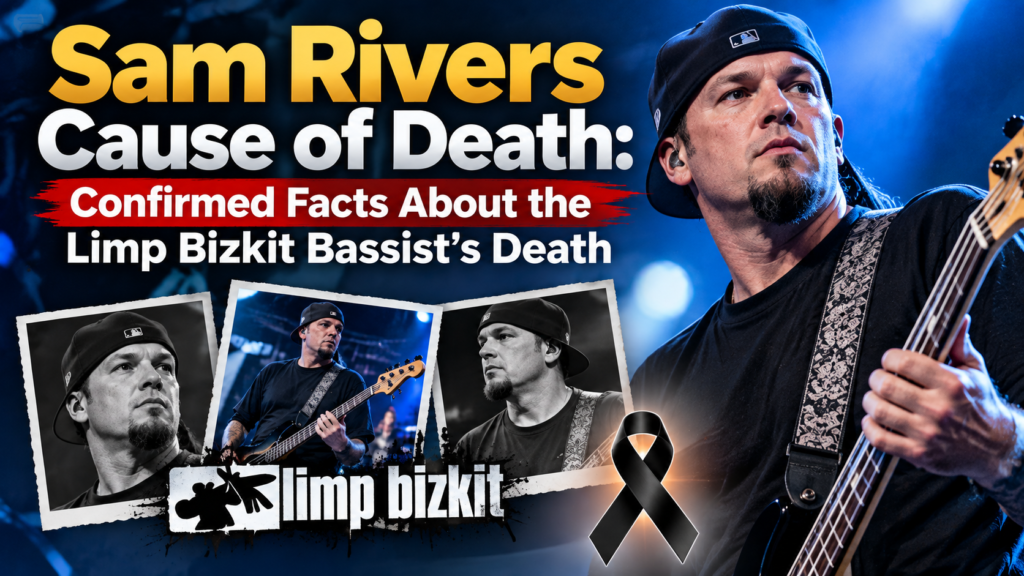
The Sam Rivers cause of death has been the subject of considerable interest since the Limp Bizkit bassist died on October 18, 2025, at the age of 48. Rivers was a founding member of Limp Bizkit and had previously experienced serious health problems, including alcohol-related liver disease that eventually required a liver transplant.
Despite his documented medical history, the exact underlying cause of Rivers’ death has not been publicly confirmed. Reports concerning the emergency response stated that he was found unresponsive and in cardiac arrest. That information describes his condition during the medical emergency, but it does not establish the disease, injury, or medical event that ultimately caused the cardiac arrest.
This distinction is essential because claims involving a heart attack, liver failure, cancer, and complications from his liver transplant have circulated online. None of those explanations should be presented as the confirmed Sam Rivers cause of death without authoritative medical evidence.
Confirm the Officially Reported Cause of Death
The most accurate answer is that Sam Rivers’ underlying cause of death has not been publicly disclosed. Limp Bizkit announced his death on October 18, 2025, but the band did not identify a specific medical cause.
Information released after his death provided additional details about the emergency response. St. Johns County Fire Rescue reportedly responded to a call concerning a person who was unresponsive and in cardiac arrest. Rivers was 48 when he died.
This information establishes that cardiac arrest occurred during the fatal emergency. It does not establish what caused the cardiac arrest.
That difference is medically important. Cardiac arrest occurs when the heart suddenly stops pumping blood effectively. Numerous conditions can lead to cardiac arrest, including abnormal heart rhythms, coronary artery disease, heart attacks, respiratory emergencies, severe metabolic abnormalities, and other serious illnesses.
Without a publicly released medical determination, it would therefore be inaccurate to identify one particular condition as Rivers’ definitive cause of death.
Reports published months after his death continued to describe the cause as undisclosed. Coverage surrounding Limp Bizkit’s 2026 tribute to Rivers likewise noted that his official cause of death had not been publicly revealed.
| Key fact | Reported information |
|---|---|
| Full name | Samuel Robert Rivers |
| Date of birth | September 2, 1977 |
| Date of death | October 18, 2025 |
| Age | 48 |
| Known for | Founding bassist of Limp Bizkit |
| Emergency condition reported | Cardiac arrest |
| Underlying medical cause | Not publicly disclosed |
| Previous major illness | Alcohol-related liver disease |
| Major medical treatment | Liver transplant |
| Returned to Limp Bizkit | Yes, following his health-related absence |
The evidence supports a careful conclusion: Rivers experienced cardiac arrest around the time of his death, while the medical condition responsible for that cardiac arrest has not been publicly established.
Distinguish Cardiac Arrest From a Heart Attack
Cardiac arrest should not automatically be interpreted as a heart attack. The terms describe different medical events, although one can sometimes lead to the other.
A heart attack, medically known as a myocardial infarction, generally occurs when blood flow to part of the heart muscle becomes blocked. The affected heart tissue can become damaged because it is deprived of oxygen.
Cardiac arrest occurs when the heart suddenly stops pumping blood effectively. The person loses consciousness, normal circulation stops, and immediate medical intervention is required.
A heart attack can trigger cardiac arrest, but it is not the only possible cause. Serious electrical disturbances of the heart, respiratory failure, structural heart disease, electrolyte abnormalities, and other medical emergencies can also result in cardiac arrest.
In Rivers’ case, public reporting about the emergency response specifically referred to cardiac arrest. Reliable reports have not established that he suffered a fatal heart attack.
For that reason, headlines or social-media posts claiming that Rivers definitively “died of a heart attack” should be treated cautiously unless they are supported by a subsequent authoritative medical disclosure.
Review the Circumstances Surrounding Sam Rivers’ Death
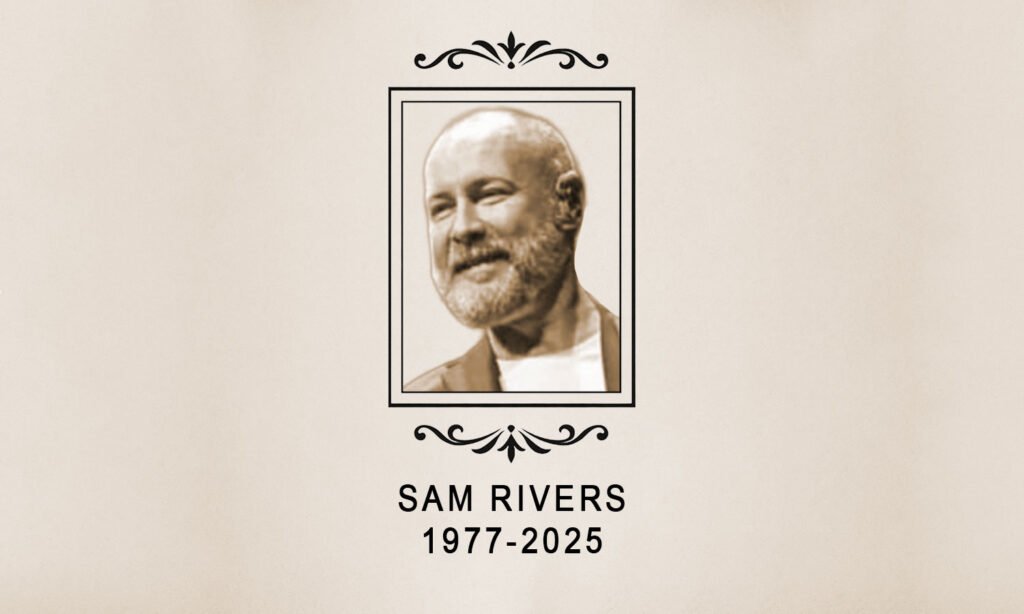
Sam Rivers died on October 18, 2025. Limp Bizkit announced his death publicly and shared a tribute celebrating his role as a musician, friend, and founding member of the band.
The initial announcement did not disclose a cause of death.
Additional information subsequently emerged about the emergency response. St. Johns County Fire Rescue reportedly confirmed that personnel responded to a call involving a nonresponsive person in cardiac arrest. The St. Johns County Sheriff’s Office was also reported as describing the incident as an “attended death.”
Neither description provides a specific medical diagnosis.
Emergency-response terminology and a medically certified cause of death serve different purposes. First responders may document a person’s condition when they arrive, while a cause-of-death determination attempts to identify the disease, injury, or chain of medical events responsible for the death.
Consequently, the cardiac-arrest information should not be expanded into an unsupported diagnosis.
Later reports continued to state that Rivers’ underlying cause of death had not been publicly disclosed. This remains an important consideration when evaluating websites claiming that a particular illness has been definitively identified.
Examine Sam Rivers’ History of Liver Disease
Sam Rivers had a well-documented history of serious liver disease years before his death. That history is relevant to his biography, but it should not be treated as proof of what caused his death in 2025.
Rivers stepped away from Limp Bizkit in 2015 during a period of significant health problems. He later discussed suffering from liver disease associated with years of heavy alcohol consumption.
His condition became serious enough to require a liver transplant.
A liver transplant replaces a severely diseased or failing liver with a healthy donor organ. Recipients generally require extensive medical monitoring afterward and typically take medications designed to prevent their immune system from rejecting the transplanted organ.
Rivers eventually recovered sufficiently to return to professional music. By 2018, he had returned to performing with Limp Bizkit and continued his career with the group.
His return is an important part of the timeline because the transplant occurred years before his death. Rivers was able to resume touring and performing following the health crisis that had forced him away from the band.
His liver disease therefore represents established medical history. It does not establish liver failure as his eventual cause of death.
Avoid Assuming Liver Disease Caused Sam Rivers’ Death
The connection between Rivers’ previous liver problems and his death may appear intuitive, but a previous diagnosis cannot be treated as a later cause of death without supporting evidence.
People with histories of severe liver disease or organ transplantation can experience long-term health complications. However, determining whether any particular complication contributed to an individual’s death requires specific medical evidence.
No authoritative public information has established that Rivers died from liver failure.
There is likewise no confirmed public evidence establishing that his transplanted liver failed, that organ rejection occurred, or that another transplant-related complication directly caused his death.
The distinction can be summarized simply:
Confirmed: Rivers previously experienced severe alcohol-related liver disease and underwent a liver transplant.
Not confirmed: Liver disease, liver failure, organ rejection, or another transplant complication caused his death.
Maintaining that distinction prevents medical history from being converted into an unsupported diagnosis.
Evaluate Claims That Cancer Caused Sam Rivers’ Death

Cancer is another proposed explanation that appeared online following Rivers’ death. However, reliable public evidence has not established cancer as the Sam Rivers cause of death.
Some speculation was connected to social-media activity involving DJ Lethal after Rivers died. Cancer-related wording or hashtags associated with posts led some websites and social-media users to speculate that Rivers may have had cancer.
Such material does not constitute medical confirmation.
A hashtag can be ambiguous. It may refer to the person being discussed, another individual, a general awareness message, or information that has not been explained publicly. Without a direct and authoritative statement, its meaning cannot safely be converted into a diagnosis.
More importantly, subsequent reporting continued to state that Rivers’ cause of death remained undisclosed.
The responsible conclusion is therefore that cancer has not been publicly confirmed as the cause of Sam Rivers’ death.
Compare Confirmed Information With Unverified Claims
Search results surrounding celebrity deaths can contain information of very different reliability. In Rivers’ case, separating documented facts from theories provides a much clearer picture.
| Claim | Evidence status |
|---|---|
| Sam Rivers died on October 18, 2025 | Confirmed |
| He was 48 years old | Confirmed |
| Emergency responders received a cardiac-arrest call | Reported by established news outlets citing authorities |
| He definitely died from a heart attack | Not publicly confirmed |
| He previously suffered from serious liver disease | Confirmed |
| He received a liver transplant | Confirmed |
| Liver failure caused his death | Not publicly confirmed |
| His transplant caused his death | Not publicly confirmed |
| Cancer caused his death | Not publicly confirmed |
| His underlying cause of death was publicly disclosed | Not established by the reliable reporting reviewed |
This evidence hierarchy is particularly important for health-related reporting. A documented medical history does not automatically explain a later death, and an emergency condition does not necessarily reveal the underlying cause.
Follow Sam Rivers’ Health Timeline
Reviewing Rivers’ medical and professional history chronologically helps separate established events from assumptions made after his death.
Rivers was born on September 2, 1977, and became one of the musicians who founded Limp Bizkit in Jacksonville, Florida. As the group developed during the 1990s, his bass playing became an essential component of its rhythm-heavy sound.
Limp Bizkit subsequently became one of the most commercially successful bands associated with the nu-metal movement. Rivers remained a central member during the group’s major albums, tours, and international rise.
His career was interrupted by serious health problems in the mid-2010s.
Rivers stepped away from Limp Bizkit in 2015. He later discussed the severity of his liver disease and his history of alcohol consumption. His medical treatment eventually included a liver transplant.
Following his recovery, Rivers returned to Limp Bizkit. By 2018, he was performing with the group again.
That return continued for several years. Rivers remained part of Limp Bizkit until his death in October 2025.
After Rivers died, the band publicly mourned him and later returned to performing while incorporating tributes to its longtime bassist.
The chronology demonstrates why his previous liver disease is an important part of his life story while also showing why it should not automatically be identified as the cause of his death.
Understand the Medical Meaning of Cardiac Arrest
Because cardiac arrest is the most important medical term publicly associated with Rivers’ final emergency, understanding its meaning helps prevent inaccurate conclusions.
During cardiac arrest, the heart fails to maintain effective circulation. Blood flow to the brain and other vital organs stops, making the condition immediately life-threatening.
Cardiac arrest can result from several underlying mechanisms. A dangerous abnormal heart rhythm can cause it. A heart attack can sometimes trigger it. Severe respiratory problems, structural abnormalities, metabolic disturbances, and other critical medical events can also contribute.
This means that cardiac arrest often represents the final mechanism of death rather than the complete explanation for why the death occurred.
For example, two people could both experience cardiac arrest while having entirely different underlying medical conditions.
That principle applies when interpreting reports about Rivers. The fact that emergency responders encountered or were called for cardiac arrest does not allow an outside observer to determine what underlying disease or event produced it.
A definitive explanation would require additional medical information that has not been made public.
Verify Information Before Repeating Cause-of-Death Claims
Readers searching for “Sam Rivers cause of death” may encounter headlines that appear more definitive than the evidence they contain.
A strong headline claiming that a cause has been “revealed” does not necessarily mean an official determination exists. The supporting article may simply repeat information about cardiac arrest, Rivers’ previous liver disease, or social-media speculation.
Several types of sources deserve different levels of weight.
Statements from family members or authorized representatives can provide direct information, although families may choose to keep medical details private.
Statements from relevant public authorities can establish circumstances surrounding an emergency or death.
Medical examiner or coroner records, where publicly available, can provide formal cause and manner-of-death findings.
Established news organizations can accurately report information obtained from those sources, particularly when they clearly identify where the information originated.
Anonymous social-media posts, unexplained hashtags, copied articles, and websites that provide no sourcing offer substantially less certainty.
For Rivers, the strongest publicly reported information establishes the cardiac-arrest emergency and his previous medical history. It does not establish a definitive underlying cause.
Respect the Difference Between Public Interest and Private Medical Information

Celebrity deaths frequently generate intense public interest, but a public figure’s medical information does not automatically become public after death.
Families may decide not to disclose the precise cause. Authorities may release only limited information. Medical details may also remain unavailable because of privacy considerations or local rules governing death records.
The absence of a public explanation does not make speculation more reliable.
It simply means that the available evidence has limits.
This is particularly relevant in Rivers’ case because his previous health problems were already known publicly. Once his death was announced, it became easy for online discussions to connect his documented liver disease with his death.
That connection may appear plausible, but plausibility is not confirmation.
Accurate coverage should therefore acknowledge both pieces of information without presenting an unsupported causal relationship.
Recognize Sam Rivers’ Contribution to Limp Bizkit
The continuing attention surrounding Rivers also reflects his importance to Limp Bizkit.
Rivers was not a later touring replacement. He was a founding member who helped develop the band’s musical identity from its early years in Jacksonville.
The best-known Limp Bizkit lineup featured Fred Durst on vocals, Wes Borland on guitar, John Otto on drums, DJ Lethal on turntables and sampling, and Rivers on bass.
Bass played a particularly important role in the group’s sound.
Limp Bizkit combined elements of heavy metal, hip-hop, funk, alternative rock, and rap. That combination placed considerable emphasis on groove and rhythm, giving Rivers and Otto an important role in connecting the heavier guitar arrangements with hip-hop-influenced rhythmic patterns.
Rivers contributed to the group during the period in which Limp Bizkit became internationally successful.
Albums including Significant Other and Chocolate Starfish and the Hot Dog Flavored Water helped make the group one of the most recognizable acts associated with the late-1990s and early-2000s nu-metal era.
His musical contribution consequently extends far beyond the circumstances of his death.
Review Limp Bizkit’s Tribute to Sam Rivers
Limp Bizkit responded to Rivers’ death by emphasizing his personal and musical importance to the group.
The surviving members described Rivers in deeply affectionate terms and highlighted the rhythm and presence he had brought to Limp Bizkit throughout its history.
Their initial tribute focused primarily on his life rather than his cause of death.
DJ Lethal also publicly encouraged people to respect the family’s privacy while remembering Rivers through his music.
Limp Bizkit later returned to the stage following Rivers’ death. During its first concert after his passing, the band incorporated a visual tribute celebrating its longtime bassist.
Additional tribute material appeared in 2026, extending the band’s public remembrance of Rivers beyond the immediate aftermath of his death.
These tributes reinforce his position as a central figure in Limp Bizkit’s history. They do not provide additional confirmation about the underlying medical cause of his death.
Use the Most Accurate Answer to the Sam Rivers Cause of Death Question
The most evidence-based answer remains straightforward: Sam Rivers died at age 48 on October 18, 2025, and emergency responders were called regarding cardiac arrest, but his underlying medical cause of death has not been publicly confirmed.
His previous liver disease and transplant are documented facts.
They should not be described as his cause of death without additional evidence.
A fatal heart attack has not been publicly established.
Cancer has not been publicly established.
Transplant rejection or liver failure has not been publicly established.
Cardiac arrest is the only specific medical condition directly associated with the fatal emergency in established reporting, and even that does not identify the underlying cause.
Future disclosure from Rivers’ family, representatives, or an appropriate authority could provide additional information. Unless such information emerges, claims assigning a specific disease as the definitive cause should be treated as unverified.
Conclusion
The Sam Rivers cause of death remains officially undisclosed based on the reliable public information available following the Limp Bizkit bassist’s death. Rivers died on October 18, 2025, at age 48, and emergency personnel reportedly responded to a situation involving a nonresponsive person in cardiac arrest.
Cardiac arrest does not necessarily identify the underlying cause of death. It describes the failure of the heart to maintain effective circulation and can result from numerous medical conditions.
Rivers’ previous health history is well documented. He experienced severe alcohol-related liver disease, underwent a liver transplant, recovered, and eventually returned to Limp Bizkit. However, there is no authoritative public evidence establishing liver failure, transplant complications, a heart attack, or cancer as his definitive cause of death.
Until additional medical information is released by an appropriate source, the most accurate approach is to distinguish confirmed facts from speculation.
Rivers should also be remembered for more than the unanswered medical questions surrounding his death. As a founding member of Limp Bizkit, he helped shape the bass-heavy, groove-driven sound that became central to the band’s identity and to the broader nu-metal era.
Frequently Asked Questions
What was Sam Rivers’ official cause of death?
Sam Rivers’ underlying medical cause of death has not been publicly disclosed in the reliable reporting available after his death. Emergency responders were reportedly called regarding a nonresponsive person in cardiac arrest, but that does not establish the underlying cause.
Did Sam Rivers die from cardiac arrest?
Cardiac arrest was reported in connection with the emergency response to Rivers’ death. However, cardiac arrest describes the heart stopping effective circulation and does not explain the medical condition that caused it.
Did Sam Rivers die from a heart attack?
A heart attack has not been publicly confirmed as Sam Rivers’ cause of death. A heart attack and cardiac arrest are different medical events, although a heart attack can sometimes lead to cardiac arrest.
Did Sam Rivers die from liver disease?
There is no authoritative public confirmation that liver disease caused Rivers’ death. He previously experienced serious alcohol-related liver disease and underwent a liver transplant, but his medical history should not be treated as proof of his eventual cause of death.
Did Sam Rivers have cancer?
Cancer has not been publicly confirmed as Rivers’ cause of death. Online speculation developed after his death, but speculation and ambiguous social-media activity do not provide sufficient evidence of a cancer diagnosis or cancer-related death.
How old was Sam Rivers when he died?
Sam Rivers was 48 years old when he died on October 18, 2025. He was born on September 2, 1977, and was best known as a founding member and bassist of Limp Bizkit.