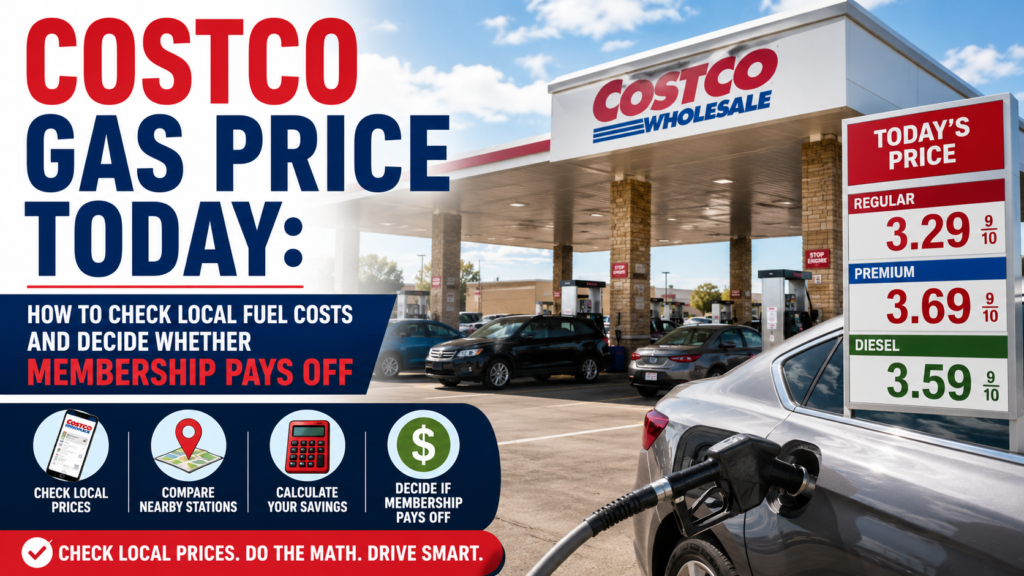
Searching for “Costco gas price today” usually comes down to a practical money question: is Costco cheap enough in your area to make the stop worthwhile, and can the fuel savings help justify the annual membership fee?
There is no single nationwide Costco gas price that answers that question. Costco gasoline prices vary by warehouse, city, state, local competition, fuel taxes, transportation costs, and changes in wholesale gasoline markets. Prices can also move during the week, and in some markets they may change within the same day as retailers respond to new supply costs and nearby competitors.
That is why publishing one “today” price would be misleading almost immediately. The more useful approach is to check the current price at the exact Costco you plan to visit, compare it with nearby stations, and calculate whether the difference is meaningful for your household.
Costco provides location-specific fuel prices through its website and mobile app, while services such as GasBuddy can help compare nearby stations. Costco says members can use its warehouse locator to view fuel prices, station hours, and other location details. (costco.com)
From a personal-finance perspective, the key calculation is simple: annual gallons purchased multiplied by average savings per gallon. That number tells you far more about membership value than a single pump price.
For readers evaluating recurring household expenses, this is where GrowBusinessMag can frame Costco gasoline as a return-on-membership question rather than just another search for the cheapest station nearby.
Check Today’s Costco Gas Price at Your Exact Location
The most reliable way to find the Costco gas price today is to look up the specific warehouse you intend to use. Costco allows shoppers to select an individual warehouse and review its current fuel prices and gas-station hours. (costco.com)
That local lookup matters because even Costco warehouses in the same metro area may not post identical prices. Their surrounding competitors, operating conditions, tax exposure, and fuel supply logistics can differ.
Use the Costco App
Costco’s mobile app is one of the fastest ways to check a nearby station before you leave home.
According to Costco’s instructions, users can:
- Open the Costco app.
- Tap the Warehouse icon.
- Search nearby warehouses or enter a city, state, or ZIP code.
- Select a warehouse.
- Open the location details.
- Review gas-station hours and current fuel prices.
Costco lists local gasoline prices among the location-specific information available through its app. (costco.com)
This is especially useful if you already shop at one Costco regularly and want to know whether the current price justifies filling up during the same trip.
Use Costco.com’s Gas Station Locator
Costco’s website offers a similar option.
The gasoline locator allows users to find a warehouse and view fuel prices, operating hours, and holiday closures. Costco’s broader warehouse locator can also filter results to show locations with gas stations. (costco.com)
This method works well when planning a longer trip or comparing several Costco locations along your route.
Compare the Price With GasBuddy
GasBuddy can add useful context because it helps drivers compare nearby stations by price and distance.
GasBuddy explains that its app can locate stations around a chosen area and search by ZIP or postal code. It also notes that warehouse-club stations such as Costco may sometimes be hidden by active filters, so users may need to reset filters or check the map view. (help.gasbuddy.com)
The two tools serve different purposes.
Costco tells you what Costco is charging at a specific warehouse.
GasBuddy helps show what other nearby stations are charging at roughly the same time.
Using both gives you a better basis for deciding whether the Costco price is actually compelling in your local market.
Compare Costco Gas With Nearby Competitors Before Driving
A lower posted price does not automatically mean the trip saves money.
If Costco is already on your normal route, the savings are easier to capture. If reaching the station requires a substantial detour, extra mileage can eat into the price advantage.
A useful starting formula is:
Fuel-price savings = gallons purchased × price difference per gallon
Then consider the cost of the additional driving needed to reach the station.
For example, if your Costco sits next to the warehouse where you already buy groceries, nearly all of the pump-price difference may translate into real savings.
If the station requires a dedicated round trip through traffic, the economics become less obvious.
That does not mean Costco fuel is a bad value. It means the value depends on how the station fits into your normal driving pattern.
Expect Costco Gas Prices to Vary by Location
Costco gas prices are not uniform because gasoline prices themselves are not uniform across the United States.
The U.S. Energy Information Administration identifies several factors behind regional gasoline-price differences, including:
- State and local taxes
- Distance from fuel supply
- Supply disruptions
- Retail competition
- Operating costs
- Regional fuel specifications
(eia.gov)
A Costco warehouse operates within the same regional fuel market as the stations around it. Costco can choose how aggressively to price fuel, but it cannot eliminate taxes, transportation expenses, refining conditions, or local supply constraints.
State and Local Gas Taxes Affect the Pump Price
Fuel taxes can create large geographic differences before retail strategy is even considered.
The EIA reports that state gasoline taxes and fees averaged 33.55 cents per gallon nationally as of January 2026, though individual states can be substantially above or below that figure. Federal, state, and in some places local taxes are all reflected in the retail price drivers pay. (eia.gov)
That statistic helps explain why comparing a Costco in one state with a Costco in another is usually not meaningful.
The better comparison is Costco versus other stations in the same local market, where the tax environment is broadly comparable.
Local Competition Influences Pricing
Nearby competition also affects what consumers pay.
The EIA notes that gasoline prices can be higher in areas with fewer competing stations. Even stations located relatively close together may post different prices because of traffic patterns, operating expenses, rental costs, supply arrangements, and competitive positioning. (eia.gov)
Costco has repeatedly described gasoline pricing as part of its broader effort to deliver strong member value.
Former Costco CFO Richard Galanti discussed the company’s focus on remaining highly competitive with surrounding gasoline retailers, while later management commentary continued to connect fuel pricing with Costco’s wider membership proposition. (fool.com)
Crude Oil Prices Move the Entire Market
Crude oil is another major influence on retail gasoline.
The EIA identifies crude oil as the largest underlying component of gasoline prices, alongside refining, distribution and marketing, and taxes. (eia.gov)
When crude prices rise sharply, wholesale gasoline prices tend to face upward pressure.
When crude prices fall, retail prices can move down as well, although the change may not appear immediately at every station.
That lag is one reason yesterday’s Costco price should not be assumed to remain the same today.
Understand Why Costco Gas Prices Can Change During the Day or Week
Gasoline is sold in a market where wholesale costs can move frequently, and retailers adjust pump prices as they replenish inventory and respond to nearby competitors.
The EIA notes that retail gasoline prices do not always move at the same moment as wholesale spot prices. There can be a lag before changes higher in the supply chain reach the pump. (eia.gov)
Costco’s inventory turnover can make this dynamic especially important.
In a 2022 earnings call, then-CFO Richard Galanti explained that Costco historically turned gasoline inventory very quickly, using an example in which fuel inventory could turn roughly daily, while some competitors might hold inventory longer. (fool.com)
That means Costco can be exposed to newer wholesale costs more frequently.
When wholesale prices are rising, newer inventory may cost more sooner.
When wholesale prices are falling, fast inventory turnover can also allow lower acquisition costs to flow through more quickly.
This helps explain why gas prices can move even when nothing obvious has changed at the physical station.
Understand Costco’s “First Down, Last Up” Pricing Approach
Costco’s pricing philosophy has long emphasized visible value for members.
Company executives have described a preference to be among the first to lower prices and the last to raise them when market conditions allow. Costco reiterated that philosophy in its 2026 third-quarter earnings discussion while addressing pricing and fuel value. (fool.com)
For gasoline, the practical goal is to maintain a noticeable value advantage relative to nearby stations.
That does not mean Costco promises to be a fixed number of cents below every competitor at every moment. Local fuel markets move too quickly for that.
It does mean fuel pricing serves a broader strategic purpose beyond a single transaction.
In Costco’s 2026 second-quarter earnings discussion, CFO Gary Millerchip described the company as wanting to be the “pricing authority” on gas, reflecting management’s emphasis on fuel as a highly visible measure of value for members. (fool.com)
That is the most useful expert insight for consumers: Costco’s own leadership treats gasoline pricing as a core part of the membership value proposition, particularly when fuel costs are under pressure.
Treat Costco Gas as Both a Business and a Membership Driver
It would be inaccurate to describe Costco gasoline as a product the company sells without regard to profitability.
Costco executives have said the gasoline operation is a profitable business while also explaining that it helps bring members to warehouse locations. Former CFO Richard Galanti described fuel as a good business in its own right and one that can help drive customer traffic. (fool.com)
The better way to think about Costco fuel is that it can serve several purposes at once:
- Generate revenue
- Reinforce membership value
- Increase visit frequency
- Encourage warehouse traffic
- Support member retention
Current management has continued to emphasize that connection.
During Costco’s 2026 third-quarter earnings discussion, management said members who engage with Costco gasoline tend to visit more frequently, shop more, purchase more, and renew at higher rates. Costco also said it was willing to invest in strengthening its gasoline value proposition when members were facing higher fuel costs. (fool.com)
That gives Costco a strong business reason to keep fuel prices competitive without requiring gasoline to be treated as a loss leader.
Estimate Typical Costco Gas Savings in Cents Per Gallon
There is no fixed Costco discount.
The spread between Costco and competing stations may be narrow one week and much wider the next.
Consumer Reports cited GasBuddy petroleum analyst Patrick De Haan, who said warehouse-club gasoline is nearly always cheaper and that the difference commonly falls in a range of roughly 5 cents to 25 cents per gallon. The observation applies to warehouse clubs broadly, not every Costco in every market. (consumerreports.org)
That range is useful as a planning tool, not a guarantee.
A household can test several savings assumptions:
- 5 cents per gallon
- 10 cents per gallon
- 15 cents per gallon
- 20 cents per gallon
- 25 cents per gallon
Then compare those scenarios with the actual difference between Costco and nearby stations.
That produces a more realistic estimate than assuming one national discount applies everywhere.
Calculate Whether Costco Gas Can Cover the $65 Membership Fee
Costco currently charges $65 per year for a Gold Star membership. Executive membership costs $130 per year, which includes the base membership plus the Executive upgrade. (customerservice.costco.com)
If you are considering Costco largely because of gasoline, the Gold Star membership provides the clearest break-even starting point.
Use this formula:
Gallons needed to break even = $65 membership fee ÷ savings per gallon
The result changes significantly depending on the local price gap.
| Average Savings Per Gallon | Gallons Needed to Recover $65 Membership Fee |
|---|---|
| $0.05 | 1,300 gallons |
| $0.10 | 650 gallons |
| $0.15 | About 434 gallons |
| $0.20 | 325 gallons |
| $0.25 | 260 gallons |
These figures are mathematical examples, not estimates of what your Costco will save.
If Costco is 20 cents cheaper per gallon on average, buying 325 gallons over the membership year would generate $65 in gross fuel-price savings.
Beyond that point, additional savings would exceed the Gold Star membership fee, assuming the driver is not adding significant travel costs to reach Costco.
Convert the Break-Even Calculation Into Fill-Ups
Many drivers think in terms of fill-ups rather than annual gallons.
The calculation is:
Fill-ups needed = $65 ÷ savings per gallon ÷ gallons purchased per fill-up
Because fuel-tank size and driving habits vary, there is no universal answer.
At a 10-gallon fill-up, a 20-cent-per-gallon advantage saves $2 per visit. It would take about 33 similar fill-ups to recover $65.
At a 15-gallon fill-up, the same 20-cent advantage saves $3 per visit. The break-even point would arrive after about 22 similar fill-ups.
Change the price difference and the answer changes quickly.
A driver saving 5 cents per gallon needs much more fuel volume to recover the membership fee. A driver who consistently sees a 20- or 25-cent gap can reach break-even much sooner.
That is why local pricing matters more than broad claims that Costco is always cheaper.
Compare Costco Gold Star, Executive, and Non-Membership Stations
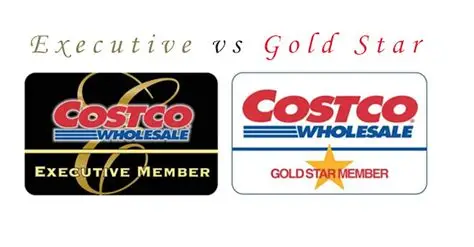
The membership comparison becomes more important when shoppers assume Costco’s Executive plan adds another fuel reward.
Gasoline is excluded from Costco’s standard 2% Executive Reward.
Costco’s U.S. Executive Reward terms specifically state that gasoline purchases do not qualify for the 2% annual reward. (costco.com)
That means upgrading from Gold Star to Executive solely for additional gasoline cash back would not produce the expected benefit.
| Feature | Costco Gold Star | Costco Executive | Typical Non-Membership Gas Station |
|---|---|---|---|
| Annual membership fee | $65 | $130 | Usually none simply to buy fuel |
| Access to Costco member gasoline prices | Yes | Yes | Not applicable |
| Executive 2% Reward | No | Yes, on qualifying purchases | Not applicable |
| 2% Executive Reward on Costco gasoline | No | No, gasoline is excluded | Not applicable |
| Extra Costco pump discount for Executive tier | No standard Executive-only discount documented | No standard Executive-only discount documented | Varies by station or loyalty program |
| Costco warehouse shopping access | Yes | Yes | No |
| Household card | Included | Included | Not applicable |
| Main fuel-related value | Access to Costco member pricing | Same Costco fuel access as Gold Star | No Costco membership required |
Costco confirms that both Gold Star and Executive members can use Costco gas stations. Its membership comparison lists Gold Star at $65 per year and Executive at $130 per year. (costco.com)
For a shopper evaluating fuel alone, Gold Star provides the essential Costco gasoline access.
Executive can still make sense when a household spends enough on other qualifying Costco purchases to justify the extra fee.
Calculate Executive Membership Separately From Gas Savings
The Executive upgrade should be evaluated independently from fuel.
Costco says Executive members receive approximately 2% back on qualifying purchases, subject to the program’s terms and exclusions. Gasoline does not count toward that reward in the United States. (costco.com)
The better framework is:
Gold Star decision: Do gasoline savings plus other Costco benefits justify $65 per year?
Executive decision: Do rewards and benefits from qualifying Costco spending justify the additional $65 upgrade cost?
Keeping the calculations separate avoids treating gasoline as if it generates an Executive reward when it does not.
Include Opportunity Costs in Your Costco Gas ROI
A good membership calculation should consider more than the sign at the pump.
Distance to Costco
If Costco sits along a route you already travel, the extra cost of reaching the station may be close to zero.
If it requires a meaningful detour, part of the apparent savings is spent getting there.
Time Spent Waiting
Busy Costco gas stations can develop lines.
There is no universal dollar value for waiting time, but it still matters in a consumer decision. A small price difference may not feel worthwhile to someone making a separate trip during peak hours.
Frequency of Fuel Purchases
Drivers who use more fuel can accumulate savings faster.
Someone who buys hundreds of gallons per year has more opportunity to benefit from a 10- or 20-cent price difference than someone who drives infrequently.
Other Costco Savings
Gasoline does not have to pay for the entire membership on its own.
If membership already saves money on groceries, household products, tires, prescriptions, travel, or other planned purchases, fuel savings can be treated as incremental value.
That often provides a more realistic membership analysis than judging Costco solely by gasoline.
Recheck Prices Instead of Assuming Costco Is Always Cheapest
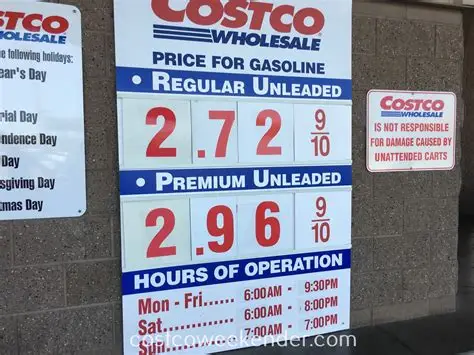
Costco promotes its gasoline as part of its member-value proposition and describes its stations as offering consistently low prices. (costco.com)
Still, consumers should compare actual local prices.
Fuel markets can move quickly, and a large price advantage last week does not guarantee the same spread today.
Before a large fill-up:
- Check your preferred Costco in the Costco app.
- Compare nearby stations.
- Measure the cents-per-gallon difference.
- Consider the distance and route.
- Decide whether the savings justify the stop.
That approach avoids turning Costco’s general value proposition into an assumption that may not hold at every location.
Factor Regional Fuel Conditions Into Your Comparison
Regional conditions can cause large differences between Costco locations.
The EIA identifies refinery outages, transportation constraints, regional fuel requirements, taxes, supply disruptions, and local operating costs as important sources of price variation. (eia.gov)
That is why comparing a Costco in California with one in Texas tells you relatively little about Costco’s competitiveness.
A better benchmark is:
Your Costco versus nearby stations selling fuel in the same local market.
That comparison controls for many of the regional factors affecting all retailers in the area.
Use Costco Gas Prices as One Part of the Membership Decision
Fuel is one of the easiest Costco membership benefits to quantify because the savings can be calculated directly.
If a local Costco is 15 cents cheaper per gallon and a household buys 500 gallons over a year, the gross price difference equals $75 before accounting for extra driving.
If Costco is only 5 cents cheaper and the household buys 300 gallons, the gross difference is $15.
Neither example proves that membership is worthwhile or not worthwhile.
The first household could potentially recover the Gold Star fee through fuel alone.
The second household might still justify membership through savings on other planned purchases.
The useful comparison is based on your own annual fuel use, local price spread, and shopping habits.
FAQ About Costco Gas Price Today
How can I find the Costco gas price today?
Use the Costco app or Costco.com’s warehouse and fuel-station locator. Select the exact warehouse you plan to visit and review its current fuel price. Costco confirms that local gasoline prices are available through its app and location tools. (costco.com)
Is Costco gas always cheaper than other stations?
Costco positions gasoline as a strong member value, but there is no guaranteed fixed discount at every location. Consumer Reports cited GasBuddy analyst Patrick De Haan as saying warehouse-club fuel commonly runs about 5 to 25 cents per gallon lower, though actual local differences can fall outside that range. (consumerreports.org)
Does Costco Executive membership give 2% back on gas?
No. Costco’s U.S. Executive Reward terms exclude gasoline purchases from the standard 2% reward calculation. Gold Star and Executive members both receive access to Costco fuel stations, but Executive membership does not add the normal 2% reward to gasoline purchases. (costco.com)
How many gallons do I need to buy for Costco membership to pay for itself?
Divide the $65 Gold Star membership fee by your average savings per gallon. A 10-cent average savings requires 650 gallons to recover $65. A 20-cent difference requires 325 gallons, while a 25-cent difference requires 260 gallons. (customerservice.costco.com)
Why does Costco gas cost more in some states?
Retail gasoline prices vary because of crude oil and wholesale fuel costs, state and local taxes, refining conditions, transportation expenses, regional fuel requirements, supply disruptions, operating costs, and local competition. The EIA identifies these as major drivers of regional gasoline-price differences. (eia.gov)
Decide Whether Today’s Costco Gas Price Creates Real Value
The most useful answer to “Costco gas price today” is not a single national figure. Costco gasoline prices are location-specific and move with wholesale markets, crude oil costs, taxes, regional supply conditions, and local competition.
Check your exact warehouse through the Costco app or Costco.com, then compare the posted price with nearby competitors through a service such as GasBuddy. Costco’s tools are the better source for its own local price, while a comparison service can show whether that price represents a meaningful discount in your area. (costco.com)
Then turn that difference into an annual calculation. Costco’s Gold Star membership currently costs $65 per year, so divide $65 by your average savings per gallon to estimate how much fuel you would need to buy for gasoline savings alone to cover the fee. (customerservice.costco.com)
At a 5-cent advantage, a driver needs substantial annual volume before gasoline alone offsets membership. At a 20- or 25-cent advantage, the break-even point arrives much sooner. The calculation becomes even more favorable when Costco is already on your regular route and the membership produces savings on other purchases you would make anyway.
Costco gasoline should not be described as a product the company sells without regard to profit. The company has characterized fuel as a profitable operation while also linking it directly to member value, shopping frequency, and retention. That combination explains why competitive gas pricing is strategically important to Costco. (fool.com)
For consumers, the conclusion is straightforward: do not judge Costco gas by a national average or a stale price posted somewhere online. Check the local price, compare it with nearby stations, calculate your cents-per-gallon advantage, and multiply that difference by the gallons your household actually buys. That gives you a far more reliable measure of whether Costco gasoline is helping your membership pay for itself.