
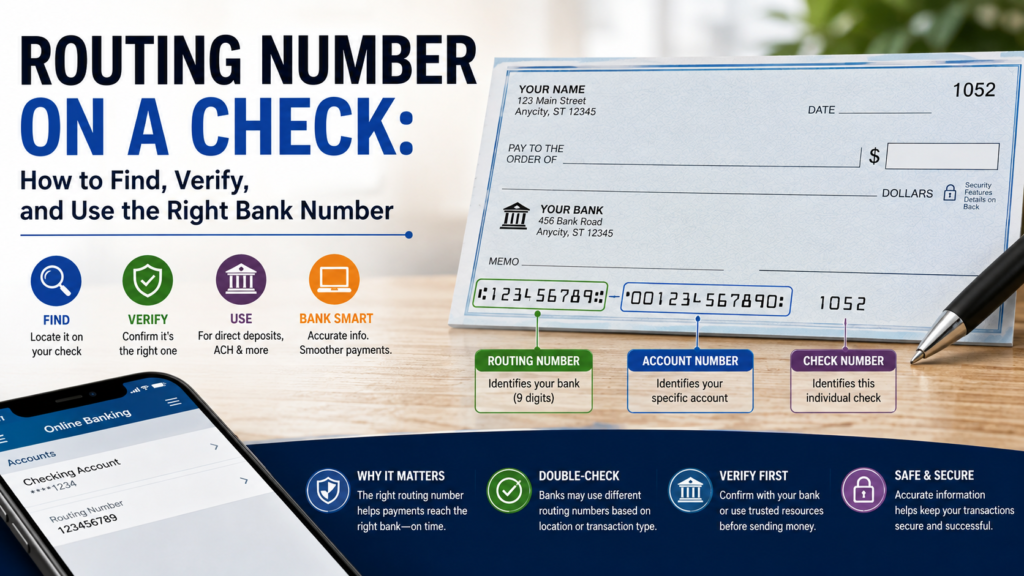
A routing number on a check is one of the key pieces of banking information printed on a personal or business check. This nine-digit number identifies the financial institution connected to the account and helps payment systems direct money to the correct bank or credit union. Routing numbers are routinely used for direct deposits, Automated Clearing House (ACH) payments, electronic transfers, automatic bill payments, and other banking transactions.
Even as paper check use declines, routing numbers remain central to electronic banking. The Federal Reserve reported that U.S. consumers and businesses made 236.6 billion noncash payments in 2024, while check payments fell to 9.2 billion. That shift underscores how banking identifiers once associated mainly with paper checks now play a major role in digital payments as well.
Finding a routing number is usually straightforward, but confusing it with an account number or using the wrong routing number can delay a payment or cause a transaction to fail. Some financial institutions also use different routing numbers depending on the account location or transaction type, making verification important before money is sent.
This guide explains where to find the routing number on a check, how it differs from an account number, how to confirm that the number is correct, and how routing information works when banking online or through a mobile app.
Understand How a Routing Number Identifies Your Bank
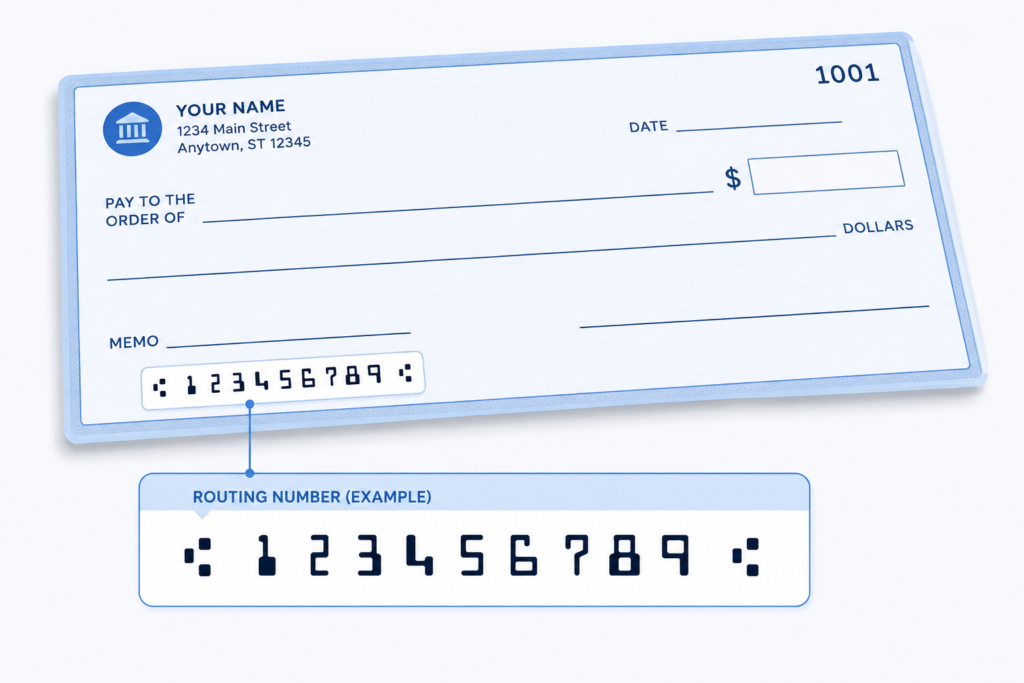
A routing number is a nine-digit identification number used by U.S. financial institutions to process payments. It is commonly called an ABA routing number or routing transit number. The American Bankers Association explains that routing numbers identify the financial institution responsible for processing a transaction.
The routing number does not identify an individual customer’s bank account. Instead, it identifies the bank, credit union, or other eligible financial institution responsible for that account. Your account number has a separate function: it identifies your specific checking or savings account within the institution.
A standard routing number contains nine digits. Federal Reserve documentation explains that the number consists of routing information followed by a check digit used as part of the validation process.
Routing numbers provide a standardized way for payment systems to determine where money should go. When an employer sends a direct deposit, for example, the routing number identifies the receiving financial institution while the account number identifies the employee’s specific account.
The same combination is commonly used for ACH transfers, recurring electronic debits, and other bank-to-bank payments. The Consumer Financial Protection Bureau notes that businesses often process ACH payments using a customer’s routing and account numbers.
Industry observers note that the continuing growth of electronic payments makes accuracy increasingly important. A routing number may look like a simple string of digits, but it acts as a critical destination identifier within payment processing.
Locate the Routing Number on a Check
The easiest way to find a routing number on a check is to look at the series of numbers printed along the bottom edge.
On most personal checks, the routing number is the nine-digit number positioned at the bottom left. The American Bankers Association identifies the routing number as typically appearing before the account number and check number.
A standard check may be arranged like this:
| Information | Typical position on a check | Purpose |
|---|---|---|
| Routing number | Bottom left | Identifies the financial institution |
| Account number | Bottom center | Identifies your specific bank account |
| Check number | Usually after the account number | Identifies the individual check |
The numbers along the bottom are printed in a machine-readable format traditionally associated with magnetic ink character recognition, or MICR. Federal Reserve guidance describes the routing number as appearing in the machine-readable strip along the bottom of a check.
For example, imagine the bottom of a check contains:
123456789 001234567890 1052
In this simplified example, 123456789 would normally represent the routing number, 001234567890 would represent the account number, and 1052 could represent the check number.
Check layouts can vary, however. The check number may appear in more than one location, and some checks can display information in a slightly different sequence. If the layout is unclear, verify the routing number through the financial institution rather than relying only on its position.
Check the Length Before Using the Number
A U.S. ABA routing number contains exactly nine digits. If the number you are looking at contains substantially more digits, it is probably an account number rather than a routing number.
Counting the digits is a useful first check, but it does not prove that the number is correct. A nine-digit sequence can still be outdated, mistyped, or unsuitable for a particular transaction.
Avoid Using the Number in the Upper Corner
Checks can also display routing information in fractional form elsewhere on the document. Federal Reserve guidance notes that this information may appear near the upper portion of a check while the standard nine-digit routing number appears along the bottom.
When a banking website, employer, payment provider, or transfer form asks for a routing number, it generally expects the standard nine-digit number rather than fractional routing information.
Distinguish the Routing Number From the Account Number
Understanding the difference between a routing number and account number is essential because the two numbers work together but perform different jobs.
The routing number identifies the financial institution. The account number identifies the particular account held by the customer. Put simply, the routing number tells the payment system which bank should receive the instructions, while the account number tells that bank which account is involved.
| Feature | Routing number | Account number |
|---|---|---|
| Identifies | Financial institution | Individual customer account |
| Typical length | 9 digits | Varies by institution |
| Check location | Usually bottom left | Usually after routing number |
| Used for direct deposit | Yes | Yes |
| Used for ACH payments | Yes | Yes |
| Unique to individual customer | No | Generally yes |
| Needs careful protection | Especially when paired with account data | Yes |
A bank can have thousands or millions of customers sharing the same routing number while each customer has a different account number. Large financial institutions may also maintain multiple routing numbers, which means customers of the same bank do not necessarily use identical numbers.
That distinction matters when completing a direct deposit form. Entering the correct account number with an incorrect routing number can cause the payment to be rejected, delayed, or routed incorrectly.
The CFPB advises consumers to double-check both account and routing numbers when making electronic transfers.
Keep Routing and Account Numbers Separate From Card Numbers
A debit card number is another identifier and should not be confused with either a routing number or a bank account number.
The long number printed on a debit card is associated primarily with card-network transactions. It is not normally the number an employer requests for direct deposit.
The same distinction can apply to prepaid accounts. Some prepaid products have separate routing and account numbers for direct deposit, and those details may differ from the number printed on the card itself.
Verify the Routing Number Before Sending Money
The safest way to verify a routing number is to compare it with information provided directly by your bank or credit union.
Start by signing in to the financial institution’s official online banking website or mobile application. Many banks display routing and account information under account details, direct deposit settings, or similar sections.
You can also examine a recent check linked to the account. The nine-digit number at the bottom left typically provides the ABA routing number associated with that check.
For additional verification, the Federal Reserve Banks maintain an E-Payments Routing Directory that allows users to search participating financial institutions by routing number, institution name, and location.
Another reliable option is to contact the bank directly using the telephone number shown on its official website, mobile application, bank statement, or the back of a bank-issued card.
Confirm the Number for the Specific Transaction
Finding a valid routing number does not always mean you have found the correct one for your particular payment.
Banks may use different routing arrangements according to transaction type, location, account history, or internal structure. A routing number associated with checks or ACH transactions should not automatically be assumed to be the correct routing information for a wire transfer.
Before initiating a high-value transfer, confirm exactly which routing instructions the bank requires.
For direct deposit, ACH, or bill-payment setup, information shown inside the financial institution’s official banking service is generally more dependable than an unfamiliar third-party website.
Compare Reliable Sources When Unsure
If you are uncertain, compare the number shown on your check with the number provided in your bank’s official account information.
A match offers additional confidence. If the numbers differ, do not guess. Ask the institution which routing number applies to the transaction you intend to complete.
GrowBusinessMag approaches practical banking topics from the same perspective: readers benefit most when everyday financial information is tied to clear verification methods and real-world use.
Respond Quickly After Using the Wrong Routing Number
Using the wrong routing number can produce different results depending on whether the number is invalid, belongs to another financial institution, or is valid but inappropriate for the payment method.
If the routing number cannot be processed for the requested transaction, the payment may be rejected or returned. That can lead to a delayed direct deposit, unsuccessful transfer, missed payment, or a request to submit updated banking information.
A more serious problem can arise when incorrect payment details direct funds somewhere other than the intended destination. The CFPB warns that incorrect account or routing information in a money transfer can result in lost funds and that recovery is not always guaranteed.
For that reason, do not assume every incorrect entry will simply cause the payment to bounce back automatically.
Contact the Financial Institution Immediately
If you discover an error after submitting a transaction, contact your bank or payment provider as soon as possible.
Provide the transaction date, amount, recipient details, incorrect routing information, and any available transaction or confirmation number. The institution can determine whether the payment is pending, rejected, returned, or already transmitted.
When the error involves payroll direct deposit, notify the employer’s payroll department as well. The company may need to cancel or update payment instructions depending on the payment’s processing stage.
For recurring payments, correct the saved banking information before the next scheduled debit or deposit.
The available remedy depends on the transaction type and processing status, so the institution handling the payment is the best source for specific recovery instructions.
Use Routing Numbers Correctly for Direct Deposit
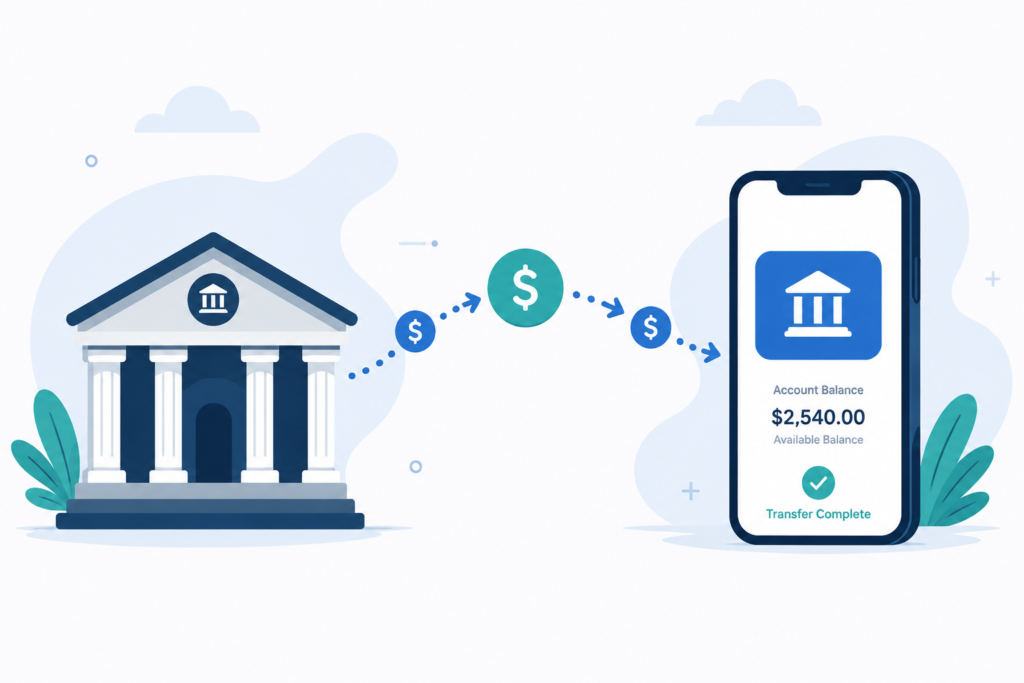
Direct deposit commonly requires both a routing number and an account number.
An employer or payment provider uses these details to route money electronically into the designated checking or savings account. The routing number identifies the financial institution, while the account number identifies the final destination within that institution.
ACH is widely used for payroll deposits, recurring payments, business transfers, and other electronic transactions. Its scale is substantial: Nacha reported that the ACH Network processed 35.2 billion payments valued at $93 trillion in 2025.
When setting up direct deposit, you may also need to specify whether the destination is a checking or savings account. Selecting the correct account type matters because the payment instructions need to correspond with the account held by the financial institution.
Some employers request a voided check during setup. A voided check can provide both the routing number and checking account number without functioning as a normal payment instrument.
Always review the numbers before submitting payroll instructions. A transposed digit, missing digit, or confusion between routing and account numbers can delay a paycheck.
Use Routing Numbers Safely in Online and Mobile Banking
Routing numbers remain relevant even when no paper check is involved.
Digital banking applications use routing and account numbers for transfers, direct deposit setup, external account linking, and electronic bill payments.
For example, if you link an account held at another financial institution, the banking platform may request the external bank’s routing number and your account number. Those details allow the system to identify the institution and account participating in the transfer.
The CFPB advises consumers making transfers through online or mobile banking to review both routing and account numbers carefully before authorizing a transaction.
Find Routing Information Inside Your Banking App
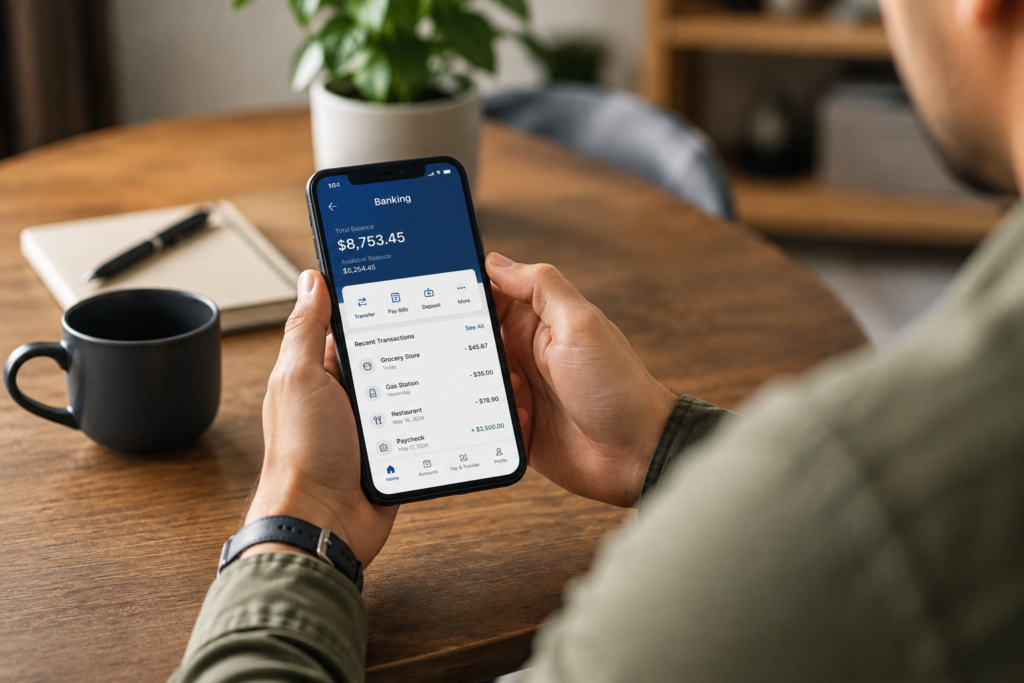
Many financial institutions make routing information available inside their mobile applications.
The exact navigation differs by bank, but it may appear under sections such as account details, account information, direct deposit information, or routing and account numbers.
Using the official application can be particularly useful when you do not have paper checks. Digital-first checking accounts may still provide routing and account numbers for ACH transactions and direct deposits even when customers rarely use checks.
Understand How ACH Payments Use Routing Numbers
When you authorize an electronic payment directly from a checking account, the merchant or service provider may ask for your routing and account numbers.
Businesses commonly use these details to process ACH bill payments, and online payment services can also use ACH when transferring money between bank and credit union accounts.
Money can move into the account, as with payroll, or out of it, as with an authorized recurring payment.
Because routing and account information together can be used to initiate financial transactions, handle the combination carefully. Only provide banking details to organizations you trust, and confirm that you are using the legitimate website or application before entering financial information.
Check the Routing Number When Changing Banks
Routing information becomes especially important when moving from one financial institution to another.
A new checking account normally comes with a different account number and may also use a different routing number. Existing direct deposits and automatic payments therefore need to be reviewed and updated.
The CFPB recommends updating direct deposit arrangements and automatic transactions when moving a checking account to another bank or credit union.
Do not close the previous checking account immediately if outstanding checks, scheduled withdrawals, or pending deposits still depend on it. First identify recurring transactions, update them with the new banking information, and confirm that important deposits and payments are processing correctly.
The same principle applies when a financial institution informs customers that banking details have changed following an account migration or another operational change. Follow official instructions rather than assuming an older routing number will continue to work.
Protect Your Routing and Account Information
A routing number by itself generally identifies a financial institution rather than a specific customer, but pairing it with an account number creates much more useful payment information.
Avoid posting photographs of personal checks online, sending unprotected copies unnecessarily, or entering banking details into websites reached through suspicious emails or messages.
A check can reveal your name, bank information, routing number, account number, check number, and potentially other personal details. Before sharing a check image for a legitimate business purpose, determine whether the entire document is actually necessary.
Be particularly cautious when someone unexpectedly requests banking information and pressures you to provide it immediately.
Federal Reserve guidance also warns consumers not to attempt payments using Federal Reserve Bank routing numbers or false routing information. Federal Reserve Banks do not maintain ordinary personal accounts that individuals can use to pay household bills.
When payment instructions seem unusual, independently contact the financial institution using verified contact information.
Confirm the Number Before Completing Any Transaction
Finding the routing number on a check is usually simple: look for the nine-digit number printed along the bottom left of the check. That number identifies the financial institution, while the account number beside it identifies the individual checking account.
The distinction matters whenever you establish direct deposit, make an ACH payment, link an external account, authorize an electronic debit, or provide banking details to a legitimate payment service.
Before sending money, verify the routing number through your bank’s official website or mobile app, a bank-issued check, direct communication with the institution, or an authoritative routing directory. If different routing numbers appear for different transaction types, confirm which one applies instead of assuming the number printed on a check works for every payment.
A short verification can prevent rejected transactions, delayed deposits, and payment errors that may be difficult to reverse.
Review Common Questions About Routing Numbers on Checks
Is the routing number always the first number on a check?
On most standard U.S. personal checks, the nine-digit routing number appears at the bottom left before the account number. Check designs can vary, however, so verify the number with your financial institution if the layout is unclear.
Is a routing number the same as an account number?
No. A routing number identifies the financial institution, while an account number identifies your individual account at that institution. Both numbers are commonly required for direct deposit and ACH payments.
Can I find my routing number without a check?
Yes. Your routing number may be available through your bank or credit union’s official website, online banking portal, mobile application, account documents, or customer service department. The Federal Reserve Banks also maintain a routing directory for participating institutions.
Can the same bank have more than one routing number?
Yes. A financial institution can use multiple routing numbers, and the appropriate number may depend on the payment type or banking arrangement. When setting up an ACH payment, direct deposit, or wire transfer, use the routing information specifically provided by your financial institution for that transaction.