
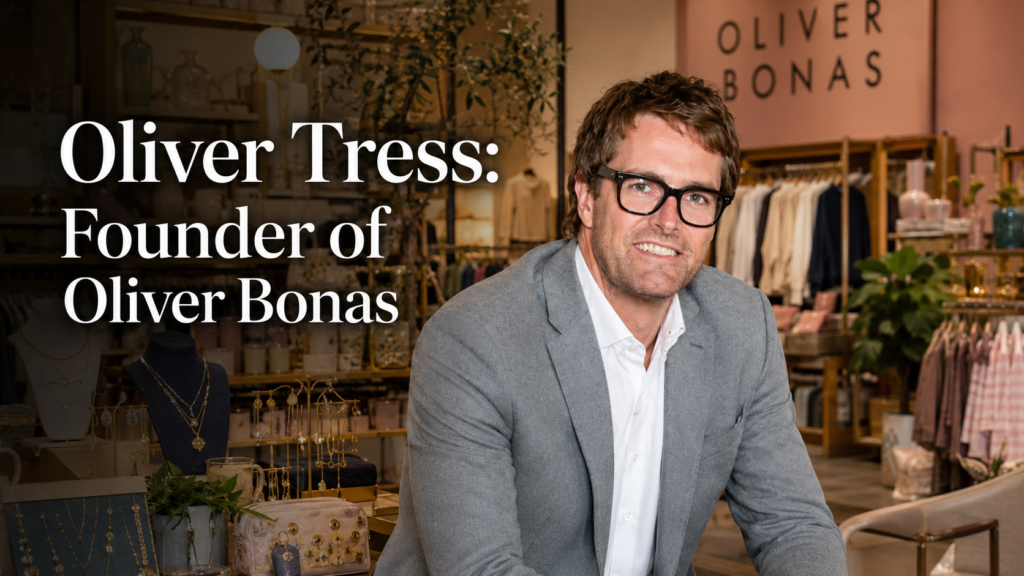
Oliver Tress is a British entrepreneur best known for founding Oliver Bonas, the lifestyle retailer that brings women’s fashion, jewellery, gifts, furniture and homeware together under one brand. He opened the first Oliver Bonas shop on Fulham Road in London in 1993 and gradually developed the business into a prominent retail chain operating across the United Kingdom and Ireland.
His career provides a useful example of how a founder can transform personal taste and product-sourcing experience into a scalable commercial brand. Rather than beginning with formal training in fashion, product design or retail management, Tress drew on international travel, cultural curiosity and direct contact with customers.
Interest in Oliver Tress extends beyond his personal biography. Shoppers often want to know who founded Oliver Bonas, where the company name came from and how the retailer grew. Business owners also study his approach to product selection, brand identity, store expansion and privately funded growth.
Trace Oliver Tress’s Early Life and Education

Oliver James Mark Tress was born in May 1967 and spent part of his early life in several countries. Oliver Bonas describes his upbringing as culturally influenced by time spent across America, Asia and Africa. Exposure to different places, materials and visual traditions helped develop the curiosity that would later influence the retailer’s product collections.
Tress attended Marlborough College before studying anthropology at Durham University from 1986 to 1989. He entered retail with an academic background focused on culture, communities and human behaviour rather than conventional business disciplines.
That education was relevant to the company he later built. Lifestyle retail depends on understanding how customers express identity through clothing, jewellery, interiors and gifts. Anthropology examines how people create meaning through objects and social practices, while retail translates similar observations into products and shopping experiences.
His international upbringing also encouraged an interest in products that British shoppers might not encounter in mainstream stores. Instead of treating fashion, jewellery and homeware as unrelated departments, Tress viewed them as connected parts of a person’s lifestyle. That broad perspective became one of the defining features of Oliver Bonas.
| Personal detail | Available information | Relevance |
|---|---|---|
| Full name | Oliver James Mark Tress | Identifies the founder behind Oliver Bonas |
| Birth date | May 1967 | Places his retail career across more than three decades |
| University | Durham University | Provided his academic background |
| Degree subject | Anthropology | Supported his interest in culture and consumer behaviour |
| Occupation | Retail entrepreneur | Founder and long-term leader of Oliver Bonas |
Follow the Launch of the First Oliver Bonas Store
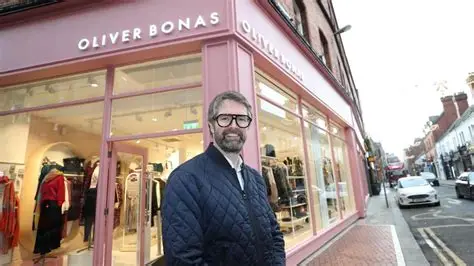
Tress founded Oliver Bonas in 1993 when he was 25 years old. He opened the first shop on Fulham Road in west London after developing a small business selling items he had found while travelling.
The original range included handbags and jewellery brought back from Hong Kong, where his parents were living, along with products sourced from British trade shows. Tress identified goods he found appealing and tested whether London shoppers shared his enthusiasm.
The shop began as a modest venture rather than a heavily financed retail launch. Published accounts state that he invested approximately £3,000 of his savings, with a significant portion used to secure the premises. The limited budget required close attention to stock, rent and daily sales.
The store reportedly made about £1,000 on its first Saturday. Although one strong day could not prove that the concept would succeed nationally, the result offered early evidence that customers were interested in the products and presentation.
Tress initially performed many roles himself. He sourced products, arranged displays, served customers and made commercial decisions. Working directly in the shop allowed him to see which items attracted attention, which prices customers accepted and how people moved between product categories.
The original store established the model Oliver Bonas would continue to develop. It was not strictly a jewellery boutique, fashion shop or gift store. Its appeal came from placing different products within one carefully selected collection and giving customers multiple reasons to browse.
Examine the Meaning Behind the Oliver Bonas Name
The Oliver Bonas name sometimes causes confusion because it sounds like the full name of an individual. Oliver Tress is the company’s founder, while Oliver Bonas is the retail brand.
Published profiles explain that “Oliver” came from Tress’s first name and “Bonas” came from Anna Bonas, his girlfriend when the business was established. Combining the names created an identity that felt personal without using Tress’s complete legal name.
The choice also gave the company room to expand. A highly descriptive name tied to jewellery, imported gifts or one neighbourhood could have become restrictive as the product range developed. Oliver Bonas could be applied equally to clothing, furniture, accessories and homeware.
The name helped create the impression of an independent, founder-influenced retailer. Even customers who knew little about Tress could associate the stores with a personal point of view rather than an anonymous mass-market chain.
That distinction became increasingly valuable as the company added locations. The business needed to grow while preserving the atmosphere of a carefully curated shop. A memorable, non-descriptive name supported that balance.
Study the Expansion of Oliver Bonas
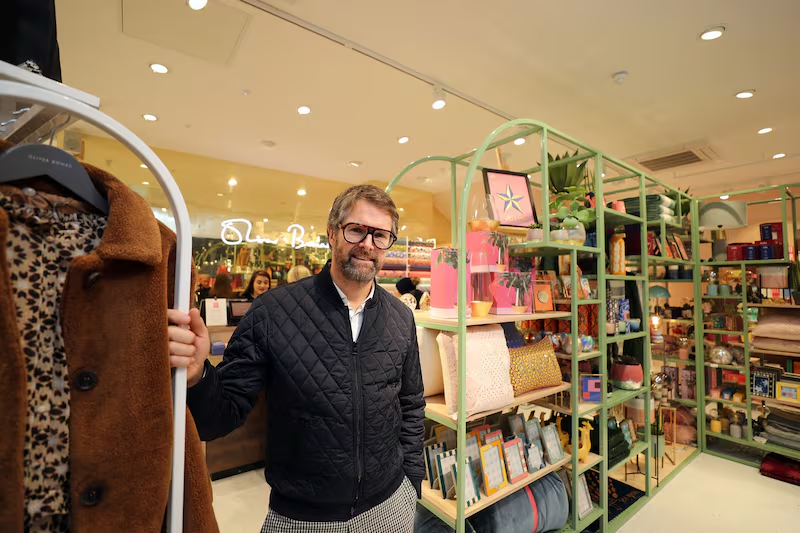
Oliver Bonas expanded gradually from its first London shop into a multi-location retailer. Tress did not attempt to build a national store network immediately. The company added locations over many years, giving its management team time to refine the product mix, store format and operating model.
By 2017, published interviews described the business as having approximately 60 stores. Reporting around the opening of its Dublin location in 2019 placed the chain at more than 70 shops and approximately 1,100 employees.
By 2023, the company was widely reported to operate more than 80 stores across the United Kingdom and Ireland. Store totals can differ slightly according to publication dates, relocations and recent openings, but the figures demonstrate the scale of growth achieved since 1993.
Dublin marked an important stage because it expanded the company’s physical presence beyond the United Kingdom. Tress said the Dublin branch produced the busiest opening the retailer had experienced at that time. His observation provides the article’s expert insight because it comes directly from the founder and reflects first-hand knowledge of the company’s trading performance.
Growth required more than identifying suitable shopping streets. Each new store needed trained employees, dependable stock deliveries, consistent visual presentation and enough local demand to support rent and operating costs.
The company also had to expand its warehouse, design, buying and digital capabilities. A small founder-led shop can operate through direct personal oversight, but a national chain needs systems that allow different teams and locations to deliver a consistent experience.
| Development stage | Approximate scale | Business significance |
|---|---|---|
| 1993 opening | One Fulham Road shop | Tested the lifestyle-retail concept |
| 2017 expansion | About 60 stores | Established a substantial UK presence |
| 2019 development | More than 70 stores | Supported expansion into Dublin |
| 2023 position | More than 80 stores | Confirmed UK and Ireland scale |
| Current product scope | Fashion, jewellery, gifts, furniture and homeware | Creates several sources of customer demand |
Explore the Oliver Bonas Product Strategy
Oliver Bonas operates as a lifestyle retailer rather than a specialist in one category. Its assortment includes women’s clothing, jewellery, accessories, furniture, gifts and homeware.
This breadth gives customers several reasons to visit. Someone may enter a store looking for a birthday gift and leave with a piece of jewellery. Another shopper may browse clothing before noticing a lamp, vase or cushion. The categories support one another when the overall visual presentation remains coherent.
Fashion gives the company a recurring seasonal cycle. Dresses, knitwear, coats and accessories change as weather and consumer preferences shift. Jewellery provides smaller purchases that can work as personal treats or gifts. Homeware allows customers to bring the brand’s colours and patterns into their living spaces.
Furniture extends the retailer into higher-value purchases. Chairs, desks, cabinets and lighting require more consideration than small accessories, but they also strengthen the company’s position as a design-led lifestyle business.
Gifts connect the different departments. Jewellery, candles, decorative objects, bags and stationery can all serve gifting occasions. The category gives the retailer opportunities around birthdays, weddings, holidays and seasonal celebrations.
Over time, Oliver Bonas moved from depending heavily on founder-selected imports to developing products through dedicated internal teams. The company states that its product teams continue to channel Tress’s curiosity into its fashion and homeware collections.
The broader range also reduces reliance on one department. A decline in one category may be partly offset by demand elsewhere. However, the strategy requires careful inventory planning because clothing sizes, jewellery, decorative items and furniture all have different supply-chain needs.
Analyse Oliver Tress’s Approach to Design
Tress’s contribution to design comes primarily through selection, commercial judgement and brand direction. He was not known as a formally trained fashion or furniture designer. His early strength was recognising products that could appeal to customers and presenting them within an engaging store environment.
The Oliver Bonas aesthetic often combines colour, pattern and contemporary shapes. Individual items may be playful or visually bold, but the overall assortment is designed to feel connected.
Store presentation plays an important commercial role. Customers encounter jewellery, clothing and home accessories within the same visual environment. The layout encourages discovery and increases the possibility that a person shopping in one category will notice another.
This approach treats retail design as more than decoration. Lighting, product placement, colours, fixtures and space influence how long customers browse and how they understand the brand.
Tress has also expressed an interest in architecture and the work of British designer Paul Smith. These influences suggest that he considers the relationship between products, interiors and brand presentation rather than judging individual items in isolation.
A founder does not need to personally design every object to shape a company’s creative identity. Decisions about materials, colours, price points, packaging and store layouts collectively determine how customers experience a brand.
The challenge is maintaining that identity as the organisation grows. A single shop can reflect a founder’s daily decisions, while a large chain depends on designers, buyers, visual merchandisers and store managers applying shared principles.
Assess His Founder-Led Leadership Style
Oliver Tress has remained closely connected to the company throughout its expansion. He has been described in published sources as its founder, owner, managing director and chief executive.
Founder leadership can provide consistency because the person directing the company understands its original purpose. Tress selected the early products, worked in the first store and saw how customers responded before the business had national recognition.
That experience gave him first-hand knowledge of the company’s development. It also allowed the retailer to retain a clear identity while extending into new categories and locations.
As Oliver Bonas grew, leadership could no longer depend on the founder handling every decision. The company needed professional managers, designers, buyers, logistics teams, digital specialists and store employees.
Tress’s role therefore shifted from operating one shop to directing a more complex organisation. The brand still reflected his interests, but teams became responsible for translating those interests into collections, campaigns and store experiences.
In a 2023 interview, Tress discussed the value of communication, creativity, teamwork and problem-solving. These capabilities are particularly important in retail, where product, operations and customer service teams must respond quickly to changing demand.
The company has also promoted the phrase “Work Hard, Play Hard & Be Kind” as part of its culture. The statement presents Oliver Bonas as an ambitious but approachable workplace. Public values do not reveal every employee’s experience, but they show how the company wants its leadership and culture to be understood.
Review the Financial Growth of the Business
The financial development of Oliver Bonas demonstrates how far the company has progressed from its first shop. Growth required investment in property, employees, stock, warehouses, technology and product development.
A recent verified statistic provides a clearer picture of its scale. Oliver Bonas recorded revenue of approximately £150.2 million in 2024, up from £135.7 million in 2023, according to figures reported from the company’s filed accounts. That represents an increase of roughly 10.7 percent.
The same accounts showed that pre-tax profit declined from £8.6 million to £7.8 million. The figures illustrate an important distinction: higher sales do not automatically lead to higher profit. Increased wages, store costs, property expenses and other operating pressures can reduce earnings even when revenue rises.
Oliver Bonas opened seven stores and relocated seven others to larger premises during 2024, according to reporting based on the accounts. New and expanded locations can support future sales, but they also require immediate spending on leases, staffing, fixtures and stock.
The official Companies House record confirms that Oliver Bonas Limited remains an active private company and that its latest filed accounts cover the year ending December 2024.
Earlier growth was also supported by external finance. Published company histories have reported revolving credit facilities and pandemic-era lending that helped the business manage investment and disruption.
Revenue, however, should never be confused with the founder’s personal wealth. Sales belong to the company and must cover stock, salaries, rent, tax, debt and other expenses. The value of Tress’s ownership would also depend on the company’s liabilities, profitability and any independent valuation.
Because Oliver Bonas is privately owned, the business does not publish information as frequently as a listed company. Precise online estimates of Tress’s net worth therefore lack a reliable public foundation.
Connect His Career to Modern British Retail
Tress’s career shows how an independent retailer can compete through differentiation rather than price alone. Oliver Bonas does not attempt to offer every available fashion or homeware product. It attracts customers through a recognisable selection and a consistent visual identity.
The company sits between small independent boutiques and large department-store chains. It offers the reach and convenience of a multi-store business while trying to preserve the sense of discovery associated with a smaller shop.
That position is difficult to maintain. As a retailer grows, standardised systems become necessary, but excessive standardisation can weaken the individuality that attracted customers in the first place.
Physical shops remain important to the Oliver Bonas model. Customers can feel fabrics, try on clothing, examine jewellery and understand the size and finish of furniture. These interactions are difficult to reproduce fully through a website.
Online retail still provides essential convenience. It lets the company reach customers who do not live near a store and allows shoppers to compare products before making a purchase. The digital and physical channels support different parts of the customer journey.
The company has also operated through major changes in British retail, including recessions, rising property costs, online competition, Brexit-related disruption and the Covid-19 pandemic.
Survival across those periods required more than a distinctive visual style. It depended on cash management, supply chains, property decisions, digital investment and the ability to adjust stock when customer behaviour changed.
Industry observers note that founder-led retailers are strongest when creative judgement is supported by operational discipline. Oliver Bonas illustrates that principle because its identity attracts attention, while its logistics, teams and financial controls allow the concept to function across a large store network.
Distinguish Verified Facts From Online Speculation
Searches for Oliver Tress often include questions about his wealth, family and private relationships. Reliable information is much easier to find about his role at Oliver Bonas than about his personal finances.
Companies House confirms his association with the registered company and provides official information about its legal status and filings. Company materials and established publications also confirm that he founded the first store in 1993.
Claims about an exact net worth should be approached cautiously. Private-company ownership can be valuable, but calculating that value requires reliable information about shareholdings, debt, assets, liabilities and the price a buyer would pay.
A company’s annual revenue cannot be used as a direct estimate of its founder’s fortune. Revenue measures sales before expenses. It does not represent cash available to the owner.
Personal details should also be kept in proportion. Information about Tress’s relationships or family may attract search interest, but it does not explain the growth of Oliver Bonas.
A credible profile should focus primarily on his education, sourcing experience, store strategy, product development and leadership. These details are relevant to his public career and can be supported by company records or established reporting.
The strongest verified conclusion is that Tress founded Oliver Bonas and guided its development from a single London shop into a substantial lifestyle retailer. Precise claims about his current personal wealth remain unconfirmed.
Apply the Business Lessons From Oliver Tress’s Career
Entrepreneurs can learn from the manageable scale of Tress’s first venture. He began with one shop, limited personal savings and a focused product selection. That approach allowed him to test actual demand before committing to rapid expansion.
The early business also benefited from direct customer feedback. Tress could see which products sold, which displays attracted attention and which price points worked. Real purchasing behaviour gave him information that a theoretical business plan could not provide.
Another lesson comes from the relationship between the company’s product categories. Oliver Bonas did not diversify into completely unrelated areas. It added clothing, homeware, jewellery, furniture and gifts that could serve a similar customer and share a recognisable style.
The company’s gradual expansion also demonstrates the value of patience. Store growth took place over decades, allowing the organisation to develop management, logistics and financing alongside its physical estate.
Expansion still involved risk. New stores require upfront investment, and broader collections can increase the amount of unsold stock. Controlled growth does not eliminate those pressures, but it gives a company more opportunity to identify problems before they affect the entire network.
The final lesson concerns repeatability. Personal taste may be enough to launch an independent shop, but it cannot manage dozens of stores by itself. A successful founder must turn creative instincts into guidelines, processes and teams that other people can apply.
Tress achieved this by moving from personally sourcing much of the early range to overseeing a business with dedicated product, retail and operational specialists.
Reinforce Oliver Tress’s Place in Retail
Oliver Tress transformed a small Fulham Road shop into one of Britain’s most recognisable lifestyle retail businesses. His journey began with jewellery, handbags and gifts sourced through travel and trade shows before developing into a much wider fashion and homeware proposition.
His background in anthropology and international upbringing contributed to an interest in culture, objects and personal expression. Those interests gave Oliver Bonas a broader identity than a conventional clothing or gift shop.
The company’s growth also depended on commercial decisions that were less visible to customers. Store leases, credit facilities, warehouses, design teams, stock controls and digital systems enabled the retailer to operate at scale.
Oliver Bonas’s reported 2024 revenue of more than £150 million demonstrates the commercial reach of the business Tress began with personal savings. At the same time, the decline in annual profit shows that even an established retailer must manage rising costs and investment pressures carefully.
Tress’s central achievement was not simply opening a successful shop. He created a retail concept that could be repeated across locations without losing its core personality.
His career shows how curiosity and product judgement can establish a brand, while patient expansion and operational discipline can sustain it.
Frequently Asked Questions About Oliver Tress
Who is Oliver Tress?
Oliver Tress is a British retail entrepreneur and the founder of Oliver Bonas. The company sells women’s fashion, jewellery, gifts, furniture and homeware through stores and its online platform.
When did Oliver Tress establish Oliver Bonas?
He opened the first Oliver Bonas store on Fulham Road in London in 1993. The business later expanded across the United Kingdom and Ireland.
Is Oliver Tress the same person as Oliver Bonas?
No. Oliver Tress is the founder of the company. Oliver Bonas is the retailer’s brand name, formed by combining Tress’s first name with the surname Bonas.
Where did Oliver Tress study?
Tress studied anthropology at Durham University between 1986 and 1989. His academic background preceded his career in retail.
How successful is Oliver Bonas?
Oliver Bonas reported revenue of approximately £150.2 million for 2024, compared with £135.7 million in 2023. Pre-tax profit was approximately £7.8 million.
What is Oliver Tress’s net worth?
No authoritative public source confirms his exact net worth. Oliver Bonas is privately owned, and company revenue should not be treated as a measure of the founder’s personal wealth.