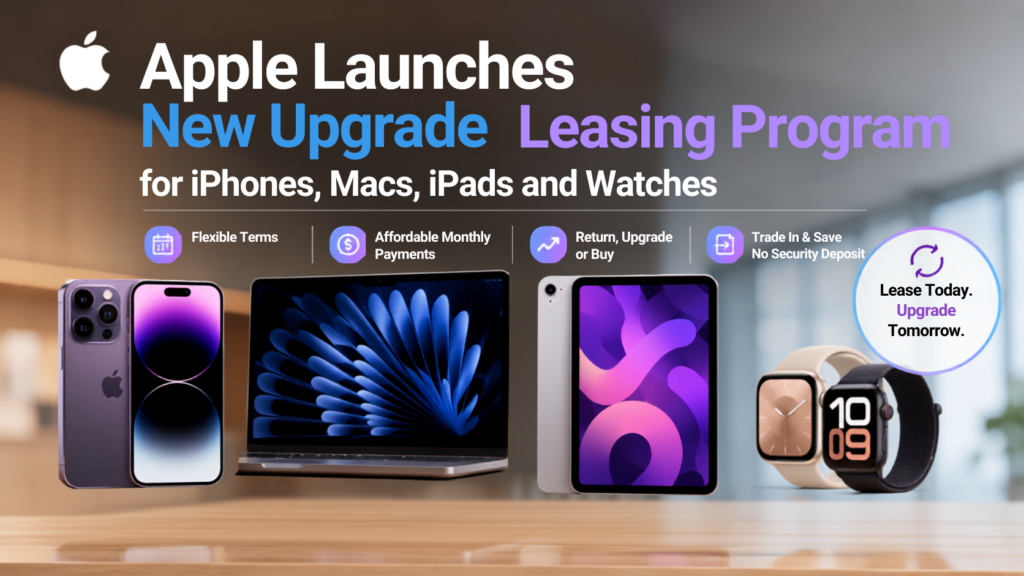
Apple has launched a new hardware leasing program in the United States that allows customers to pay monthly for selected iPhones, Macs, iPads and Apple Watches instead of buying them outright.
Apple Upgrade Goes Live in the US
The program, called Apple Upgrade, is available through Apple retail stores, the company’s online store and the Apple Store app. It is offered in partnership with buy-now-pay-later provider Klarna.
Customers can choose 12- or 24-month lease terms for eligible iPhones and Apple Watches. Macs and iPads are available with 24- or 36-month agreements. Advertised monthly prices start at $17.99 for an iPhone, $11.99 for an iPad or Apple Watch, and $24.99 for a Mac, although costs vary by model and configuration.
Some Lower-Cost Devices Are Excluded
Not every Apple product currently qualifies for the program. Excluded devices reportedly include the iPhone 16, standard iPad, Apple Watch SE and several entry-level Mac models.
The limited selection suggests Apple is initially focusing the program on newer and higher-value devices rather than its most affordable products.
Customers Can Return, Upgrade or Buy
Unlike a traditional installment plan, customers do not automatically own the device after making the scheduled payments. At the end of the lease, they can return it, upgrade to a newer model or pay an additional amount to keep it.
Apple Upgrade also allows customers to trade in an eligible device when joining the program, which can reduce the monthly payment. No security deposit is required, although applicants must complete a soft credit check through Klarna.
Apple Targets Rising Device Costs
The new service replaces Apple’s previous iPhone Upgrade Program, which focused mainly on annual iPhone replacements and often required higher monthly payments.
Apple is introducing the leasing option as consumers keep smartphones for longer and premium device prices continue to rise. Presenting expensive hardware as a predictable monthly expense could make upgrades appear more affordable without forcing Apple to reduce retail prices.
Leasing Could Boost Apple’s Refurbished Business
The program may also strengthen Apple’s position in the refurbished-device market. Returned leased products can be inspected, repaired and resold, giving Apple greater control over used inventory and the value of its hardware after the first customer finishes using it.
Apple’s move could encourage other technology manufacturers to introduce similar leasing options. If customers respond positively, monthly hardware subscriptions may become a more common alternative to traditional device ownership.