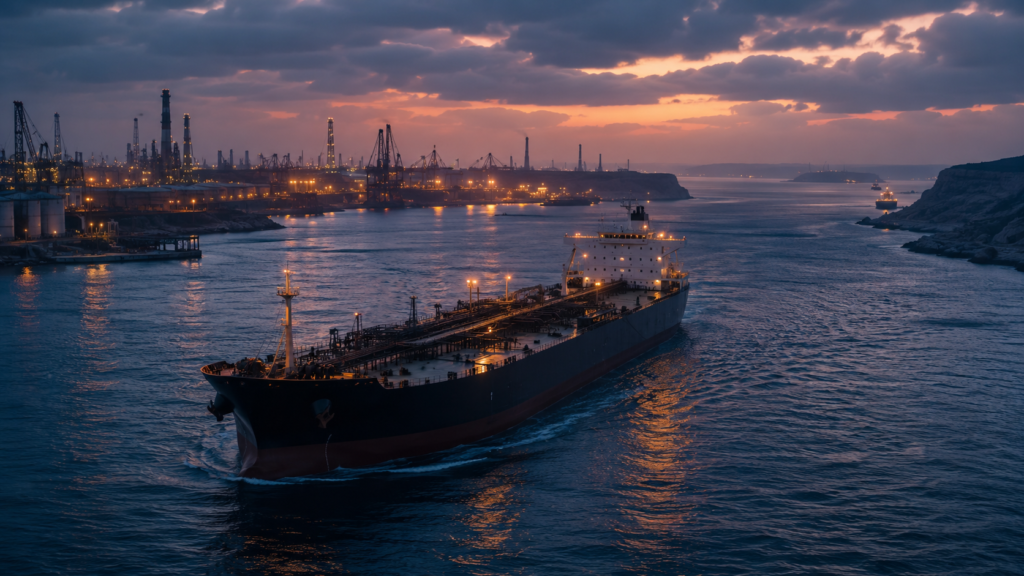
OPEC is facing one of the toughest tests in its nearly seven-decade history as disagreements over production quotas threaten the cohesion of the world’s most influential oil alliance. After months of disruption around the Strait of Hormuz, member nations are pressing to restore lost output, exposing long-running divisions that could reshape global energy markets and put renewed pressure on crude prices. According to the International Energy Agency (IEA), roughly 20 million barrels of oil pass through the Strait of Hormuz each day, underscoring why disruptions in the region have an outsized impact on global supply.
Production Quotas Become the New Flashpoint
With shipping gradually returning through the Strait of Hormuz, attention has shifted from supply interruptions to production limits. During the conflict, major producers including Iraq, Iran, and Kuwait were forced to curb output after exports through the strategic waterway were heavily restricted. As trade resumes, countries that suffered steep revenue losses are seeking significantly higher production quotas.
Iraq has become the strongest advocate for increased output after its oil production dropped from more than 4.5 million barrels per day earlier in the year to just over 1 million barrels during April and May. Officials have indicated the country could reconsider its OPEC membership if production targets are not expanded. The debate follows the United Arab Emirates’ departure from the organization in April, adding to signs of growing frustration within the group.
Saudi Arabia Holds the Decisive Advantage
Saudi Arabia remains the pivotal voice in determining OPEC’s next move. Unlike several Gulf producers, the kingdom continued exporting through pipelines linked to the Red Sea, reducing the impact of the Strait of Hormuz disruption on its production. As a result, Riyadh has less incentive to support a rapid increase in output that could weaken oil prices.
Energy investors often note that Saudi Arabia’s priority is market stability rather than maximizing short-term production. That helps explain why OPEC+ recently approved a relatively modest increase of 188,000 barrels per day, the fifth incremental production hike since March instead of authorizing a larger supply boost.
Weak Demand Adds Pressure to Prices
The internal dispute comes at a time when global oil demand remains below pre-conflict levels. Softer consumption in China and Europe, supported by continued electrification and slower industrial activity, has heightened concerns that returning supply could outpace demand. Analysts warn that additional barrels entering the market too quickly could create a temporary surplus.
Some forecasts suggest oil could fall toward $60 per barrel next year and approach $50 later in the decade if production rises too quickly. Saudi Arabia also retains the option of significantly increasing output, potentially pushing prices toward $40 per barrel, a level many competing producers would struggle to absorb.
For businesses and investors following energy markets, including readers of GrowBusinessMag, OPEC’s internal negotiations now matter as much as geopolitical developments. Whether the alliance reaches a compromise or allows internal divisions to deepen will shape oil prices and energy markets well beyond the current crisis.