
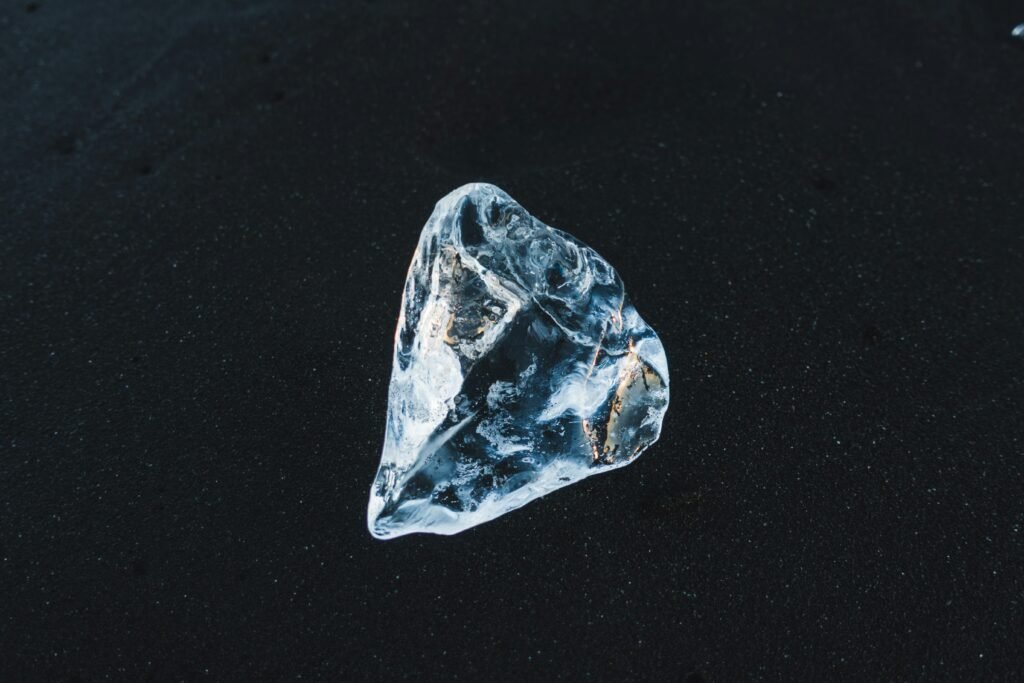
Imagine spotting an unusual crystal while hiking, exploring a riverbed, or sorting through an inherited mineral collection. Most people would see an ordinary stone and move on. Experienced prospectors and gem enthusiasts, however, know that rough diamonds rarely look like the sparkling gemstones displayed in jewelry stores.
Learning how to identify a raw diamond is a practical skill that combines geology, mineral identification, and careful observation. Because rough diamonds often resemble quartz, topaz, calcite, and other naturally occurring minerals, misidentification is common. In fact, many authentic diamonds are initially overlooked because they lack the brilliance associated with polished gems.
By understanding a diamond’s physical properties, crystal habits, density, and optical behavior, you can make a far more informed assessment before seeking professional verification. This guide explains how to identify a raw diamond using both field observations and industry-standard evaluation methods.
What Is a Raw Diamond?
A raw diamond, often called a rough diamond, is a natural diamond that has not undergone cutting, polishing, or shaping. It exists in the same form in which it was recovered from the earth.
Diamonds originate deep within the Earth’s mantle, typically more than 90 miles below the surface, where intense pressure and temperatures exceeding 2,000 degrees Fahrenheit create the conditions necessary for carbon atoms to crystallize. Over millions or even billions of years, volcanic activity transports these crystals closer to the surface through kimberlite and lamproite formations.
Natural Formation Process
The remarkable durability of diamonds comes from their atomic structure. Carbon atoms are bonded in a tightly packed crystalline arrangement that creates exceptional hardness and stability.
Geological conditions required for diamond formation include:
- Extreme pressure
- High temperatures
- Carbon-rich environments
- Significant geological timescales
According to the Gemological Institute of America, most natural diamonds formed between 1 billion and 3.5 billion years ago, highlighting the extraordinary geological history behind every rough stone.
Appearance of Rough Diamonds
One of the biggest surprises for beginners is how understated a rough diamond can appear.
A raw diamond may be:
- Transparent or translucent
- Colorless, yellow, brown, gray, or white
- Frosted or cloudy-looking
- Rounded by natural growth processes
- Slightly greasy in appearance
This is one reason why learning how to identify a raw diamond requires more than simply looking for sparkle.
Key Physical Characteristics of Raw Diamonds
Experienced gemologists rely on several observable characteristics when evaluating rough stones.
Crystal Shape
Natural diamonds commonly form octahedral crystals.
Typical crystal forms include:
- Octahedrons
- Cubes
- Dodecahedrons
- Distorted crystal combinations
Unlike many common minerals, diamond crystals often display symmetrical growth patterns and naturally smooth faces.
Exceptional Hardness
Diamonds rank 10 on the Mohs Hardness Scale, making them the hardest naturally occurring material known.
This property is often discussed when explaining how to identify a raw diamond, but professionals rarely rely on destructive scratch tests because they can damage valuable specimens and produce misleading results.
Adamantine Luster
Gemologists describe the surface reflection of diamonds as adamantine.
Rather than appearing glassy like quartz, rough diamonds often show:
- Sharp reflections
- Metallic flashes
- Oily-looking surfaces
- Distinctive light return
Veteran gemologist Richard Drucker once noted that rough diamonds often “announce themselves through their luster before their brilliance.” This observation reflects a common industry experience: the surface appearance frequently provides stronger clues than sparkle alone.
High Density
Raw diamonds feel surprisingly substantial relative to their size.
Although not dramatically heavier than every lookalike mineral, their density often becomes noticeable when comparing multiple specimens side by side.
Thermal Conductivity
Diamonds transfer heat extremely efficiently.
This property forms the basis of most commercial diamond testers and remains one of the most reliable indicators used during preliminary examinations.
Transparency and Natural Inclusions
Natural rough diamonds commonly contain:
- Mineral inclusions
- Growth lines
- Internal fractures
- Crystal irregularities
Perfectly flawless rough diamonds are exceptionally uncommon in nature.
How to Identify a Raw Diamond at Home
While laboratory analysis remains the gold standard, several non-destructive techniques can help determine whether a specimen warrants further evaluation.
Examine Surface Texture
One of the simplest ways to begin learning how to identify a raw diamond is through close visual inspection.
Look for:
- Greasy luster
- Frosted surfaces
- Natural crystal faces
- Rounded growth features
Quartz typically displays a more glass-like appearance, whereas diamonds often look slightly oily.
Check Crystal Geometry
Using a jeweler’s loupe or magnifying glass, inspect the stone’s overall structure.
Pay attention to:
- Octahedral symmetry
- Flat crystal faces
- Natural geometric patterns
Well-formed crystals often provide stronger clues than color alone.
Evaluate Transparency
Many rough diamonds appear:
- Transparent
- Semi-transparent
- Slightly cloudy
However, transparency should be considered alongside other characteristics rather than as a standalone test.
Observe Light Reflection
Although rough diamonds do not display the intense sparkle of cut gemstones, they still interact with light in distinctive ways.
Watch for:
- Bright flashes from crystal faces
- Sharp reflections
- Strong surface luster
Compare Weight
When evaluating how to identify a raw diamond, experienced collectors often compare stones of similar dimensions.
A rough diamond may feel denser and more substantial than common quartz crystals of the same size.
Use a Diamond Tester
Thermal conductivity testers are widely available and can provide useful preliminary results.
While these devices cannot replace laboratory testing, they offer one of the safest and most practical home-screening methods.
Avoid Destructive Testing
Many online sources continue to recommend outdated methods.
Avoid:
- Hammer tests
- Burn tests
- Aggressive scratch tests
- Impact experiments
A potentially valuable stone should never be subjected to unnecessary damage.
Professional Methods for Raw Diamond Identification
When a specimen appears promising, professional analysis becomes essential.
Microscopic Examination
Gemologists use high-powered microscopes to examine:
- Growth structures
- Crystal morphology
- Surface features
- Internal inclusions
These characteristics often reveal whether a stone formed naturally.
Thermal Conductivity Testing
Professional-grade diamond testers provide more accurate readings than most consumer devices.
Because diamonds conduct heat exceptionally well, this remains one of the industry’s preferred screening methods.
Electrical Conductivity Analysis
Advanced instruments combine thermal and electrical testing to distinguish diamonds from moissanite and other simulants.
Specific Gravity Testing
Density measurements help eliminate many common lookalikes.
Each mineral possesses a characteristic specific gravity range that assists in identification.
Optical Analysis
Professionals evaluate how light behaves within a crystal.
Diamonds possess unique optical properties that differ significantly from quartz, topaz, and calcite.
Spectroscopic Testing
Spectroscopy enables experts to identify:
- Natural diamonds
- Laboratory-grown diamonds
- Treated gemstones
- Synthetic simulants
This technology has become increasingly important as lab-grown diamonds enter the marketplace.
Laboratory Certification
For potentially valuable specimens, independent certification provides the highest level of confidence.
Reports typically document:
- Authenticity
- Weight
- Color
- Clarity
- Crystal characteristics
Anyone serious about how to identify a raw diamond should understand that laboratory verification remains the final authority.
Comparison Table: Raw Diamond vs Common Lookalikes
| Feature | Raw Diamond | Quartz | Topaz | Calcite | Moissanite |
|---|---|---|---|---|---|
| Hardness (Mohs) | 10 | 7 | 8 | 3 | 9.25 |
| Typical Luster | Adamantine | Vitreous | Vitreous | Pearly | Brilliant |
| Density | High | Moderate | Moderate | Lower | Moderate |
| Crystal Shape | Octahedral | Hexagonal | Orthorhombic | Rhombohedral | Hexagonal |
| Thermal Conductivity | Very High | Low | Low | Low | High |
| Surface Appearance | Greasy | Glassy | Glassy | Waxy | Bright |
| Scratch Resistance | Exceptional | Good | Very Good | Poor | Excellent |
Who Should Learn This Skill
The ability to identify rough diamonds has practical value across several professions and hobbies.
Mineral Collectors
Collectors regularly encounter unfamiliar specimens at mineral shows, auctions, and field sites.
Strong identification skills help separate genuinely interesting finds from common materials.
Prospectors
Prospectors benefit directly from understanding how to identify a raw diamond when exploring diamond-bearing regions.
Geology Students
Hands-on mineral identification reinforces classroom concepts involving crystal systems, mineralogy, and earth processes.
Jewelry Professionals
Accurate preliminary assessments improve purchasing decisions and reduce the likelihood of costly mistakes.
Hobbyists and Treasure Hunters
Outdoor enthusiasts often discover unusual crystals and minerals during recreational exploration.
Knowing what characteristics matter can prevent overlooked opportunities.
Estate Buyers and Antique Dealers
Inherited collections occasionally contain unrecognized gemstones.
Basic identification knowledge can uncover significant hidden value.
FAQ
How can I tell if a rough stone is a diamond?
Look for octahedral crystal shapes, adamantine luster, high hardness, strong thermal conductivity, and natural crystal faces. Professional verification is recommended.
Does a raw diamond sparkle like a polished diamond?
No. Rough diamonds typically appear more subdued and may look frosted or slightly greasy.
Can quartz be mistaken for a raw diamond?
Yes. Quartz is among the most common diamond lookalikes because of its transparency and crystal habit.
Is a diamond tester accurate for rough diamonds?
A quality thermal conductivity tester can be helpful, but laboratory testing offers significantly greater accuracy.
What colors do natural rough diamonds occur in?
Natural rough diamonds may be colorless, yellow, brown, gray, white, green, blue, or pink.
Are all rough diamonds valuable?
No. Market value depends on factors such as size, clarity, color, rarity, and overall quality.
Should I clean a suspected rough diamond before testing?
Yes. Removing dirt and surface debris can improve visual examination and testing accuracy.
Conclusion
Understanding how to identify a raw diamond involves much more than searching for sparkle. Crystal structure, luster, density, thermal conductivity, and geological context all play important roles in separating genuine diamonds from lookalike minerals. While home evaluation techniques can provide valuable clues, professional testing remains the most reliable path to confirmation.
Whether you are a collector, prospector, jeweler, geology student, or outdoor enthusiast, developing these identification skills can help you recognize promising specimens with greater confidence. If you discover a stone that exhibits multiple diamond characteristics, the next step is simple: have it evaluated by a qualified gemologist or accredited laboratory. That ordinary-looking crystal could be far more remarkable than it first appears.