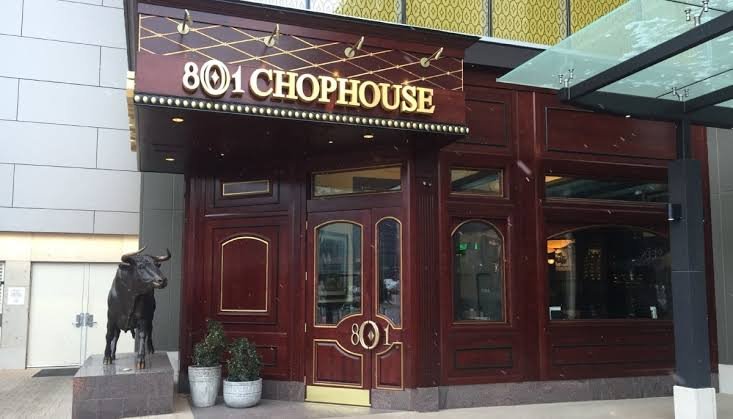
New details emerging from the Chapter 11 case are providing a clearer picture of the 801 Chophouse bankruptcy than the initial filing alone. While early reports focused on the company’s debt and bankruptcy petition, recently disclosed court information offers greater insight into revenue trends, disputed creditor claims, and how the company values individual restaurant locations. For a quick overview of the 801 Chophouse bankruptcy before exploring the financial details, watch ABC News’ coverage of the filing.
According to reporting on the court filings, parent company 801 Restaurant Group filed for Chapter 11 protection in April 2026, listing approximately $18.7 million in liabilities and about $15 million in assets. Since then, additional disclosures have highlighted scheduled creditor hearings, multimillion-dollar disputed claims, and notable differences in the value assigned to restaurants across its portfolio.
These developments help separate the company’s operational performance from its financial restructuring. Rather than pointing to widespread operational failure, the filings suggest the bankruptcy is largely centered on debt obligations, lease disputes, and efforts to reorganize the parent company’s finances while keeping most restaurants operating as usual.
This in-depth analysis of the 801 Chophouse bankruptcy examines what comes next in the Chapter 11 process, reviews the latest financial disclosures, breaks down the largest creditor claims, and explores what the company’s own valuation figures may indicate about its long-term restructuring strategy.
What’s Next After the Chapter 11 Filing?
May 2026 Hearings Move the Case Into the Next Phase
The bankruptcy has now progressed beyond the initial filing. According to reporting on the court filings, formal creditor meetings and significant hearings are scheduled for May 2026, marking the beginning of the reorganization phase.
During this stage, creditors gain an opportunity to review financial information, question company representatives, and evaluate the proposed path forward. These proceedings are designed to establish the framework for negotiations rather than determine the outcome of the case immediately.
For anyone following the 801 Chophouse bankruptcy, the May hearings represent one of the first major opportunities to understand how creditors and the company may approach restructuring discussions.
What Typically Happens During This Stage?
Chapter 11 is intended to help financially distressed businesses reorganize instead of shutting down immediately. After the initial petition is filed, attention usually turns toward validating creditor claims, reviewing assets, assessing cash flow, and discussing how debts might ultimately be resolved.
Creditors may challenge financial disclosures, object to certain claims, or negotiate repayment terms. At the same time, the company works to demonstrate that its business can continue operating while addressing outstanding obligations.
According to the Administrative Office of the U.S. Courts, Chapter 11 generally allows businesses to remain in operation while proposing a court-approved plan to restructure debts rather than liquidate assets immediately. This debtor-in-possession framework is one of the defining features of corporate reorganizations.
Operations Continue During the Bankruptcy
One important point often overlooked is that the bankruptcy filing involves only the parent holding company.
Individual restaurant LLCs were not included in the Chapter 11 filing, meaning customers can continue dining at the operating locations without interruption. That distinction makes the 801 Chophouse bankruptcy different from cases where restaurants immediately cease operations or begin widespread closures.
The Financial Picture Behind the Filing
Revenue Continued to Increase
One of the more notable details disclosed through reporting on the court filings involves revenue.
BusinessDen reported that the restaurant group generated approximately $51 million in revenue during 2025, compared with roughly $50 million in 2024.
While the increase is modest, it demonstrates that customer demand remained relatively steady before the bankruptcy filing.
Revenue Alone Doesn’t Tell the Full Story
Growing sales do not necessarily prevent a company from seeking Chapter 11 protection.
Businesses can continue producing substantial revenue while facing significant lease obligations, litigation expenses, financing costs, or long-term debt commitments that place pressure on cash flow.
Viewed in that context, the 801 Chophouse bankruptcy appears to reflect balance-sheet challenges more than a collapse in restaurant demand.
Industry observers often note that hospitality businesses can remain operationally healthy while still requiring financial restructuring if fixed obligations outpace available cash flow.
The Underlying Business Still Shows Signs of Stability
The reported revenue figures suggest customers continued supporting the restaurant group throughout 2025.
That matters because bankruptcy courts and creditors generally consider whether a company maintains a viable operating business capable of supporting a reorganization plan.
Although revenue growth alone cannot guarantee a successful restructuring, it provides evidence that the company’s operating restaurants continue generating meaningful business while financial issues are addressed.
Inside the Largest Creditor Claims
Shea Properties Holds the Largest Listed Claim
The largest creditor listed in the bankruptcy filings is Shea Properties, with a disputed claim totaling approximately $3.4 million, according to reporting on the court filings.
The claim relates to the former 801 Fish restaurant located at Denver’s Cherry Creek Shopping Center.
Court records indicate the dispute extends beyond unpaid rent. Shea previously evicted the restaurant and filed suit alleging unpaid lease obligations along with property damage associated with the space.
The Denver Dispute Carries Significant Weight
BusinessDen reported that Shea Properties Executive Vice President Peter Culshaw said the company was “disappointed this didn’t work out” and is actively seeking a new tenant for the former restaurant space. He declined further comment because litigation remains pending.
That statement is one of the few public comments connected to the dispute and reflects that the landlord is now focused on re-leasing the property while legal proceedings continue.
Because the claim remains disputed, the bankruptcy court will ultimately determine how much, if any, of the requested amount is allowed.
The SBA Loan Is Also Contested
Another major obligation involves an approximately $2 million Small Business Administration loan obtained in 2022.
According to reporting on the court filings, that loan relates specifically to the Cherry Creek location and is also disputed by the company.
Disputed claims are common in Chapter 11 proceedings. They do not necessarily represent final amounts owed, as creditors and debtors may challenge both the validity and size of individual claims before the court reaches a determination.
Together, these disputed obligations represent some of the most closely watched financial issues in the 801 Chophouse bankruptcy.
Comparison of Major Creditor Claims
| Claimant | Claim Amount | Status | Related Location |
|---|---|---|---|
| Shea Properties | $3.4 million | Disputed | Former 801 Fish, Cherry Creek, Denver |
| SBA Loan | $2 million | Disputed | Cherry Creek, Denver |
| Other listed creditors | Various | Mixed | Multiple business obligations |
A Tale of Two Valuations
Denver and St. Louis Tell Very Different Stories
One of the most revealing details in the bankruptcy filings involves the company’s own valuation estimates for individual locations.
According to reporting on the court filings:
- The closed Denver location carries a reported value of approximately $716,000.
- The St. Louis 801 Chophouse location is valued at roughly $8 million.
The contrast is striking and illustrates how dramatically asset values can differ within the same restaurant group.
The Valuation Gap Reflects Different Business Conditions
Restaurant valuations are influenced by far more than the physical property itself.
Factors such as profitability, customer demand, lease terms, local market conditions, and future earning potential all contribute to overall value.
An operating flagship restaurant in a mature market can command substantially higher value than a location that has already closed and become the subject of litigation.
The figures disclosed during the 801 Chophouse bankruptcy reflect those very different operating circumstances.
Creditors Will Watch These Numbers Closely
Asset valuations play a central role in Chapter 11 proceedings because they help determine how much value may ultimately be available to support a restructuring plan.
They also influence negotiations involving lenders, landlords, and unsecured creditors, particularly when individual assets differ significantly in value.
The sizable gap between Denver and St. Louis reinforces that not every location contributes equally to the company’s overall financial position.
Operating Restaurants Continue Serving Customers
Most Locations Remain Open
A key detail in the bankruptcy filings is that the operating restaurant entities were not included in the Chapter 11 case.
Restaurants continue operating in:
- Des Moines
- Omaha
- Kansas City
- Leawood
- St. Louis
- Minneapolis
- Tysons Corner, Virginia
As a result, customers generally should not expect service interruptions solely because of the parent company’s restructuring.
The Filing Primarily Targets Financial Reorganization
Corporate bankruptcies frequently distinguish between holding companies and operating subsidiaries.
That appears to be the case here, allowing restaurants to continue generating revenue while the parent company works through debt negotiations and creditor claims.
For diners, the 801 Chophouse bankruptcy may have little visible impact unless future court decisions substantially change the restructuring process.
How the Financial Pieces Connect
Looking Beyond the Headlines
Taken together, the financial disclosures present a more balanced picture than debt figures alone.
The company reported increased annual revenue, continues operating most restaurants, and retains valuable assets in several markets. At the same time, substantial disputed obligations tied to one former location have become a major focus of the Chapter 11 case.
Rather than suggesting uniform financial weakness, the filings indicate that certain markets have created far greater challenges than others.
Denver Remains Central to the Case
Several of the largest financial issues all trace back to the Denver operation.
The largest creditor claim involves the former Cherry Creek location.
The disputed SBA loan is tied to that same restaurant.
The company’s lowest reported property valuation also belongs to Denver.
That concentration suggests the closed location has become one of the defining financial issues shaping the 801 Chophouse bankruptcy proceedings.
What Could Happen Next?
Multiple Outcomes Remain Possible
Chapter 11 reorganizations rarely follow a straight path.
Future developments may include negotiated settlements, revised repayment plans, court rulings on disputed claims, additional financial disclosures, and eventual approval of a restructuring strategy.
The May hearings represent an important milestone, but they are only one step in what could be a lengthy legal process.
Long-Term Success Depends on More Than Court Approval
Court approval alone does not guarantee a successful restructuring.
The company’s ability to maintain customer demand, manage operating costs, resolve major disputes, and reduce financial obligations will ultimately shape its long-term outlook.
As publications such as GrowBusinessMag frequently observe when covering business restructurings, understanding both operating performance and financial liabilities provides a more complete view of a company’s recovery prospects.
Frequently Asked Questions
Is every 801 Chophouse location included in the bankruptcy?
No. According to reporting on the court filings, only the parent holding company filed for Chapter 11 protection. Individual restaurant LLCs continue operating normally.
What is the largest creditor claim?
The largest listed claim is approximately $3.4 million from Shea Properties. The claim is disputed and relates to the former 801 Fish restaurant in Denver’s Cherry Creek Shopping Center.
Why did the company file for bankruptcy if revenue increased?
According to reporting on the court filings, the company generated approximately $51 million in revenue during 2025. However, revenue growth does not eliminate obligations such as lease liabilities, litigation, and outstanding debt, all of which can contribute to a Chapter 11 filing.
What happens during the May 2026 creditor hearings?
Creditors and company representatives typically review financial disclosures, discuss disputed claims, answer questions under oath, and begin negotiating elements of a reorganization plan under court supervision.
Why is the Denver location valued so much lower than the St. Louis restaurant?
According to reporting on the court filings, the company assigned an estimated value of about $716,000 to the closed Denver location compared with roughly $8 million for the St. Louis property. The filings do not identify a single reason, but the difference likely reflects varying operating conditions, closure status, and market performance.
Conclusion
The latest developments surrounding the 801 Chophouse bankruptcy offer a more detailed understanding of the company’s restructuring than the original filing alone. According to reporting on the court filings, the restaurant group entered Chapter 11 while reporting approximately $51 million in annual revenue, suggesting that customer demand remained relatively stable even as financial obligations became increasingly difficult to manage.
The case is now centered on issues that extend beyond headline debt figures, including disputed multimillion-dollar claims linked to the former Denver location, sharply different property valuations across the restaurant portfolio, and the upcoming May 2026 creditor hearings that will shape the next stage of the restructuring process.
For business owners, investors, and restaurant industry observers, the 801 Chophouse bankruptcy illustrates that Chapter 11 is often driven by the complexity of debt, leases, and legal obligations rather than sales performance alone. As additional court proceedings unfold, they should provide a clearer picture of whether the company can successfully reorganize while preserving the operating restaurants that continue to serve customers. If you want to stay updated on major restaurant bankruptcies, restructuring cases, and the financial stories behind them, follow our latest coverage for future developments.