Imagine owning a business that can generate sales 24 hours a day without requiring a cashier or storefront. That opportunity continues to attract entrepreneurs, small business owners, and investors to the vending industry. Before making your first purchase, however, one question should be answered clearly: how much does a vending machine cost?
The answer extends well beyond the purchase price. Machine type, payment technology, refrigeration, capacity, installation, and ongoing operating expenses all influence your total investment. According to the National Automatic Merchandising Association (NAMA), the U.S. convenience services industry generates more than $40 billion in annual economic impact, highlighting the continued demand for modern vending solutions. This growing market makes choosing the right machine just as important as choosing the right location.
In this guide, you’ll learn how much does a vending machine cost, what affects pricing, how new and used machines compare, hidden expenses to expect, and whether investing in vending machines makes financial sense in today’s market.
Types of Vending Machines and Their Costs
Different vending machines serve different customer needs, and each category comes with its own pricing range.
Snack Vending Machines
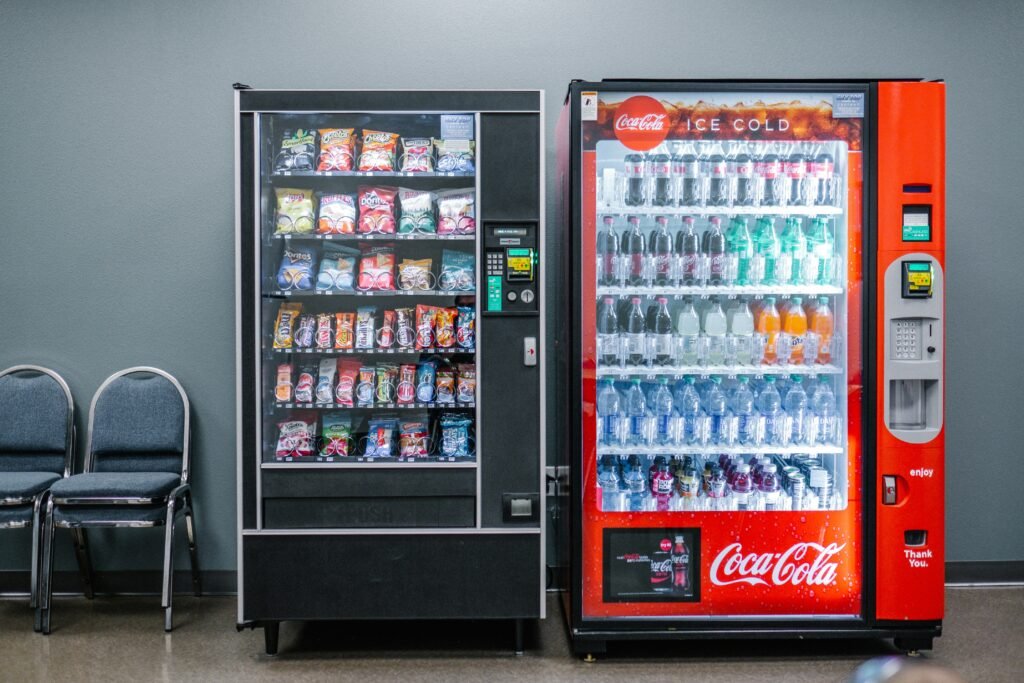
Snack vending machines remain one of the most popular choices for first-time operators because they offer relatively low startup costs and broad product appeal. They typically dispense chips, candy, granola bars, cookies, and other packaged snacks.
Typical price range:
- Used: $1,000 to $3,000
- New: $3,500 to $6,500
Machines equipped with larger capacities, touchscreen displays, and cashless payment systems generally cost more, but those features can improve customer convenience and encourage higher sales.
Beverage Vending Machines
Cold beverage machines include refrigeration systems, making them more expensive than standard snack machines.
Typical price range:
- Used: $1,800 to $4,500
- New: $4,000 to $8,500
These machines are commonly installed in offices, gyms, hospitals, schools, and manufacturing facilities where demand for bottled drinks and canned beverages remains consistent throughout the day.
Combo Vending Machines
Combo vending machines combine snacks and beverages in one cabinet, making them an efficient solution for locations with limited floor space.
Typical price range:
- Used: $2,500 to $5,000
- New: $4,500 to $8,000
Although the upfront investment is higher than purchasing a basic snack machine, a combo unit can simplify operations by serving multiple customer preferences from a single location.
Specialty Vending Machines
Specialty vending machines dispense products beyond food and beverages.
PPE and Safety Equipment
Manufacturing plants and warehouses often use these machines to distribute gloves, safety glasses, hard hats, and other workplace supplies.
Typical cost:
$4,000 to $10,000
Fresh Food Machines
Fresh food vending machines feature advanced refrigeration and inventory monitoring systems designed for sandwiches, salads, dairy products, and prepared meals.
Typical cost:
$8,000 to $20,000
Smart Retail Kiosks
These advanced machines sell electronics, cosmetics, beauty products, and other high-value merchandise while using cloud-based inventory management and digital displays.
Typical cost:
$10,000 to more than $50,000 depending on customization.
When evaluating how much does a vending machine cost, remember that specialized machines command higher prices because they include more advanced hardware and software.
New vs Used Vending Machine Cost
Choosing between a new and used machine is one of the first financial decisions every buyer makes.
Buying a New Machine
A new vending machine offers the latest technology, manufacturer warranties, energy-efficient components, and compatibility with modern payment methods.
Advantages include:
- Lower maintenance requirements
- Greater reliability
- Credit card and mobile payment support
- Remote inventory monitoring
- Manufacturer warranty
The trade-off is a larger upfront investment, but many buyers value the reduced risk of unexpected repairs during the first several years.
Buying a Used Machine
Used machines provide a lower-cost entry point for entrepreneurs with limited startup capital.
Benefits include:
- Lower purchase price
- Faster potential return on investment
- Easier expansion across multiple locations
Before purchasing, inspect the refrigeration system, bill validator, coin mechanism, compressor, control board, shelves, and overall condition. A thorough inspection can prevent expensive repairs later.
If you’re researching how much does a vending machine cost, buying a quality used machine may reduce your initial investment by 30% to 60%, provided the equipment has been properly maintained.
Key Cost Factors
Several factors influence the final purchase price of a vending machine.
Machine Size
Larger machines hold more products, reducing restocking frequency while increasing purchase cost.
Product Capacity
Higher-capacity machines require larger cabinets, stronger motors, and additional shelving, all of which contribute to the final price.
Cashless Payment Systems
Consumers increasingly expect to pay with cards or mobile wallets instead of cash.
Installing contactless payment technology typically adds several hundred dollars to the purchase price, but many operators report stronger sales because customers are not limited by the cash they carry.
Smart Technology
Modern vending software allows owners to:
- Monitor inventory remotely
- Receive maintenance alerts
- Track real-time sales
- Analyze purchasing trends
These features improve operational efficiency, particularly for businesses managing multiple machines.
Energy Efficiency
Energy-efficient compressors, LED lighting, and intelligent cooling systems reduce monthly electricity costs. While these models cost more upfront, they often lower long-term operating expenses.
Brand Reputation
Established manufacturers generally command higher prices because replacement parts, technical support, and long-term reliability are easier to obtain.
Hidden Costs to Consider
The machine itself represents only part of your investment.
Additional expenses may include:
Inventory
Most operators spend between $300 and $1,500 stocking a new machine before opening for business.
Delivery and Installation
Shipping, transportation, and professional installation costs vary depending on machine size and delivery location.
Card Processing Fees
Cashless payment providers typically charge transaction fees that should be included in your operating budget.
Repairs and Maintenance
Even dependable machines occasionally require replacement parts, compressor servicing, or payment system repairs.
Insurance
Commercial insurance helps protect your investment against theft, vandalism, fire, and liability claims.
Business Licenses and Permits
Some states and municipalities require vending permits or business licenses before machines can begin operating.
Comparison Table
| Feature | Budget Machines | Mid-Range Machines | Premium Machines |
|---|---|---|---|
| Purchase Price | $1,000–$3,000 | $3,500–$7,000 | $8,000–$50,000+ |
| Condition | Mostly used | New or lightly used | Brand-new |
| Cashless Payments | Optional | Usually included | Standard |
| Remote Monitoring | Rare | Available | Advanced |
| Energy Efficiency | Basic | Good | Excellent |
| Best For | Beginners | Growing businesses | Enterprise operators |
Is Buying a Vending Machine Worth It?
The answer depends largely on location, operating costs, product selection, and customer traffic.
A machine installed in a busy office building, hospital, university, airport, or manufacturing facility has a much greater chance of producing reliable revenue than one placed in a low-traffic area. Industry professionals consistently point to location as the single most important factor affecting profitability.
As NAMA has noted, “a great machine in a poor location will rarely outperform an average machine in a high-traffic location.” That practical perspective reflects what experienced operators often discover after managing multiple machines.
For many entrepreneurs asking how much does a vending machine cost, the more valuable question is how efficiently that investment can generate consistent cash flow. Operators who monitor inventory, rotate products based on customer demand, and keep machines fully operational generally achieve stronger long-term returns.
Frequently Asked Questions
1. How much does a vending machine cost for beginners?
Entry-level used machines typically start around $1,000, while new commercial machines generally range from $3,500 to $6,000.
2. Is buying a used vending machine a good idea?
Yes. A well-maintained used machine can significantly reduce startup costs, provided all major mechanical and electronic components are inspected before purchase.
3. Do vending machines require monthly maintenance?
Routine maintenance includes cleaning, restocking, software updates, and occasional repairs. The exact cost depends on machine age and usage.
4. How long does a vending machine last?
Commercial vending machines commonly remain in service for 10 to 20 years or longer when properly maintained.
5. Can I finance a vending machine?
Yes. Many manufacturers and equipment finance companies offer leasing and financing programs that reduce the initial capital required.
Conclusion
Understanding how much does a vending machine cost means evaluating the complete investment rather than focusing only on the purchase price. From machine type and payment technology to inventory, maintenance, and installation, every expense contributes to your long-term profitability. Whether you choose a budget-friendly used model or invest in a premium smart vending system, selecting equipment that matches your location and customer demand is far more important than simply buying the least expensive option.
Before making a purchase, compare several suppliers, estimate your ongoing operating costs, and project expected revenue based on foot traffic and product demand. A carefully planned investment today can become a dependable source of recurring income for years to come.