
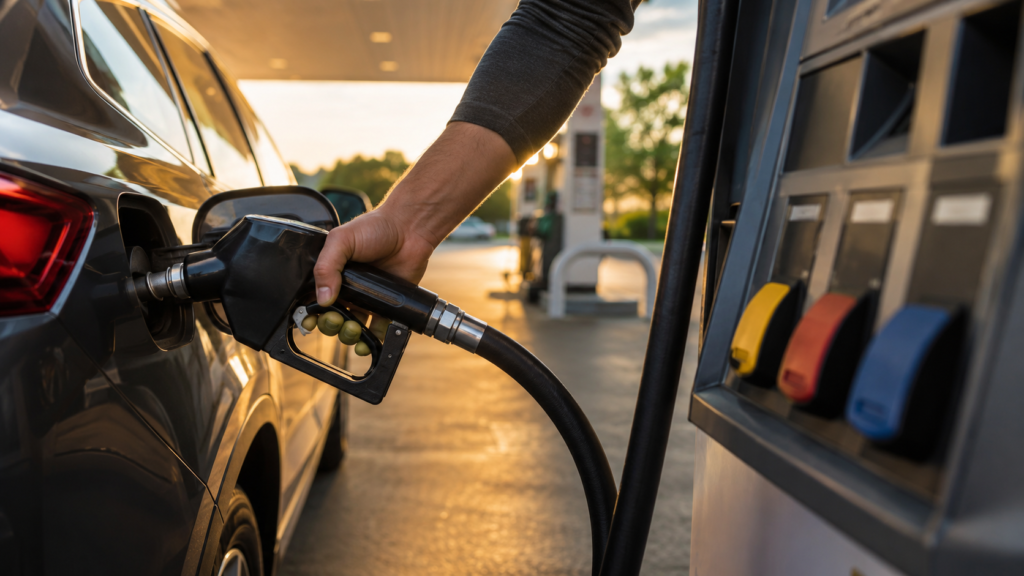
Drivers are paying almost $1 more per gallon for premium gasoline than regular fuel, marking the widest price gap in decades. Even so, demand for higher-octane fuel continues to rise across the United States. The trend reflects a mix of evolving vehicle technology, consumer buying habits, and fuel pricing strategies that have transformed the gasoline market over the past decade.
Retail Markups Push Premium Prices Higher
Premium gasoline once sold for only about 20 cents more per gallon than regular fuel. That spread widened to roughly 40 cents by 2015, climbed to around 60 cents in 2018, exceeded 80 cents in 2022, and now sits just below $1.
Refining costs explain only part of the increase. Federal emissions rules introduced in the mid-2000s reduced sulfur levels in gasoline, requiring refiners to blend more costly, higher-octane ethanol to maintain premium fuel standards. Yet wholesale pricing has increased by only about 20 cents per gallon since 2007, while retail prices have climbed far more, indicating that station-level markups account for much of today’s wider price gap.
According to the U.S. Energy Information Administration (EIA), Americans consumed about 369 million gallons of finished motor gasoline per day in 2023, underscoring how even small shifts in fuel pricing can translate into billions of dollars in consumer spending.
More Vehicles and Consumer Beliefs Drive Demand
Higher prices have done little to slow demand. Premium gasoline represented roughly 13% of U.S. gasoline sales last year, up from about 9% in 2013.
A key reason is that more new vehicles now require or recommend premium fuel. By 2018, models recommending or requiring higher-octane gasoline outnumbered those designed primarily for regular fuel, reflecting the industry’s shift toward smaller turbocharged engines that often perform best with higher octane.
Industry analyst Andy Lipow, president of Lipow Oil Associates, says the growing share of premium sales reflects both changing vehicle requirements and long-standing consumer habits. Many drivers continue choosing premium even when their owner’s manual recommends regular gasoline, believing it delivers better performance or protects the engine over time.
Performance Benefits Remain Limited
For most vehicles, that extra spending offers little return. Octane measures a fuel’s resistance to engine knocking rather than its ability to increase horsepower. A 2016 AAA study found that premium gasoline provides no measurable benefit for vehicles engineered to run on regular 87-octane fuel. Even engines designed for premium typically see no added advantage from fuels rated above 91 octane, despite some stations offering 93 or 94-octane blends.
Looking ahead, premium gasoline demand is likely to remain resilient as more performance-oriented vehicles enter the market. Whether the widening price gap persists, however, will depend on fuel market competition, refining economics, and how well consumers distinguish genuine engine requirements from decades-old marketing perceptions. GrowBusinessMag will continue following these developments as they shape the U.S. fuel market.